
Search News
Industry Portal
Hot Articles
Nickel Spike Pressures Heavy-duty Angle Grinder Costs
Time
Click Count
On July 9, 2026, the sharp rise in LME nickel prices turned a raw-material move into an immediate trade and delivery issue for Heavy-duty Angle Grinders. Because nickel is a core input for brushless motor magnetic steel and housing alloys, the latest price jump, linked in the event summary to tighter export quotas and stronger restocking demand, is relevant not only to manufacturers but also to exporters, procurement teams, distributors, and supply-chain operators that must manage quotations, lead times, and contract execution under changing market rules.
What Has Been Confirmed So Far
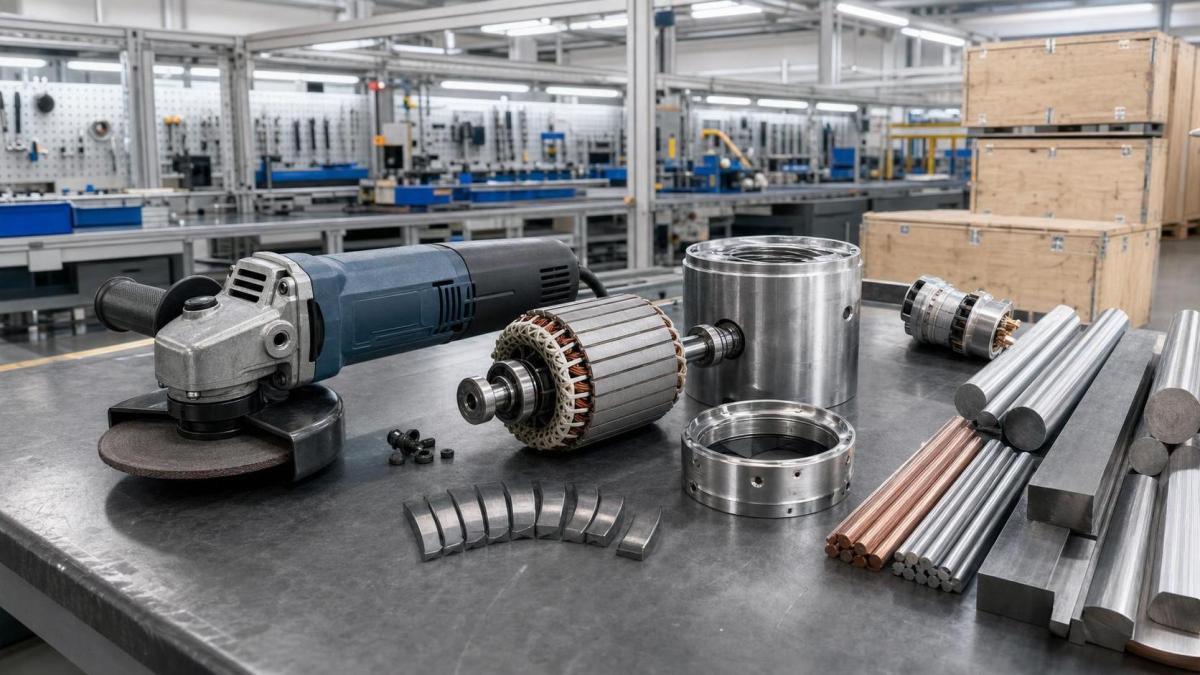
The confirmed event is that LME nickel futures closed at $24,850 per ton on July 9, 2026, up 12.3% in a single day and reaching the highest level since October 2025. The summary attributes the move to tighter Indonesian export quotas combined with a surge in restocking demand from European stainless steel mills. It also confirms that nickel is a core raw material for the brushless motor magnetic steel and housing alloys used in Heavy-duty Angle Grinders.
The same summary states that this price jump will directly raise export quotations for mid-range and high-end angle grinders. It further indicates that, starting in late July, the room for order-by-order price negotiation is expected to narrow and delivery lead times are expected to extend to 8 to 10 weeks.
Where the Pressure Is Likely to Appear First
Quotation and contract handling for export business
From an industry perspective, export-oriented sellers may be affected first because raw-material volatility can quickly narrow the validity window of quotations. The main pressure point is the transition from inquiry to order confirmation: pricing terms, offer validity, and delivery commitments may all need closer review. What deserves closer attention is whether commercial documents, technical quotations, and supply commitments remain aligned once material costs move sharply.
Procurement planning for motor and alloy inputs
For raw-material and component procurement teams, the impact is likely to concentrate on purchasing rhythm, supplier coordination, and stock planning. Analysis shows that the key issue is not only higher cost, but also the reduced flexibility in negotiation once upstream material prices move faster than normal. Teams handling brushless motor-related inputs and alloy-based housings should pay close attention to purchase timing, supplier confirmation, and document consistency tied to order execution.
Manufacturing and delivery scheduling
For processing and manufacturing operations, the likely effect is on scheduling discipline rather than on production capacity alone. The event summary already points to a possible extension of lead times to 8 to 10 weeks, which means production planning, shipment promises, and customer delivery communication may all become more sensitive. Observably, the business risk sits in whether planned output, confirmed material arrival, and export shipment schedules continue to match.
Channel and downstream order coordination
Distributors, importers, and downstream buyers may feel the impact through tighter repricing cycles and less room to hold open orders. In practical terms, this can affect purchase approvals, project timing, and after-sales spare planning where specific grinder models depend on stable component supply. What deserves closer attention is whether contract terms, delivery expectations, and model specifications remain workable under shortened negotiation windows.
Operational Issues Companies Should Watch Closely
Review quotation validity and contract wording
Analysis shows that companies dealing in mid-range and high-end Heavy-duty Angle Grinders should closely review how long quotations remain valid and how price-related clauses are handled in contracts. The current event does not provide formal execution rules for contract adjustment, so this should be treated as a practical risk-monitoring point rather than an established compliance outcome.
Check procurement documents against delivery promises
Where delivery lead times may stretch, procurement records, supplier confirmations, and internal scheduling documents deserve closer alignment. This is especially relevant when export orders depend on fixed shipment timing or technical documentation tied to a specific product configuration. The point is not that requirements have already changed, but that document consistency may become more important as lead times lengthen.
Watch for changes in technical and tender documentation
Observably, companies participating in tendering, specification-based sales, or formal buyer approval processes should monitor whether pricing assumptions and lead-time commitments in technical files need revision. The event summary does not confirm any new tender rule or certification standard, so this remains an area for continued observation rather than a confirmed rule change.
Prepare for tighter order negotiation windows
Export teams, supply-chain service providers, and downstream buyers should also prepare for a narrower bargaining window from late July, as indicated in the summary. From an industry perspective, the immediate task is to improve coordination between sales, procurement, and logistics so that pricing, lead-time statements, and shipment planning are based on the same assumptions.
How This Signal Should Be Read
Analysis shows that this development is best understood as an execution signal shaped by trade-rule movement and raw-material supply tightening, rather than as a standalone price story. The direct trigger described in the summary is tighter export quotas, and the downstream effect is appearing in quotation pressure and lead-time extension for Heavy-duty Angle Grinders. It is more appropriate to understand this as an early indicator that material-side trade constraints can quickly pass through to export-facing tool categories.
At the same time, this is not yet a complete picture of how the market will settle. Observably, the industry still needs to watch how procurement behavior, contract handling, delivery performance, and buyer acceptance evolve after late July. The practical question is less about headline volatility and more about whether execution standards in trade and delivery become stricter across the chain.
What the Industry Can Take From This Now
The current event points to a clear near-term issue: when a key motor and alloy material rises sharply under tighter export conditions, Heavy-duty Angle Grinder pricing and delivery become more difficult to manage across export business. A neutral reading is that the change should not yet be treated as a fully settled market outcome, but as a concrete warning that procurement discipline, quotation management, and delivery coordination may face tighter constraints in the coming weeks.
Basis of This Article and What Still Needs Verification
This article is based on the user-provided news title, event date, and event summary. For this type of development, relevant source categories would typically include official announcements, regulatory releases, customs or trade authority information, industry association updates, standard-setting documents, and reporting from authoritative media. No specific official source link was provided in the input, so the underlying official references still need to be continuously verified.
Further observation is still needed on any detailed policy wording, implementation interpretations, tender-document changes, certification-related execution impacts, industry feedback, and how companies actually adjust procurement, pricing, and delivery arrangements in response to the nickel move.
Recommended News