
Search News
Industry Portal
Hot Articles
How to Compare Aerospace Titanium Rivets for Strength and Weight
Time
Click Count
When strength margins are tight and every gram matters, comparing aerospace titanium rivets requires more than reading a datasheet. For quality control and safety decisions, the right rivet affects structural integrity, fatigue life, corrosion resistance, and compliance. This guide explains how to compare aerospace titanium rivets for strength and weight using practical criteria that support safer choices and more reliable sourcing.
What makes aerospace titanium rivets different from standard rivets?
Aerospace titanium rivets are designed for high-load structures where low mass and long fatigue life are both essential. They are not interchangeable with general industrial rivets.
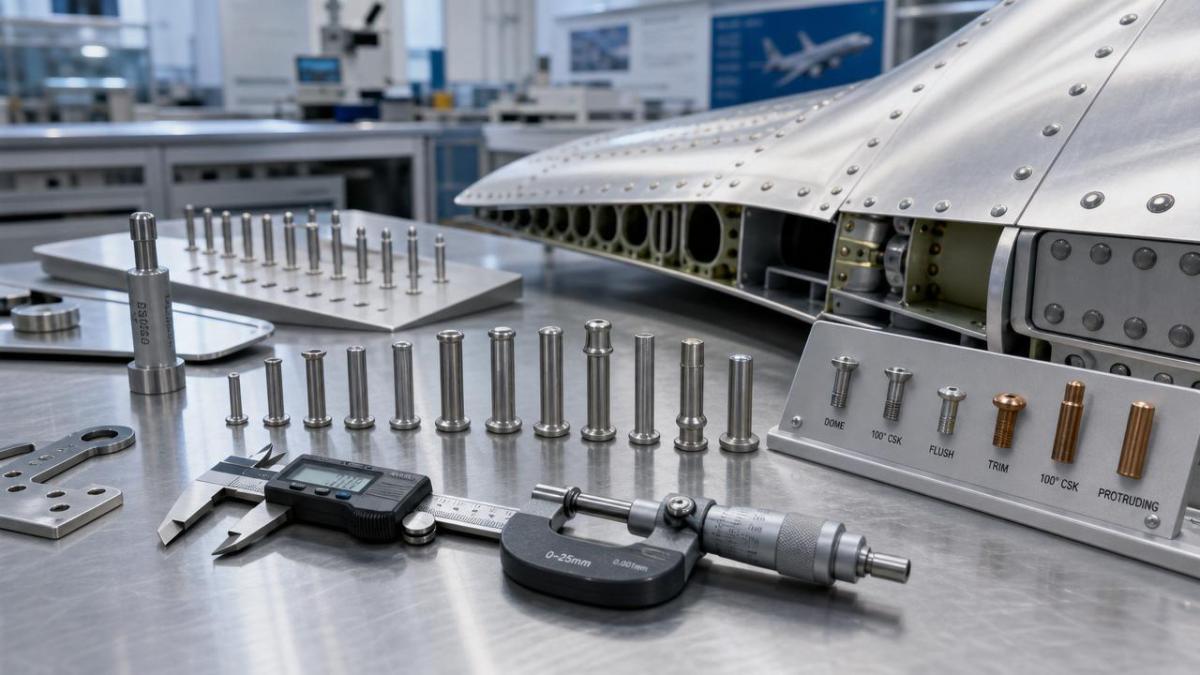
The main advantage is the strength-to-weight ratio. Titanium offers high tensile performance while staying much lighter than many steel fasteners used in structural joining.
These rivets also perform well in aggressive environments. They resist corrosion better than many conventional alloys, especially where moisture, salt, and temperature shifts are concerns.
Another difference is compatibility with aerospace design priorities. Aircraft and space structures often need material systems that limit galvanic issues and maintain performance under vibration.
When reviewing aerospace titanium rivets, look beyond diameter and length. Alloy grade, heat treatment, shear capacity, installation method, and certification matter just as much.
- High specific strength for weight-sensitive assemblies
- Strong corrosion resistance in harsh operating conditions
- Reliable fatigue behavior under repeated loading
- Better fit for critical structural compliance requirements
How should strength be evaluated when comparing aerospace titanium rivets?
Start with the actual load path. Rivets in aerospace panels, frames, skins, and brackets may see pure shear, combined shear and tension, or fluctuating cyclic loads.
Shear strength is usually the first property checked. Many riveted joints transfer force across the shank, so shear capacity often drives the selection process.
Tensile strength also matters. In mixed-load joints, rivet head pull-through, clamp integrity, and local bearing performance can be affected by tensile characteristics.
Fatigue performance is equally important. A rivet with attractive static strength may still fail earlier under repeated pressurization cycles or vibration exposure.
Hardness alone should not be used as a shortcut. Higher hardness can suggest strength, but it does not replace full mechanical test data and application validation.
Key strength checks
- Single shear and double shear ratings
- Ultimate tensile strength and yield strength
- Fatigue test data under representative cycles
- Bearing interaction with joined materials
- Installation effects on final joint strength
It is best to compare aerospace titanium rivets using normalized conditions. Different test methods, grip ranges, and installation processes can distort direct comparisons.
How do you compare weight without oversimplifying the decision?
Weight comparison should focus on system impact, not only unit mass. A lighter rivet may reduce total aircraft weight, but only if it still meets durability targets.
Begin with density. Titanium is denser than aluminum but much lighter than many steels. This places aerospace titanium rivets in a useful middle ground.
Then calculate mass per installed joint. Include head style, shank diameter, length, collar components if present, and expected quantity across the structure.
A meaningful metric is strength per gram. This helps compare aerospace titanium rivets against steel or nickel-based options for equivalent structural demand.
Also consider secondary weight savings. Stronger rivets may allow thinner local reinforcement, fewer fasteners, or more efficient load distribution in some designs.
Useful weight comparison questions
- What is the mass of one installed rivet assembly?
- How many rivets are required per structure?
- Does higher strength reduce rivet count?
- Will material compatibility add coatings or washers?
- Does the chosen rivet affect maintenance weight indirectly?
The best answer is rarely the lightest rivet on paper. The best option is the rivet that delivers target performance at the lowest total structural penalty.
Which material and design factors matter most in real aerospace applications?
Alloy selection is central. Common titanium families vary in strength, ductility, corrosion behavior, and forming characteristics. These differences directly affect aerospace titanium rivets.
Head style matters too. Countersunk heads improve aerodynamics and flush surfaces, while protruding heads may offer different installation and bearing behavior advantages.
Shank fit is another major factor. Interference-fit rivets can improve fatigue resistance, but they may require tighter hole preparation and more controlled installation practices.
Temperature exposure should be reviewed early. Some aerospace titanium rivets perform well across broad ranges, but nearby materials may expand differently and change joint behavior.
Galvanic compatibility cannot be ignored. Titanium in contact with carbon composites, aluminum, or dissimilar metals may need isolation strategies, coatings, or sealing compounds.
What common mistakes lead to poor rivet selection?
One common mistake is comparing aerospace titanium rivets by tensile strength alone. Joints often fail through bearing damage, hole elongation, or fatigue before pure tensile fracture.
Another mistake is ignoring installation sensitivity. A premium rivet can underperform if hole preparation, driving force, or upset formation is inconsistent.
Cost-only decisions also create risk. Titanium rivets usually cost more upfront, but rework, corrosion failures, and inspection burden can make cheaper alternatives more expensive later.
Many teams also underestimate documentation. Aerospace titanium rivets should come with clear specification references, heat lot traceability, and test records appropriate to the program.
Risk reminders
- Do not compare rivets from unmatched standards
- Do not overlook fatigue and vibration conditions
- Do not ignore galvanic interaction with adjacent materials
- Do not assume all titanium alloys behave alike
- Do not skip process validation for installed joints
How can aerospace titanium rivets be compared in a practical sourcing checklist?
A practical comparison process should combine engineering data, production fit, and lifecycle considerations. This reduces the chance of choosing a rivet that looks strong but performs poorly in service.
First, confirm the application category. Airframe skin joints, engine-adjacent structures, composite assemblies, and high-vibration modules may require different priorities.
Second, compare aerospace titanium rivets using a balanced scorecard. Weight, static strength, fatigue life, corrosion resistance, installation repeatability, and compliance should all be included.
Third, request evidence. Material certificates, dimensional reports, mechanical test summaries, and process consistency records are more useful than broad marketing claims.
This method fits the broader SHSS view of high-strength hardware. Critical fasteners should always be assessed as structural safety components, not commodity parts.
What is the best final approach to choosing aerospace titanium rivets?
The best approach is to compare aerospace titanium rivets through strength-to-weight performance, fatigue behavior, installation stability, and certification quality at the same time.
Start with the joint load case. Then review alloy, geometry, installed mass, environmental resistance, and required documentation. Only after that should price be compared.
For critical structures, ask for sample validation under realistic conditions. A small test program can prevent expensive field issues, weight penalties, and avoidable compliance setbacks.
When aerospace titanium rivets are chosen with this disciplined process, they support lighter structures, safer performance margins, and more dependable long-term service outcomes.
Use the checklist above as the next step. It turns material comparison into a practical, evidence-based decision that aligns strength, weight, and structural reliability.
Recommended News