
Search News
Industry Portal
Hot Articles
3D Structured Light vs 2D Imaging for Reliable Access Control
Time
Click Count
For business evaluators comparing modern access control options, the gap between 2D imaging and 3D structured light is no longer just technical—it directly affects security accuracy, spoof resistance, deployment cost, and long-term ROI.
As organizations expand smart buildings, industrial sites, and mixed-use facilities, access systems must balance speed, trust, privacy, and durability.
In that context, 3D structured light has become a key reference point for reliable access control design.
Understanding 2D Imaging and 3D Structured Light in Access Control
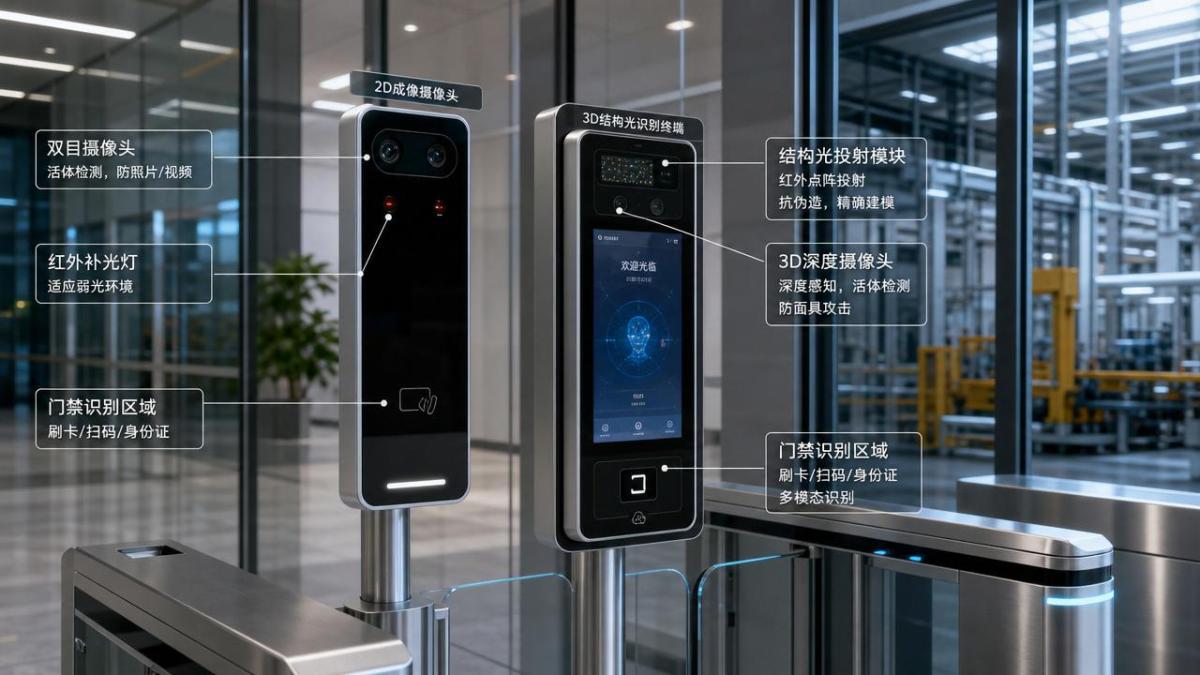
2D imaging captures flat facial or object information through visible-light or infrared cameras.
It typically analyzes texture, contours, feature points, and contrast patterns to verify identity.
This approach is widely adopted because hardware cost is low and deployment is relatively simple.
However, 2D imaging depends heavily on image quality, ambient light, camera angle, and anti-spoofing software.
3D structured light projects an infrared dot pattern or coded light onto a face or target.
A sensor then measures distortions in that pattern to reconstruct accurate depth information.
That depth map adds geometry, not just appearance, making identity checks far more robust.
For access control, 3D structured light improves liveness detection and supports reliable operation in low-light conditions.
It is especially relevant where physical entry points protect data, assets, staff safety, or critical workflows.
Current Industry Focus and Evaluation Signals
Across the broader smart hardware and security market, access control is now judged by measurable risk reduction.
Decision criteria no longer stop at recognition speed or device price.
They include spoof resistance, edge processing capability, data governance, and maintenance predictability.
This shift matters in commercial buildings, logistics zones, campuses, healthcare facilities, and industrial infrastructure.
Entry systems are now part of broader AIoT ecosystems, not isolated door devices.
As a result, 3D structured light is increasingly assessed alongside cybersecurity, building automation, and operational resilience.
Security Reliability and Business Value Differences
The main advantage of 3D structured light is reliability under real-world pressure.
A flat image can resemble a real face under favorable conditions.
A depth-verified face is much harder to imitate with photos, videos, or simple masks.
That difference directly reduces false acceptance risk at sensitive entry points.
2D imaging can still perform well in controlled environments with stable light and moderate threat levels.
Examples include low-risk offices, interior room access, and temporary visitor lanes.
Yet reliability declines when lighting changes quickly or users present at difficult angles.
3D structured light handles those conditions more consistently because depth cues remain available.
Operational value beyond recognition accuracy
- Lower fraud exposure at perimeter doors and restricted zones.
- Fewer manual interventions during peak traffic periods.
- Better user trust where touchless entry is required.
- More dependable logs for audits and incident review.
- Stronger fit with dark or mixed-light environments.
For total cost evaluation, the key question is not only device price.
It is whether failures, overrides, breaches, and rework create hidden costs over time.
In many higher-security applications, 3D structured light delivers better long-term economics despite higher hardware cost.
Typical Access Control Scenarios and Technology Fit
Not every doorway needs the same biometric depth or budget structure.
Technology fit should follow threat level, traffic pattern, environmental complexity, and compliance sensitivity.
A layered design is often most practical.
Use 3D structured light at high-value or exposed entrances.
Use 2D imaging where risk is lower and throughput needs are straightforward.
This avoids overspending while keeping critical points strongly protected.
Implementation Considerations for Reliable Deployment
Successful selection depends on more than recognition demos.
Field conditions, privacy architecture, and system integration determine actual performance.
Key deployment checks
- Measure entry lighting during day, night, and transition hours.
- Test spoof resistance using printed images, screens, and mask attempts.
- Confirm whether matching occurs on-device, on-edge, or in cloud infrastructure.
- Review template encryption, retention rules, and consent workflow.
- Check integration with turnstiles, visitor systems, and building management platforms.
- Assess throughput during shift changes or event peaks.
For compliance-sensitive environments, biometric data handling deserves equal attention.
3D structured light can strengthen identity assurance, but governance must remain disciplined.
Secure enrollment, limited retention, role-based access, and clear legal basis are essential.
It is also wise to define fallback methods for failed matches or exceptional users.
Badge backup, staffed review, or multi-factor access can preserve continuity without lowering standards.
Practical Decision Path for Next-Step Evaluation
When comparing 2D imaging and 3D structured light, the best decision comes from matching technology depth to site risk.
If entry points guard critical assets, variable-light spaces, or compliance-heavy operations, 3D structured light usually offers stronger reliability.
If deployment priorities center on basic convenience and cost control, 2D imaging may still be sufficient.
A sound next step is to rank doors by threat exposure, user volume, and audit importance.
Then run a pilot that compares false acceptance, false rejection, speed, maintenance demand, and user experience.
That evidence will show whether 3D structured light should anchor core access control while 2D imaging supports lower-risk layers.
In modern security planning, reliable entry is not just about seeing a face.
It is about verifying presence, resisting deception, and protecting operations with confidence over time.
Recommended News