
Search News
Industry Portal
Hot Articles
3D Structured Light Accuracy: What Matters in Face Capture Performance
Time
Click Count
For technical evaluators, face capture performance is only as strong as the accuracy behind it. In 3D structured light systems, small variations in depth mapping, infrared projection, calibration, and environmental tolerance can significantly affect recognition reliability. Understanding what truly drives precision helps teams compare solutions more effectively and reduce deployment risks in high-security and smart access scenarios.
Why a Checklist Matters for 3D Structured Light Accuracy
A specification sheet rarely shows real face capture performance. Two devices may claim similar recognition speed, yet differ sharply in depth precision, spoof resistance, and stability under difficult lighting.
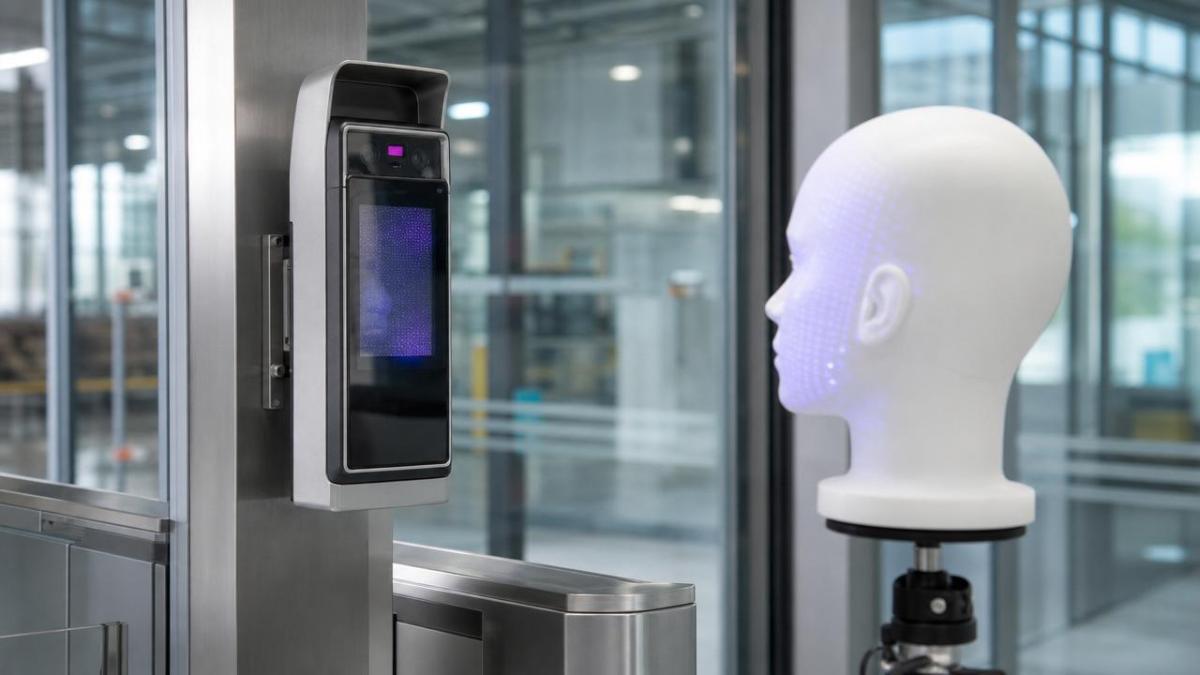
That is why a checklist-based review is useful. It turns abstract claims about 3D structured light into measurable checkpoints linked to installation risk, user throughput, and long-term maintenance.
This matters across integrated security environments. In smart buildings, industrial entry points, and commercial access systems, accuracy failures can create false rejects, delayed access, or weakened anti-spoofing performance.
Core Checklist: What Actually Drives Face Capture Precision
Use the following checklist to evaluate 3D structured light performance in a practical, comparable way.
- Verify projector quality. Check dot density, projection uniformity, and infrared energy consistency, because unstable patterns directly reduce depth reconstruction accuracy and weaken repeatable face capture results.
- Measure depth resolution at working distance. Test near, mid, and edge distances, since many 3D structured light devices perform well in demos but degrade outside ideal enrollment range.
- Review camera and projector calibration. Confirm factory alignment, drift tolerance, and recalibration method, because small optical offsets can distort facial geometry and lower recognition confidence.
- Test ambient light immunity. Evaluate bright sunlight, mixed indoor lighting, and backlit entries, since infrared interference often causes partial pattern washout and unstable depth mapping.
- Check facial angle tolerance. Capture faces with pitch, yaw, and roll variation, because access points rarely receive perfect frontal positioning from moving users.
- Inspect skin tone and surface response handling. Confirm that the 3D structured light engine maintains consistent depth extraction across varied reflectivity, cosmetics, and facial hair conditions.
- Assess anti-spoofing depth logic. Validate resistance to masks, screens, and printed attacks, ensuring the system uses real three-dimensional structure rather than shallow texture matching.
- Compare enrollment quality rules. Determine how the system guides initial face capture, because poor enrollment geometry can permanently reduce downstream recognition performance.
- Examine processing latency with accuracy. Do not separate speed from precision; some systems accelerate response by simplifying point-cloud analysis and sacrificing robust depth validation.
- Confirm thermal and aging stability. Infrared emitters, sensors, and optics can drift over time, so long-duration tests are essential for security deployments expected to run continuously.
- Validate edge-case occlusion handling. Test glasses, helmets, partial masks, and scarves, because real-world face capture rarely occurs with a fully unobstructed facial surface.
- Audit benchmark methodology. Require sample size, test conditions, false acceptance rate, and false rejection rate details, or performance claims around 3D structured light remain non-comparable.
How 3D Structured Light Accuracy Changes by Application Scenario
Smart Building and Office Access
In office lobbies and shared commercial spaces, the biggest challenge is throughput under variable light. Users approach from different angles, often while walking, carrying bags, or wearing glasses.
Here, 3D structured light accuracy depends less on lab-grade precision and more on stable depth capture across a broad acceptance zone. Consistency matters more than peak demo performance.
Industrial and Restricted Entry Points
Industrial entrances introduce dust, vibration, and temperature variation. Workers may wear helmets, protective eyewear, or partial face coverings, which changes how the facial surface is mapped.
In these conditions, strong 3D structured light systems need optical robustness, enclosure stability, and reliable anti-spoofing without becoming overly sensitive to harmless occlusions.
High-Security Data and Critical Facilities
At sensitive sites, the priority shifts toward attack resistance. Face capture performance must remain accurate when confronting replay attempts, 3D masks, or manipulated biometric presentation attacks.
This makes liveness depth verification, calibration integrity, and failure logging more important than consumer-style convenience metrics alone.
Commonly Overlooked Factors That Distort Evaluation
Ignoring Installation Geometry
Mounting height, tilt angle, and corridor width affect how the 3D structured light pattern lands on the face. Good hardware can underperform when deployment geometry is poorly planned.
Testing Only Clean Indoor Conditions
A short indoor demo says little about operational reliability. Exposure to entrance sunlight, reflective backgrounds, or HVAC-driven temperature shifts often reveals hidden accuracy weaknesses.
Treating Recognition Rate as the Only Metric
Reported recognition success can mask unstable capture quality. Without depth error data, false reject patterns, and spoof test results, the true strength of 3D structured light remains unclear.
Overlooking Sensor Aging and Maintenance
Infrared projection modules and protective windows accumulate drift, dust, and scratches. These small changes can lower structured pattern quality long before failure becomes obvious.
Practical Execution Steps for More Reliable Comparison
A disciplined evaluation process makes technical comparison more credible and reduces lifecycle surprises.
- Define the operating range first, including user height band, face angle, lighting mix, and expected accessories such as glasses or helmets.
- Run repeated tests at multiple times of day to expose ambient infrared interference that may not appear in a controlled room.
- Record false rejects and reacquisition time, not only pass rate, because user friction often comes from unstable recapture rather than total failure.
- Request calibration retention data after shock, thermal cycling, or long continuous operation if the device will serve critical infrastructure.
- Use a fixed scorecard so every 3D structured light device is judged on the same distance, light, spoof, and occlusion conditions.
Summary and Next-Step Guidance
Strong face capture performance does not come from a single headline specification. It comes from how well a 3D structured light system preserves depth accuracy across distance, lighting, angle, occlusion, and time.
A useful evaluation should connect optical design, calibration quality, anti-spoofing depth logic, and deployment conditions into one structured review. That approach supports better technical decisions in smart access, industrial security, and critical facility protection.
As a next step, build a field-oriented validation sheet and score each candidate under identical conditions. When 3D structured light is examined through real operating variables, performance differences become easier to see and easier to trust.
Recommended News