
Search News
Industry Portal
Hot Articles
How Kevlar Cut-Resistant Suits Reduce Injury Risk in High-Contact Work
Time
Click Count
In high-contact industrial environments, even a brief encounter with sharp edges, abrasive surfaces, or fast-moving materials can cause severe injuries and expensive disruption.
Kevlar cut-resistant suits reduce that exposure by adding lightweight, durable body coverage where gloves or sleeves alone are not enough.
Across construction, metal handling, utilities, recycling, logistics, and advanced manufacturing, these garments support safer workflows, stronger compliance, and more stable output.
For safety-focused operations, Kevlar cut-resistant suits are not only protective apparel. They are part of a broader risk-control system.
What Kevlar Cut-Resistant Suits Are Designed to Do
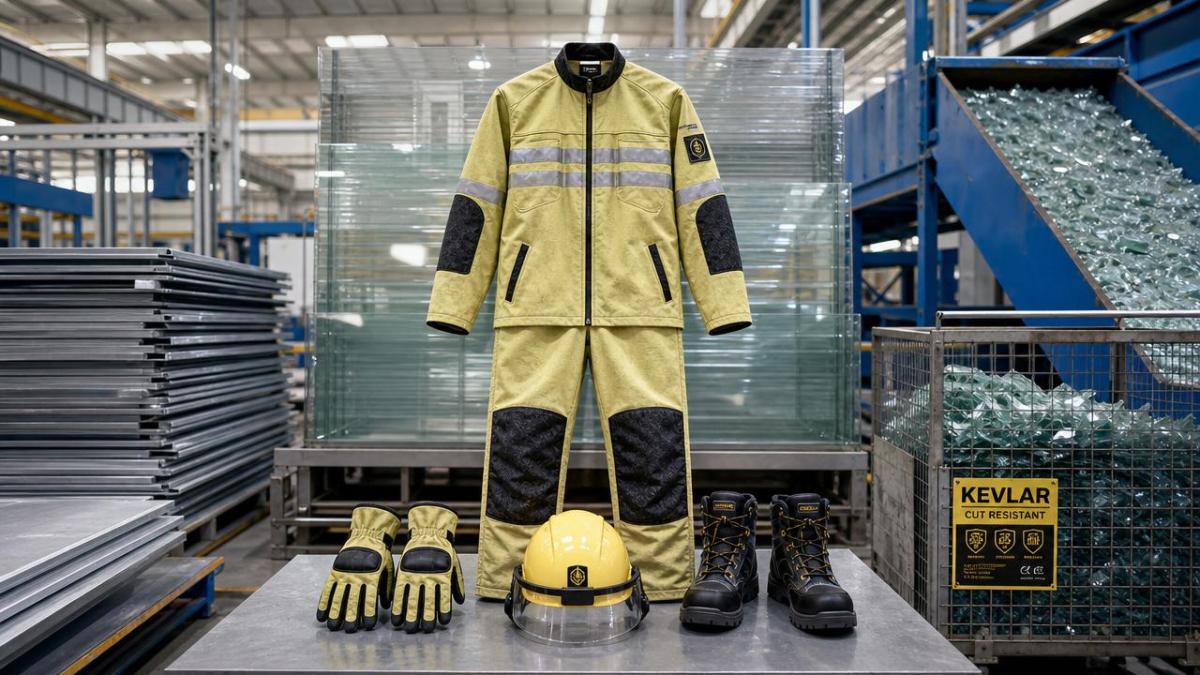
Kevlar cut-resistant suits are full-body or partial-body protective garments made with high-strength aramid fibers known for exceptional cut and abrasion resistance.
Their main function is to reduce injury severity when workers contact sharp materials, rough surfaces, fragmented metal, broken glass, or moving components.
Unlike heavy rigid armor, these suits balance protection with mobility. That matters in environments requiring climbing, bending, lifting, reaching, or repetitive motion.
Many designs combine cut resistance with tear resistance, heat tolerance, and layering compatibility, making them practical in mixed-risk industrial settings.
Core protective characteristics
- High resistance to cuts from sharp edges and jagged surfaces
- Lightweight structure for extended wear
- Flexible fabric movement for active tasks
- Durability under repeated industrial use
- Compatibility with helmets, gloves, boots, and respirators
Why Injury Risk Remains High in Contact-Intensive Work
Many injuries happen during ordinary tasks, not dramatic accidents. Sharp contact often occurs during handling, repositioning, cleaning, dismantling, or maintenance.
Modern facilities also move faster. Higher throughput increases exposure frequency, especially where materials, tools, and machinery intersect in tight work zones.
In sectors observed by SHSS, safety gaps often appear where protection covers hands but leaves arms, torso, thighs, or lower legs exposed.
Kevlar cut-resistant suits help close that gap by extending protection across larger body areas without creating unnecessary bulk.
Common industrial risk signals
How Kevlar Cut-Resistant Suits Reduce Injury Risk
The value of Kevlar cut-resistant suits comes from prevention, force reduction, and consistency across repeated exposure.
First, the fabric creates a physical barrier. It interrupts the path of blades, burrs, shards, and rough edges before they reach skin.
Second, the fiber structure distributes localized force. That can reduce the depth and severity of contact when direct avoidance fails.
Third, broader coverage lowers the chance that an unprotected body zone becomes the weak point during routine handling or sudden slips.
Fourth, comfortable wear matters. Protective gear only works consistently when users can move naturally and keep it on throughout the shift.
This is where Kevlar cut-resistant suits outperform improvised layering. Better ergonomics usually improve use compliance in real operations.
Risk reduction pathways
- Lower direct exposure to sharp contact
- Reduce severity of minor and moderate cut incidents
- Protect high-contact body zones during repetitive tasks
- Support standardized PPE use across teams
- Limit downtime related to avoidable injuries
Operational Value Across the Broader Industrial Landscape
In the comprehensive industries tracked by SHSS, protective gear influences more than injury counts. It affects continuity, quality control, insurance exposure, and operational confidence.
A cut injury can stop a line, trigger documentation, require retraining, and slow maintenance schedules. Prevention supports productivity as well as worker protection.
Kevlar cut-resistant suits also fit current industrial priorities. Facilities are seeking lightweight PPE that works alongside smart hardware, fast-paced workflows, and stricter safety expectations.
That makes these suits relevant in both traditional sectors and modern AIoT-enabled environments where physical risk still remains unavoidable.
Business and site-level benefits
- Fewer recordable cut incidents
- Improved readiness for audits and safety reviews
- Better alignment with layered PPE policies
- Reduced interruption during high-contact processes
- Higher confidence in hazardous task planning
Typical Use Scenarios for Kevlar Cut-Resistant Suits
Kevlar cut-resistant suits are especially useful where workers contact unpredictable surfaces or materials with hidden cutting hazards.
The strongest results usually come when suit selection matches the exact task profile, body exposure pattern, and surrounding PPE system.
Selection Factors That Influence Real Protection
Not all Kevlar cut-resistant suits perform equally in every setting. Selection should focus on actual exposure, not general assumptions.
Garment design, seam construction, coverage pattern, breathability, and compatibility with other PPE all affect practical safety outcomes.
Cut resistance alone is not enough. A suit that is too hot, restrictive, or poorly fitted may reduce compliance during long shifts.
Key evaluation points
- Required cut protection level for the task
- Coverage areas most exposed to contact
- Weight, heat management, and comfort
- Durability after cleaning and repeated wear
- Fit with gloves, face protection, boots, and harnesses
- Relevant testing standards and documentation
Implementation Practices and Caution Points
Effective use of Kevlar cut-resistant suits depends on training, inspection, and task-specific rules. PPE should support hazard control, not replace it.
Teams should identify where full suits are necessary and where targeted protection may be enough. Overprotection can reduce comfort and adoption.
Routine checks should look for wear points, seam damage, contamination, and laundering issues that could weaken the protective barrier.
It is also important to map suit use against machine guarding, handling methods, and workflow design to avoid treating PPE as the only defense.
Practical rollout steps
- Review incident records and near-miss patterns
- Identify body zones with repeated cut exposure
- Test Kevlar cut-resistant suits during actual tasks
- Confirm comfort, movement, and compatibility
- Set inspection, cleaning, and replacement intervals
- Update training and PPE documentation
A Practical Next Step for Safer High-Contact Operations
Kevlar cut-resistant suits help reduce injury risk by combining body coverage, cut resistance, and wearable comfort in demanding industrial conditions.
Their value is greatest where sharp contact is frequent, exposure areas extend beyond the hands, and operational continuity depends on fewer incidents.
A useful next step is to compare current incident points with actual body exposure during tasks, then evaluate whether Kevlar cut-resistant suits close existing protection gaps.
When selected carefully and integrated into a wider safety system, Kevlar cut-resistant suits support stronger protection, steadier productivity, and more resilient industrial operations.
Recommended News