
Search News
Industry Portal
Hot Articles
IoT Lighting Control Basics: How to Cut Outages and Energy Waste
Time
Click Count
For project managers balancing uptime, budgets, and sustainability goals, IoT lighting control offers a practical way to reduce outages, cut energy waste, and improve visibility across facilities. By connecting sensors, fixtures, and centralized platforms, teams can detect faults faster, automate lighting schedules, and make data-driven decisions that lower operating costs without compromising performance or safety.
Why IoT lighting control matters when downtime and energy waste are both costly
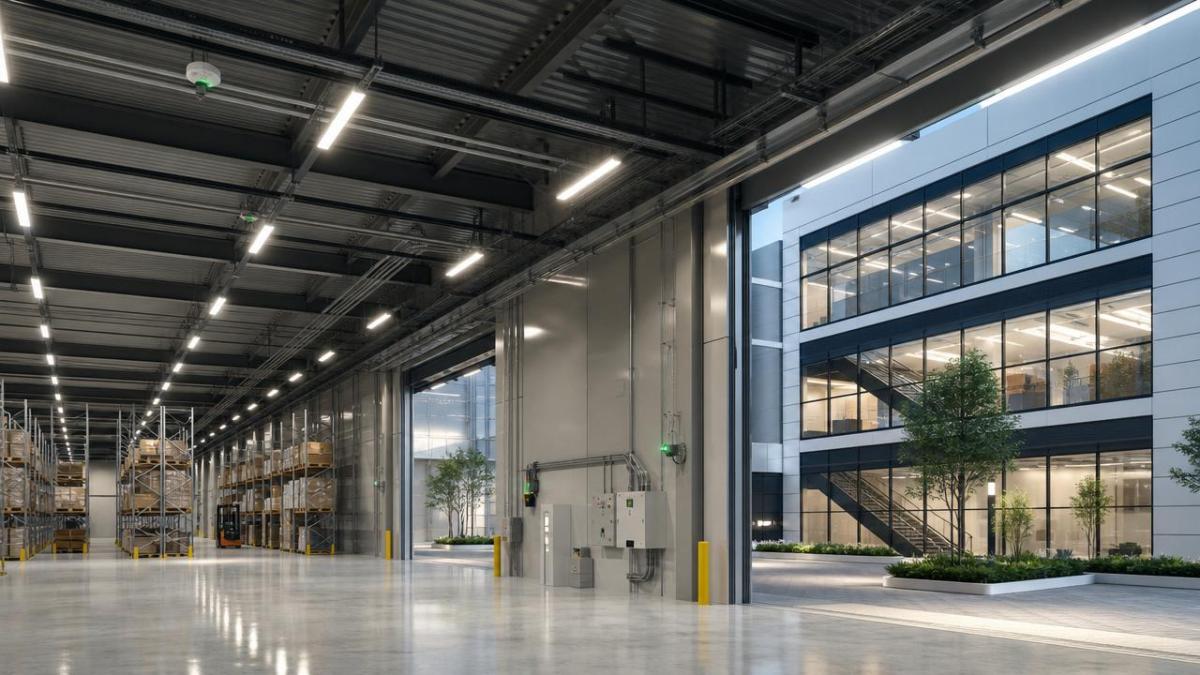
In industrial sites, commercial buildings, campuses, warehouses, and smart city projects, lighting is no longer a simple electrical utility. It is part of operational continuity, worker safety, maintenance planning, and ESG reporting.
That is why IoT lighting control has moved from a nice-to-have upgrade to a practical management layer. It gives project teams a way to monitor fixture status, automate response, and reduce hidden waste that often escapes manual inspections.
For project leaders, the pain points are familiar:
- Unexpected outages create safety risks, interrupt operations, and trigger urgent maintenance dispatches.
- Lights run at full output in low-occupancy periods, inflating electricity bills without adding value.
- Legacy controls provide little data, making it difficult to justify upgrades or optimize schedules across multiple facilities.
- Mixed protocols and fragmented procurement create integration risks during retrofit or expansion.
SHSS follows these issues across smart lighting, industrial hardware, security systems, and advanced facilities. This cross-disciplinary view matters because lighting performance is not isolated. It intersects with access control, maintenance workflows, site safety, and the reliability expectations of modern infrastructure.
What IoT lighting control actually includes
A basic IoT lighting control system usually combines connected LED fixtures or drivers, occupancy and daylight sensors, gateways, communication protocols such as DALI, Zigbee, or other networked interfaces, and software for scheduling, alerts, reporting, and remote control.
The goal is not just switching lights on and off. The real value comes from continuous visibility: who used which zone, how much energy was consumed, which device is failing, and where maintenance should be prioritized.
How IoT lighting control cuts outages in real operating environments
Outages are rarely caused by lamps alone. In modern systems, failures may involve drivers, communication nodes, power quality issues, sensor faults, or configuration errors. IoT lighting control helps teams find root causes faster instead of reacting only after a complaint is filed.
Core mechanisms that reduce outage duration
- Real-time fault alerts identify failed fixtures or offline nodes before an entire area goes dark.
- Central dashboards show location-based status, helping maintenance teams dispatch accurately instead of inspecting manually.
- Predictive maintenance trends, such as rising driver temperature or irregular power behavior, can signal likely failure points.
- Remote reconfiguration reduces the need for repeated site visits when timing, dimming, or sensor thresholds need adjustment.
In a warehouse or manufacturing site, that can mean avoiding dark aisles, delayed picking, or safety incidents. In municipal or campus settings, it can mean fewer complaints, faster service response, and more stable public illumination.
The following table helps project managers compare outage risks under conventional lighting control and IoT lighting control in practical deployment terms.
For project managers, the advantage is not just fewer failures. It is shorter diagnosis time, better service coordination, and stronger evidence when reporting maintenance performance to owners, operators, or procurement teams.
Where energy waste usually hides and how connected control solves it
Energy waste in lighting is often invisible because lights still appear to be working properly. The largest losses typically come from oversupply, poor scheduling, and static operation in spaces with variable occupancy or daylight.
High-waste scenarios project teams should review first
- Warehouse corridors lit at full output overnight despite intermittent traffic.
- Office floors running fixed schedules even on weekends, holidays, or partial occupancy days.
- Parking areas and public spaces without adaptive dimming based on time, use, or ambient light.
- Industrial zones overlit as a buffer because teams lack confidence in localized controls.
IoT lighting control reduces this waste by matching output to actual need. Occupancy sensing, daylight harvesting, and zoning logic together make the lighting layer responsive instead of fixed. That translates into lower kWh consumption and longer useful life for drivers and LEDs because they are not constantly running at unnecessary levels.
Typical control strategies and their project value
Before approving a system, project managers should understand how each strategy affects savings, complexity, and user acceptance.
The most effective deployments usually combine more than one strategy. A site may use schedules for baseline operation, sensors for local response, and analytics to refine settings over time.
How to choose the right IoT lighting control architecture for your project
Selection errors often happen when teams buy around fixture price alone. For project management, the better approach is to evaluate architecture, interoperability, maintainability, and reporting value together.
Key questions before specification or procurement
- Is this a new build, phased retrofit, or mixed-environment upgrade?
- Do you need room-level control, floor-level control, city-block control, or enterprise-wide visibility?
- Which protocols already exist onsite, and how open must the new system be for future expansion?
- Will lighting data need to connect with BMS, energy dashboards, or security workflows?
- How important are remote diagnostics, firmware updates, and spare-part standardization?
The table below summarizes practical selection criteria for IoT lighting control in multi-sector projects.
This is where SHSS offers added value. Because smart lighting increasingly overlaps with access control, edge devices, industrial operations, and city-scale infrastructure, procurement decisions should not be isolated from broader hardware and security considerations.
Implementation roadmap: how to avoid delays, integration problems, and weak ROI
A strong IoT lighting control project is usually built in stages. This helps prevent overdesign, keeps the budget tied to measurable outcomes, and reduces operational disruption during installation.
Recommended rollout sequence
- Start with an audit of fixture inventory, operating hours, failure history, and high-cost zones.
- Define priority outcomes such as outage reduction, energy savings, lower patrol labor, or better compliance reporting.
- Pilot in one representative area before scaling across multiple buildings or streets.
- Validate commissioning quality, sensor calibration, user permissions, and reporting outputs before handover.
- Establish post-installation review cycles so settings can be optimized using real usage data.
Common implementation mistakes
Many projects underperform not because the hardware is poor, but because control logic is copied from another site without matching local operating conditions. Warehouses, office towers, hospitals, transport hubs, and public roads all require different occupancy patterns, safety thresholds, and maintenance models.
Another frequent issue is insufficient coordination between electrical contractors, IT teams, and facility operators. Since IoT lighting control touches wiring, communications, software, and user workflow, project managers should define responsibility boundaries early.
Standards, compliance, and security points project teams should not ignore
Although lighting systems are often viewed as low-risk infrastructure, connected controls introduce data, access, and network management considerations. For many projects, compliance is less about one single certificate and more about meeting a combination of electrical safety, EMC, building code, and cybersecurity expectations.
What to review during technical evaluation
- Electrical safety and local installation compliance for luminaires, drivers, and control gear.
- EMC considerations so wireless or wired controls do not create avoidable interference issues.
- Data governance for cloud-linked platforms, especially when facilities combine lighting with occupancy analytics or access systems.
- Role-based user control, password policy, and update management for connected nodes and gateways.
SHSS is particularly aligned with these cross-domain questions. In advanced facilities, the line between lighting, security, and digital operations is getting thinner. A project that improves efficiency but ignores access logic or network hygiene can create a different class of operational risk.
FAQ: what project managers ask before approving IoT lighting control
Is IoT lighting control suitable for retrofit projects with mixed legacy assets?
Yes, but suitability depends on driver compatibility, wiring conditions, control goals, and the openness of the proposed platform. In retrofit work, a phased approach is often safer than a full replacement. Start with high-runtime zones or failure-prone areas where savings and maintenance gains are easiest to validate.
What should we prioritize first: energy savings or outage reduction?
That depends on site risk. In logistics, production, healthcare-adjacent, or public safety environments, outage visibility may deserve priority because darkness disrupts operations immediately. In office, campus, and commercial portfolios, energy waste may offer the fastest payback. Many strong IoT lighting control projects balance both by using one monitoring platform for separate operational goals.
How long does deployment usually take?
There is no single timeline, because scope, site access windows, protocol complexity, and commissioning depth vary widely. A contained pilot can move much faster than a campus-scale or municipal rollout. Project managers should ask suppliers to separate hardware lead time, installation time, commissioning time, and training time rather than accepting one blended schedule.
What are the most overlooked procurement risks?
The biggest ones are closed ecosystems, weak reporting tools, difficult spare-part management, and underdefined integration responsibilities. Another risk is buying advanced controls without planning who will tune schedules, review alarms, or maintain the software layer after handover.
Why choose us for smart lighting intelligence and project support
SHSS approaches IoT lighting control through the wider realities of industrial hardware, smart buildings, and urban infrastructure. That perspective helps project teams avoid narrow decisions that look efficient on paper but create downstream problems in maintenance, compatibility, or operational security.
Our strength lies in connecting smart LED lighting with adjacent systems that matter in real projects: facility resilience, procurement economics, communication protocols, compliance awareness, and integration with the broader AIoT environment.
What you can consult with us about
- Parameter confirmation for control strategies, sensor deployment, and protocol selection.
- Product and solution screening for retrofit, new construction, campus, industrial, or municipal use.
- Delivery cycle evaluation and phased rollout planning for time-sensitive projects.
- Customized方案 support around scheduling logic, zoning, maintenance workflows, and dashboard outputs.
- Certification and compliance discussion based on target market, site type, and integration needs.
- Sample review, comparative quotation communication, and technical review checkpoints before purchase approval.
If your team is evaluating IoT lighting control to reduce outages, improve reporting, or cut energy waste across complex facilities, a focused consultation can shorten decision time and prevent expensive specification errors. The most effective projects begin with the right questions, not just the lowest fixture price.
Recommended News