
Search News
Industry Portal
Hot Articles
How to account for seasonality in agricultural procurement planning
Time
Click Count
Build agricultural procurement plans around the dates when goods must be available, then work backward through supplier lead times, transport, inspection, and storage. A seasonal calendar should show both the expected demand peak and the latest practical ordering date. The gap between those dates is often where shortages begin: a product can be readily available when its need is forecast and difficult to source by the time an order is approved.
Separate commodities tied directly to harvest from inputs and equipment tied to field operations. Fresh produce, seed, spare parts, protective equipment, and lighting components have different supply cycles and storage limits. Putting them on the same calendar exposes competing demand without treating them as interchangeable purchases.
Map demand against the agricultural calendar
Start with the operating schedule: land preparation, planting, crop maintenance, harvest, storage, and any planned maintenance shutdowns. Record the earliest and latest plausible dates for each activity, not just the date used in last year’s plan. Rain can delay field access, while an early harvest can bring forward demand for packaging, handling equipment, and replacement parts.
For each required item, connect the consumption rate to the activity that creates it. Packaging demand follows the volume and timing of harvest; a repair part is linked to equipment usage and the consequences of a breakdown. Protective gear may be needed throughout the year but in higher quantities when temporary labor arrives or specific tasks begin. This distinction helps identify which quantities should move with the crop forecast and which should be reserved in advance.
Plot supplier availability alongside those dates. A supplier’s production slot, seasonal closure, or raw-material constraint can fall well before the local demand peak. Include inbound transport, unloading capacity, quality inspection, and time to resolve rejected deliveries. The usable date is the date stock is accepted and available at the point of use, not simply the date a shipment reaches the gate.
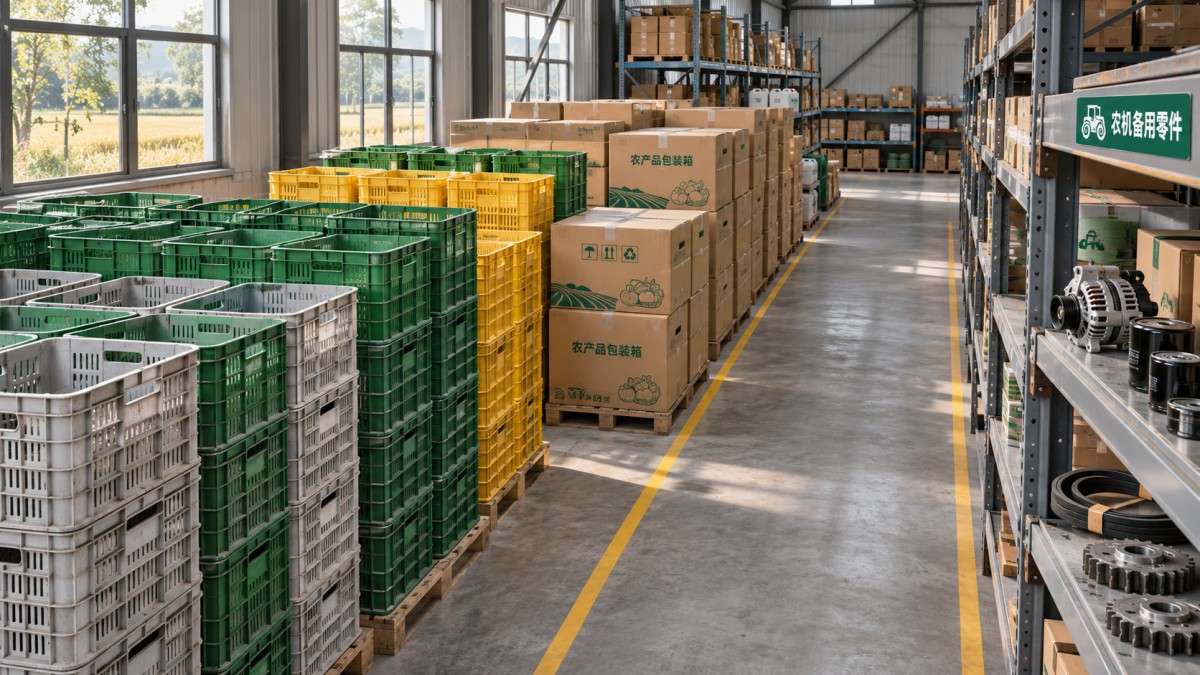
Where production spans several regions, use separate calendars. Different planting windows can create opportunities to share inventory, but transfers only work if the item is compatible, transport time fits the second location’s schedule, and stock is released before the first location needs it.
Turn historical orders into a usable forecast
Historical purchase quantities are a starting point, not a direct measure of demand. An unusually large order could reflect a change in acreage, an early purchase ahead of a price increase, or replenishment after a previous shortage. Conversely, low recorded consumption may mean stock ran out rather than demand disappeared. Annotate these events before using past orders to set the next seasonal baseline.
Combine records of consumption, inventory balances, stockouts, open orders, and actual delivery dates. Then adjust for the coming season’s acreage, crop mix, equipment fleet, operating hours, and planned projects. Use current crop and field information to revise timing as the season approaches. A change in expected harvest volume should alter packaging and handling requirements, while a delayed planting date should move associated inputs only if their storage and supplier commitments permit it.
Distinguish forecast uncertainty from lead-time uncertainty. Demand may be predictable while delivery is unreliable, or delivery may be consistent while weather makes consumption difficult to estimate. The first situation calls for closer monitoring of incoming orders; the second calls for flexible quantities and a range of demand scenarios. Treating both as a single safety-stock problem can leave cash tied up in the wrong items.
Use a range, then assign a trigger
Prepare a baseline along with lower- and higher-demand scenarios. Describe the operational assumptions behind each: planted area, expected harvest window, equipment utilization, or staffing period. Avoid assigning a precise probability unless the available data supports it.
For each scenario, specify what changes the order plan. A revised planting schedule might trigger an earlier call-off of parts; a confirmed reduction in acreage might stop a second seed release. Give each trigger an owner and a decision date that precedes the supplier’s last feasible production or dispatch date. A forecast update that arrives after that date may be accurate but no longer actionable.
Set inventory by shelf life and consequence of shortage
Extra inventory buys time only when it remains usable. Perishable produce requires appropriate temperature control and sufficient remaining shelf life at delivery. Seed viability and treatment conditions require attention to storage instructions and lot identification. Fertilizers and other agricultural inputs may require segregated storage and controls appropriate to their properties. Holding a full season’s requirement early can increase deterioration, handling, or disposal exposure.
For each item, compare the time needed to replenish it with the time operations can tolerate without it. A long-lead replacement component for harvest machinery may justify a reserved spare even if its expected use is low. A readily available standard fastener may need a smaller local buffer, provided its grade, dimensions, and finish are genuinely interchangeable with the specified part.
Set a reorder point using expected demand during replenishment plus a buffer for relevant uncertainty. Use actual end-to-end lead time, including internal approval and receiving, rather than a supplier’s quoted transit time alone. When demand accelerates before harvest, calculate the expected use over that lead time using the seasonal rate, not an annual average.
For example, if an item is used mainly during a short harvest window, a reorder point based on average monthly use can be too low just as consumption rises. The same rule can leave excessive stock after harvest. Review the threshold before the seasonal ramp-up and again when the peak ends; retain enough stock to cover residual work and verified open orders.
Track lots and expiry dates where relevant, and issue stock in an appropriate rotation. Before advancing an order, confirm that warehouse space, temperature control, and handling capacity will be available. An early delivery that cannot be stored correctly transfers a supply risk into a quality risk.
Structure orders around what is known and unknown
Commit early to items with long production lead times, restricted seasonal capacity, or limited substitutes. Keep quantities flexible where demand remains uncertain and supplier capacity can be reserved separately from final shipment quantities. An agreement that reserves capacity without defining release dates, minimum quantities, and cancellation terms can leave both parties working from different assumptions.
Match the ordering arrangement to the item:
- Scheduled releases: Set a total commitment and delivery windows for predictable consumption, with agreed procedures for changing dates or quantities.
- Capacity reservation: Secure a production or packing slot when the final volume is still uncertain. Record when the quantity becomes binding and what happens if the slot is not used.
- Staged deliveries: Reduce storage pressure for bulky or shelf-life-sensitive goods, while confirming that each delivery can be dispatched and received during the peak period.
- Contingent supply: Prequalify an alternate source for critical items, including its specification, capacity, lead time, and conditions for accepting an urgent order.
Price comparisons should reflect these terms. A lower unit price tied to a large, noncancelable early order is not equivalent to a flexible schedule with smaller releases. Include freight, storage, likely handling, and the cost of unusable stock in the comparison. Do not assume a second supplier is independent merely because it issues a separate quotation: both sources could rely on the same growing region, processor, component, or transport route.
Protect the handoff from harvest to receipt
Harvest forecasts often change faster than transport plans. Coordinate collection slots with the expected picking window, packing capacity, vehicle availability, and receiving hours. For temperature-sensitive goods, define the required condition at handover and receipt, how it will be measured, and what happens when a shipment falls outside the agreed range. A load that arrives on time but cannot be accepted does not cover the scheduled requirement.
For equipment and hardware, seasonal readiness also depends on installation and maintenance. A replacement motor, battery, or lighting component needs to match the existing equipment and arrive early enough for fitting and functional checks. Ordering the correct quantity without confirming compatibility or maintenance access can postpone use until the peak has already begun.
Agree on the information exchanged when a shipment slips: revised dispatch date, quantity affected, cause, and the next confirmed update. Separate a late vehicle from a production shortfall. The former may be resolved by adjusting a receiving slot; the latter may require drawing down a buffer, releasing an alternate source, or changing the operating schedule.
Review the plan while there is still time to change it
During the period before planting or harvest, review demand, available stock, open purchase orders, supplier commitments, and delivery exceptions against the same dated calendar. Increase the frequency as critical order deadlines approach. A useful review ends with a decision: release, defer, transfer, substitute under an approved specification, or retain the existing plan.
After the peak, compare forecast and actual use by item and week. Record whether deviations came from timing, volume, rejected material, delayed deliveries, or a change in operations. Carry those explanations into the next plan rather than simply averaging the year’s purchases. The result is a seasonal schedule that reflects what actually constrained availability and what can still be changed before the next commitment is made.
Recommended News