
Search News
Industry Portal
Hot Articles
Pneumatic Tools vs Cordless: Which Delivers Lower Downtime?
Time
Click Count
Downtime is the real scorecard when comparing pneumatic tools with cordless platforms. Torque figures attract attention, yet lost minutes usually come from hose issues, compressor interruptions, charging gaps, battery swaps, and service delays across actual work cycles.
That makes the question timely for construction, industrial assembly, maintenance, infrastructure, and smart-facility operations. In environments where SHSS tracks performance, safety, and system resilience, uptime is not only a tool issue. It is an operational discipline.
Why downtime matters more than nameplate performance
A fast tool does not automatically create a fast process. If the tool stops often, the rated output becomes less meaningful than the rhythm of interruption.
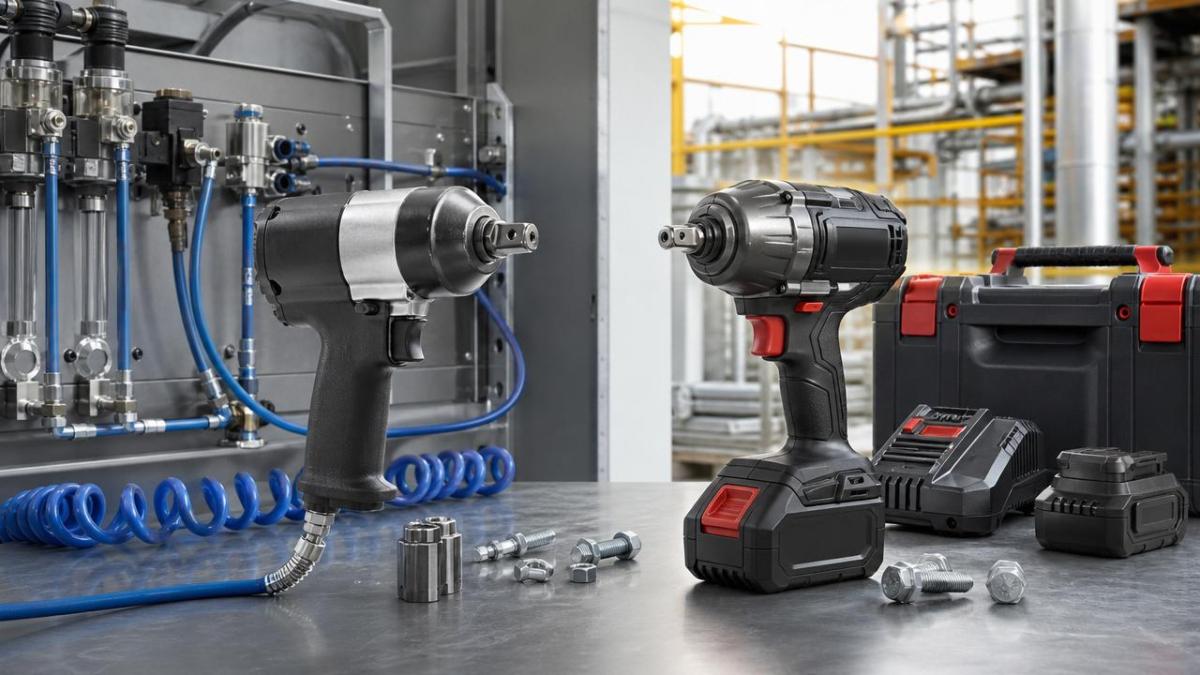
For pneumatic tools, uptime depends on air quality, compressor sizing, hose routing, fittings, and preventive maintenance. For cordless systems, uptime depends on battery readiness, charging logistics, electronic controls, and thermal behavior under heavy duty cycles.
In other words, lower downtime is rarely decided by the tool alone. It is determined by the ecosystem behind the tool and by how well that ecosystem matches the task.
Where pneumatic tools still hold a strong uptime advantage
Pneumatic tools remain hard to beat in fixed, repetitive, high-cycle environments. Assembly cells, metal fabrication lines, tire service bays, and heavy fastening stations often benefit from stable air infrastructure.
Once the compressor network is well designed, the tool itself is usually light, simple, and capable of long continuous operation. There is no charging window and no battery inventory to manage during the shift.
This matters in applications where stoppages are costly per second. A fastening line, for example, may value consistent cycle time more than mobility. In that setting, pneumatic tools can deliver very low interruption rates.
Typical conditions that favor air-powered uptime
- High-volume fastening with repeated torque ranges
- Centralized workstations with permanent air supply
- Long shifts where continuous trigger time is common
- Facilities already maintaining compressors and air treatment
- Applications where lighter tool weight reduces operator fatigue
Another reason is serviceability. Many pneumatic tools have fewer onboard electronics. In harsh industrial conditions, that simplicity can reduce certain failure modes and shorten repair decisions.
Why cordless tools often reduce downtime in the field
Cordless platforms have changed the calculation, especially with brushless motors and higher-rate lithium-ion packs. In field work, movement is part of the job, and air infrastructure becomes a source of delay rather than a productivity base.
A cordless tool removes hoses, compressors, and pressure-drop problems from the immediate workspace. That cuts setup time, reduces trip hazards, and improves access in rooftops, façades, utility corridors, transport fleets, and remote service points.
In these scenarios, downtime often comes from relocation, not only from fastening. Pneumatic tools may work well at the point of use, yet the full workflow slows when crews must drag airlines, search for supply points, or wait for compressors.
Field realities that favor cordless systems
- Frequent movement between work zones
- Service calls with uncertain site conditions
- Projects where setup time dominates tool-on time
- Elevated or confined locations with limited access
- Safety programs focused on cleaner, simpler work areas
This is where modern cordless tools align with SHSS attention to efficient empowerment. Battery intelligence, brushless efficiency, and portable power density can turn mobility into uptime instead of compromise.
The hidden causes of lost time
A useful comparison starts with the interruptions that rarely appear on product sheets. These hidden losses often decide whether pneumatic tools or cordless platforms perform better in practice.
The table shows a common pattern. Pneumatic tools often lose less time during nonstop production, while cordless tools often lose less time during movement-heavy work.
How to evaluate real uptime instead of assumed uptime
The best comparison uses process data, not preference. A technical review should map the full work cycle and identify where stoppages actually occur.
Focus on these decision points
- Tool-on time versus travel and setup time
- Peak torque events versus average daily duty cycle
- Single-point failure risk in compressors or charging fleets
- Repair turnaround, spare availability, and service access
- Environmental factors such as dust, moisture, and temperature
- Safety implications tied to hoses, cords, batteries, and ergonomics
It is also worth separating short interruptions from catastrophic interruptions. A quick battery swap may be manageable. A compressor failure can halt an entire zone. On the other hand, poor battery planning can cause repeated small delays throughout the day.
That distinction matters in integrated sites where tools support wider systems. In SHSS-observed environments, uptime connects with fasteners, safety protocols, smart building maintenance, and asset continuity across multiple trades.
Application by application, the answer changes
No single platform wins everywhere. Downtime behaves differently in production cells, infrastructure maintenance, and smart-city service work.
Industrial assembly and fastening
Pneumatic tools usually perform well where cycle speed is predictable and compressed air is already managed. Air-powered nutrunners, impact tools, and grinders can sustain output with minimal pause.
Construction and retrofit work
Cordless systems often cut downtime because crews move constantly. Drilling, anchoring, fastening, and access work benefit from immediate deployment and fewer site logistics.
Fleet, utility, and facility maintenance
Cordless platforms frequently gain the edge when service windows are tight. A technician reaching lighting controls, security hardware, access points, or mechanical rooms values portability more than centralized air power.
Heavy-duty continuous removal or grinding
Pneumatic tools may still deliver lower downtime if the task runs hot and long. Continuous energy delivery can outperform battery rotation when duty cycles stay extreme for extended periods.
A practical way to compare pneumatic tools and cordless fleets
A useful trial should measure more than completion speed. It should capture every interruption that affects labor flow and output quality.
- Track setup minutes per shift and per location change
- Record stoppages by cause, not only by duration
- Count how many tools are disabled by one infrastructure failure
- Measure fatigue-related slowdowns in long cycles
- Review maintenance effort for compressors, hoses, batteries, and chargers
- Check whether uptime gains affect fastening consistency and safety compliance
This method avoids a common mistake. Teams often compare tool specifications while ignoring system dependence. Downtime is a systems outcome, so the evaluation model must be systemic as well.
The most balanced conclusion
Pneumatic tools can deliver lower downtime where compressed air is reliable, demand is continuous, and workstations are fixed. Cordless tools often deliver lower downtime where mobility, setup speed, and access flexibility shape the day.
The smartest decision is usually not ideological. It comes from matching the energy platform to the interruption pattern of the job. In some operations, a mixed fleet will outperform either extreme.
The next step is to map downtime by task, location, and failure source, then test pneumatic tools and cordless alternatives against the same workflow. That creates a decision based on uptime evidence rather than on tool category alone.
Recommended News