
Search News
Industry Portal
Hot Articles
Pneumatic Tools Safety Checks Before Daily Use
Time
Click Count
Before every shift, pneumatic tools deserve a few minutes of careful inspection. For operators, these quick safety checks can prevent air leaks, sudden failures, and costly injuries while keeping performance stable on demanding jobsites. This guide outlines the essential pre-use steps to help you spot risks early, protect your team, and make sure pneumatic tools are ready for safe, efficient daily operation.
Why daily pneumatic tools safety checks matter more than many operators think
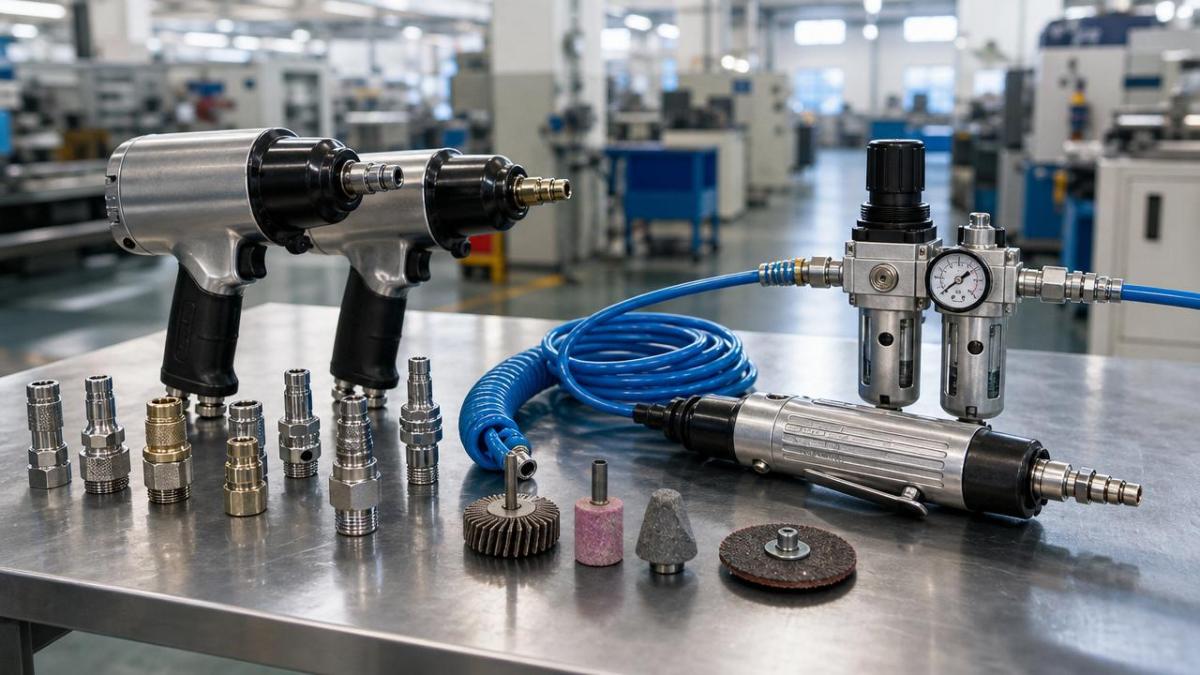
In construction, manufacturing, maintenance, metalworking, and utility operations, pneumatic tools are valued for speed, torque delivery, and durability. Yet the same compressed air that makes them productive can also turn a minor defect into a sudden hazard.
A worn hose, loose coupling, damaged trigger, or incorrect air pressure may seem small at startup. During use, however, that issue can cause whipping hoses, uncontrolled rotation, weak fastening, flying accessories, or operator fatigue from unstable tool behavior.
For users and operators, the problem is rarely lack of effort. The real issue is inconsistency. Teams often work under shift pressure, changing attachments, mixed hose sets, and shared tools. That is why pre-use inspection must be simple, repeatable, and visible.
- It reduces injury risk by identifying air leaks, cracked housings, loose sockets, and unstable connections before the tool is energized.
- It protects work quality by keeping pneumatic tools within the pressure and lubrication conditions needed for consistent output.
- It lowers downtime by catching wear early, before a seal failure or coupler break disrupts the entire line or work crew.
- It supports broader site safety, especially when tools interact with fasteners, access-restricted areas, special PPE, and other critical hardware systems.
At SHSS, tool safety is never viewed in isolation. A pneumatic impact wrench affects fastening integrity. A grinder affects spark control and PPE selection. A poorly maintained air tool can compromise both productivity and the last line of physical defense around the operator.
What should operators check on pneumatic tools before daily use?
The most effective inspection routine is a short sequence that starts before air connection and ends with a controlled test run. Operators do not need a long checklist full of theory. They need a reliable method that fits real shift conditions.
Step 1: Inspect the tool body and controls
Start with a visual and tactile check. Look for cracks, missing screws, housing damage, bent guards, sticky triggers, and signs of impact from drops. If the tool has a safety lever or trigger lock, confirm that it moves freely and returns correctly.
Step 2: Check hose, couplings, and fittings
Most pneumatic tools fail at the connection points before they fail at the motor. Inspect the hose for cuts, blistering, abrasion, soft spots, or kinks. Confirm that couplers lock firmly and that fittings are tight without thread damage.
Step 3: Verify air pressure and air quality
Compare line pressure with the tool maker’s operating range. Overpressure can overspeed the tool and raise failure risk. Underpressure can create weak performance, incomplete fastening, and operator overcompensation. Also review moisture, dirt, and lubrication condition in the air supply.
Step 4: Examine accessories and retention points
Sockets, chisels, grinding wheels, drill bits, and retainers should match the tool and application. A good tool connected to the wrong accessory is still unsafe. Check wear, cracks, uneven edges, and secure retention before energizing.
Step 5: Confirm PPE and work area readiness
Pneumatic tools are part of a system, not a standalone object. Eye protection, hearing protection, gloves suited to the task, and in some environments respiratory protection should be ready before use. The work area should also be clear of trip hazards and loose debris.
The table below gives operators a practical pre-use checklist for pneumatic tools that can be adapted across workshops, field service teams, fabrication areas, and general industrial sites.
This checklist works because it focuses on failure points operators can actually verify in minutes. It also supports shift handovers, where pneumatic tools are often reused without anyone clearly owning the last inspection decision.
Which risks are most often missed during pneumatic tools inspection?
Operators usually notice obvious damage. Hidden problems are more dangerous. These are the issues that tend to be overlooked when production pressure is high or when a tool “worked fine yesterday.”
Silent air leaks and pressure drop
A small leak near a fitting may not stop the job, but it can reduce torque consistency and cause the user to push harder or hold the tool longer. That increases strain and can damage fasteners or work surfaces.
Accessory mismatch
Using a worn socket on a high-torque impact tool or fitting an incorrect disc on a pneumatic grinder is a common site shortcut. It can cause slippage, breakage, and uncontrolled reaction forces.
Moisture in compressed air lines
Water contamination affects internal components, corrosion rate, and lubrication effectiveness. In colder or humid environments, moisture can become a hidden reliability issue across multiple pneumatic tools in the same shift.
Unsafe hose routing
Even when the tool itself is sound, a hose routed across walkways, sharp metal edges, or moving equipment creates secondary hazards. A safe inspection should include how the hose will move during actual work.
- Do not judge safety only by whether the motor runs.
- Do not ignore slight vibration changes, because they often signal internal wear or poor accessory fit.
- Do not continue using pneumatic tools that require improvised holding methods or repeated trigger manipulation to function.
In SHSS field-oriented guidance, this risk view matters because safe operation is tied not only to the tool, but also to fastener integrity, PPE compatibility, and jobsite control around the worker.
How should operators judge air tool condition by application scenario?
Not all pneumatic tools face the same operating stresses. A pre-use check for a nailer differs from one for an impact wrench or a die grinder. The inspection logic should follow the actual task, not a generic checklist alone.
The comparison table below helps operators connect tool type, common failure points, and the most important daily judgment criteria before work begins.
This scenario-based approach helps teams avoid a common mistake: treating all pneumatic tools as if they have the same risk pattern. In reality, rotating tools, percussive tools, and fastening tools each need a different emphasis during inspection.
What standards and compliance points should users keep in mind?
Operators are not expected to become compliance specialists, but knowing the basic framework improves daily judgment. Pneumatic tools should be used in line with the manufacturer’s instructions, site safety procedures, lockout practices where relevant, and applicable local occupational safety requirements.
For many industrial environments, attention should also be paid to noise exposure, hand-arm vibration, hose restraint practices, abrasive accessory ratings, and compressed air system maintenance. If tools are used in regulated facilities, internal permit and inspection logs may also apply.
- Check whether the site requires documented pre-use inspections for shared pneumatic tools.
- Confirm that replacement accessories and fittings are compatible with rated operating conditions.
- Review whether hearing, eye, respiratory, or cut-resistant PPE is needed for the exact task.
This cross-disciplinary safety view aligns with SHSS expertise across industrial tools, high-strength hardware, smart site control, lighting visibility, and protective equipment. Safe output comes from coordinated systems, not isolated product decisions.
Common mistakes, quick answers, and better daily decisions
Can pneumatic tools be used if there is only a minor air leak?
It is not a good daily-use decision. Even a small leak can alter power delivery, raise compressor load, and create unpredictable behavior under demand. Fix the leak before the shift, especially for fastening and grinding applications.
How often should operators lubricate pneumatic tools?
That depends on tool design, air system configuration, and manufacturer guidance. Some pneumatic tools rely on line lubrication, while others need manual oiling at defined intervals. Daily checks should confirm the lubrication method, not guess it.
Is a quick trigger test enough before work?
No. A trigger test only confirms partial function. Operators should also inspect hose condition, coupler security, air pressure, accessory compatibility, and the surrounding work area. Most incidents come from system failures, not trigger failure alone.
When should a pneumatic tool be removed from service immediately?
Remove it if there is cracked housing, uncontrolled speed, repeated air leakage after reconnection, faulty safety mechanism, damaged retention hardware, or any sign that the accessory may not stay secure during operation.
Why choose us for pneumatic tools guidance and safer hardware decisions?
SHSS supports industrial users, operators, and procurement teams with a broader decision framework than a basic product sheet. We connect pneumatic tools safety with fastening reliability, PPE readiness, lighting visibility, and the operational controls that modern industrial sites increasingly demand.
If you are reviewing pneumatic tools for daily use, you can consult us on practical topics that affect both safety and output:
- Parameter confirmation for air pressure range, accessory suitability, and task-specific operating conditions.
- Product selection support for impact tools, grinding tools, pneumatic fastening tools, hoses, fittings, and related protective gear.
- Delivery and replacement planning for shared fleet tools, consumables, and spare parts under tight project schedules.
- Application-based recommendations where pneumatic tools interact with high-strength fasteners, controlled access zones, low-visibility environments, or elevated PPE requirements.
- Certification and compliance review for general industrial expectations, operating documentation, and compatible safety practices.
- Sample evaluation and quotation communication for teams comparing tool categories, maintenance approaches, and replacement cycles.
If your team wants a clearer daily inspection workflow, a more suitable pneumatic tools shortlist, or support aligning tool choice with site safety demands, contact SHSS for a targeted discussion built around your application, risk points, and operating priorities.
Recommended News