
Search News
Industry Portal
Hot Articles
How to Select High-Strength Fasteners Studs for Heavy-Load Joints
Time
Click Count
How to Select High-Strength Fasteners Studs for Heavy-Load Joints
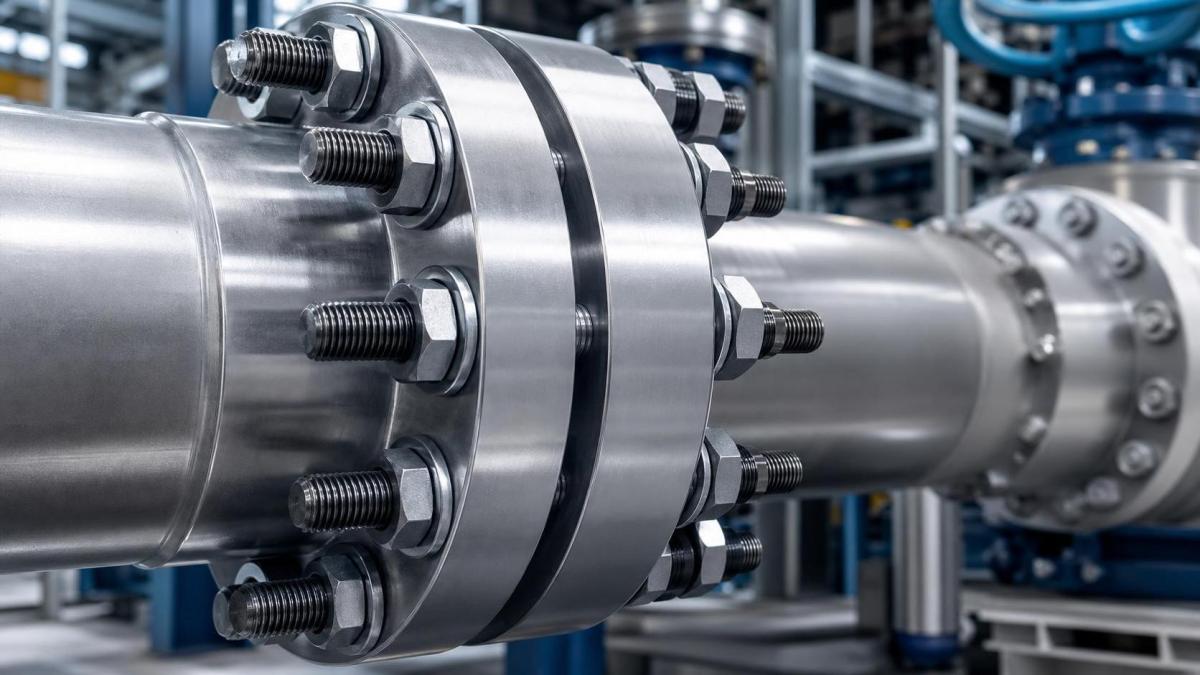
Selecting the right high-strength fasteners studs for heavy-load joints affects safety, uptime, and total lifecycle cost.
In heavy structures, the stud is not a minor item. It is the load path.
A weak selection can trigger preload loss, fatigue cracking, joint slip, or sudden fracture under dynamic service.
That is why comparing high-strength fasteners studs requires more than checking tensile strength on a datasheet.
Material grade, thread quality, installation method, corrosion exposure, and compliance standards all matter at the same time.
In practice, the best choice is the stud that maintains clamp force and resists damage through the full service cycle.
Start With the Joint, Not the Catalog
A reliable selection process starts by defining what the joint must survive.
This includes static load, cyclic load, impact, vibration, temperature swings, and maintenance frequency.
It also helps to separate ultimate strength from functional stability.
Many heavy-load joints fail because preload drops below the slip threshold, not because the stud reaches ultimate rupture.
For that reason, high-strength fasteners studs should be evaluated around clamp retention first.
- Joint type: flange, baseplate, machinery frame, pressure equipment, or structural splice
- Load profile: steady, reversing, pulsating, shock, or vibration-driven
- Service environment: indoor dry, marine, chemical, high-temperature, or mixed exposure
- Assembly constraints: access, torque control, hydraulic tensioning, and reusability
This first screen usually narrows the field faster than brand comparisons.
Check Mechanical Grade and Proof Strength Carefully
The mechanical grade defines the stud’s strength window and its elastic working range.
For heavy-load joints, proof strength often matters more than headline tensile strength.
Why? Because preload is normally set as a percentage of proof load.
If proof strength is inconsistent, the installed clamp force becomes unpredictable.
Common references include ASTM A193, ASTM A320, ASTM A453, ISO property classes, and application-specific specifications.
High-strength fasteners studs for rotating equipment may differ from those used in bridges or process piping.
When comparing offers, ask for mill certificates and batch-level mechanical test reports, not only nominal grade claims.
Match Material to Temperature and Corrosion Reality
Material choice is where many high-strength fasteners studs are over-specified or badly mismatched.
Carbon alloy steel may be cost-efficient in dry service, but it can become a liability in corrosive plants.
Stainless options improve corrosion resistance, yet some grades lose strength or gall under high preload.
At elevated temperatures, creep resistance and relaxation behavior deserve close review.
In offshore or chemical environments, coating compatibility and galvanic interaction with mating parts become equally important.
A useful screening question is simple: what will attack the joint first, heat, moisture, chemicals, or repeated movement?
- For marine exposure, verify pitting resistance and coating durability.
- For hot service, verify strength retention at operating temperature.
- For hydrogen-prone systems, screen for embrittlement sensitivity.
- For mixed metals, review galvanic corrosion paths.
The right material often reduces maintenance costs more than it increases purchase cost.
Do Not Underestimate Threads, Fit, and Surface Finish
A strong stud can still fail early if the threads create stress concentration or friction variability.
For high-strength fasteners studs, thread rolling quality directly affects fatigue performance.
Rolled threads generally outperform cut threads in demanding cyclic applications.
Thread fit also matters because excessive looseness can raise bending risk, while poor engagement damages preload consistency.
Surface finish affects torque-tension behavior, especially when coatings or lubricants are involved.
This is one reason equivalent-looking studs can produce different installed loads under the same torque.
- Confirm thread manufacturing method.
- Check tolerance class and mating nut compatibility.
- Review coating thickness versus thread engagement.
- Request torque coefficient or friction factor data.
These details look small on paper, but they drive real joint behavior in the field.
Preload Stability Is the Core Decision Point
Most heavy-load joints depend on preload to keep parts compressed and movement controlled.
That makes preload stability the core metric when selecting high-strength fasteners studs.
Look beyond initial tightening values and ask what happens after 100 hours, 1,000 cycles, or a thermal excursion.
Embedment, gasket creep, coating compression, and differential expansion can all reduce clamp force.
In flange joints, that drop may create leakage. In structural joints, it may start fretting and fatigue.
A more reliable comparison uses the full tightening system.
- Stud material and proof load
- Nut grade and bearing surface condition
- Lubrication method and friction stability
- Tightening tool capability and calibration
- Verification method, such as tension measurement or ultrasonic elongation
If suppliers cannot discuss preload retention clearly, their data package is probably incomplete.
Review Fatigue, Vibration, and Failure Mode Risk
Heavy-load joints often live in dynamic systems rather than quiet static assemblies.
Pumps, compressors, steel structures, transport equipment, turbines, and lifting systems all create cycling stress.
In these cases, fatigue resistance should be treated as a primary selection factor.
High-strength fasteners studs with poor geometry transitions or inconsistent heat treatment may crack long before overload occurs.
Vibration also raises the chance of self-loosening if preload is marginal.
That means evaluators should map likely failure modes before final approval.
This failure-based view usually produces more defensible procurement decisions.
Standards, Traceability, and Supplier Validation
A strong stud specification is only useful if the delivered batch truly matches it.
That is why traceability and supplier process control deserve formal review.
For high-strength fasteners studs, request evidence on raw material origin, heat treatment controls, thread inspection, and final testing.
Standards compliance should be matched to the actual project code, not copied from a previous purchase.
From recent market changes, documentation quality is becoming a stronger differentiator than brochure claims.
A capable supplier should provide:
- Material test certificates and heat numbers
- Mechanical test results by batch
- Dimensional and thread inspection records
- Coating or plating process data
- Nonconformance handling and recall traceability procedure
Without that level of control, a low unit price can become an expensive risk multiplier.
A Practical Evaluation Framework for Final Selection
When several options look similar, a weighted evaluation model helps bring discipline to the decision.
This is especially useful for high-strength fasteners studs in high-consequence joints.
- Define the service case and failure consequences.
- Screen candidate grades and materials against operating conditions.
- Compare preload reliability, fatigue performance, and corrosion resistance.
- Audit standards compliance and traceability depth.
- Review installation method, inspection plan, and replacement interval.
- Score total risk, not only purchase price.
In real projects, this approach prevents the common mistake of buying strength while overlooking service stability.
The right high-strength fasteners studs are the ones that fit the joint, keep preload, survive the environment, and stay traceable from mill to installation.
Use that filter consistently, and selection decisions become clearer, faster, and much easier to defend.
Recommended News