
Search News
Industry Portal
Hot Articles
Smart Streetlights vs Traditional LEDs: Cost Gaps Over 5 Years
Time
Click Count
For finance approvers weighing urban lighting investments, the real question is not sticker price but total cost over time. This comparison of smart streetlights and traditional LEDs shows where capital cost, maintenance, energy use, and control efficiency begin to separate over five years. When budget approval depends on measurable ROI, smart streetlights deserve a closer financial review.
Why a checklist works for a five-year lighting cost review
A simple unit-price comparison hides the real economics of street lighting. Fixtures operate nightly, fail unevenly, and create service costs beyond electricity alone.
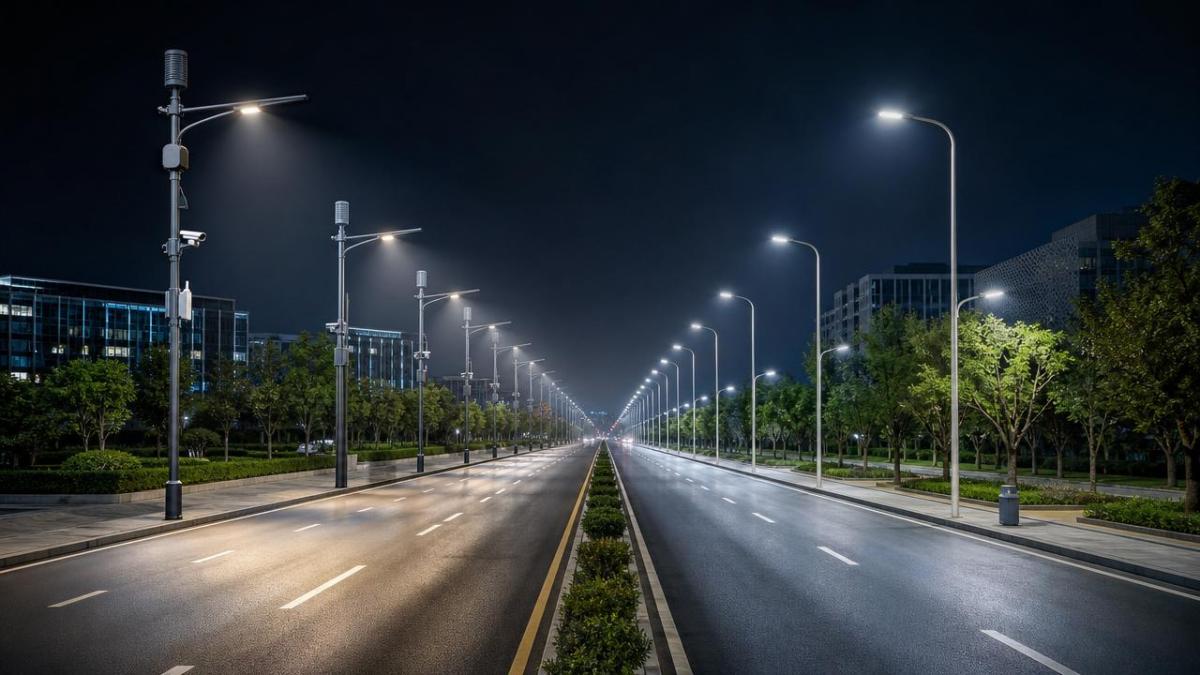
Smart streetlights add controls, sensors, and connectivity, so they usually start with higher upfront cost. Yet they often reduce waste, truck rolls, outage time, and manual inspection needs.
That is why a checklist matters. It forces the decision to move from purchase price toward total cost of ownership, service predictability, and usable performance gains.
Use this checklist to compare smart streetlights vs traditional LEDs
- Calculate full installed cost, including poles, controls, gateways, commissioning, labor, and software setup, instead of comparing fixture prices alone.
- Measure energy savings under real dimming schedules, because smart streetlights rarely run at full output all night in modern city programs.
- Include maintenance dispatch cost, since remote fault alerts can sharply reduce nighttime patrols, manual checks, and emergency service calls.
- Check component life by driver, surge protector, control node, and luminaire, not only by advertised LED chip lifetime.
- Review network reliability and protocol compatibility, especially for DALI, Zigbee, LoRaWAN, or cellular systems planned for future upgrades.
- Compare outage visibility, because smart streetlights report failures immediately while traditional LEDs often wait for public complaints or inspection rounds.
- Estimate carbon and compliance value where reporting rules, sustainability targets, or smart city funding criteria reward monitored energy performance.
- Model software and subscription fees across five years, since recurring platform charges can narrow savings if ignored early.
- Test adaptive lighting assumptions against actual traffic and pedestrian patterns to avoid paying for advanced controls with little operating benefit.
- Assess data ownership and cybersecurity requirements, particularly when smart streetlights connect into broader municipal or campus infrastructure platforms.
Where the five-year cost gap usually appears
Upfront capital
Traditional LEDs normally win on day-one capital. A standard fixture replacement is simpler, faster, and lighter on procurement documentation.
Smart streetlights carry extra hardware, communication modules, and commissioning work. In many projects, initial cost may land 20% to 60% higher.
Energy consumption
Traditional LEDs already improve energy performance over legacy sodium or metal halide systems. However, they usually operate on fixed schedules and fixed output.
Smart streetlights widen the gap by dimming during low traffic hours, adapting to seasons, and responding to ambient light. That often creates the first major operating savings.
Maintenance and fault response
This is where smart streetlights often outperform most clearly. Remote diagnostics reduce blind service visits and help crews arrive with the right replacement part.
Traditional LEDs can still be reliable, but fault discovery is slower. Over five years, delayed detection creates hidden labor cost and lower lighting availability.
Control value beyond lighting
Smart streetlights may also support sensors, environmental monitoring, emergency signaling, or future edge devices. Those added functions do not always appear in an energy-only spreadsheet.
If the site needs only basic illumination, traditional LEDs may remain the leaner choice. If the network is part of a smart city roadmap, the financial picture changes.
Scenario notes that change the answer
Urban roads with variable traffic
Smart streetlights fit best where traffic drops sharply at night but safety standards still demand consistent visibility. Dimming schedules can be tuned by hour, zone, or event.
In this setting, traditional LEDs leave savings untapped because they cannot react dynamically without external control layers.
Industrial parks and logistics yards
Industrial sites often value uptime and maintenance visibility more than headline efficiency. Smart streetlights help track failures across wide areas and support safer night operations.
Where operations run on fixed overnight schedules, the energy advantage may be smaller. Even so, maintenance savings can still justify the upgrade.
Residential streets and smaller municipalities
Budget pressure is usually tighter here. Traditional LEDs can remain attractive when network infrastructure, software fees, or technical support capacity are limited.
Still, smart streetlights may work well in phased deployments, starting with high-failure corridors or locations with repeated complaint history.
Commonly missed cost items and risk flags
Software costs are often underestimated. A low hardware quote can look attractive until annual platform fees are added across every node.
Commissioning complexity can delay savings. If mapping, grouping, and testing are poorly planned, smart streetlights may reach full operation later than expected.
Interoperability risk is real. Proprietary ecosystems may limit future fixture replacement, sensor expansion, or integration with other smart infrastructure systems.
Surge protection should not be treated as a footnote. In exposed outdoor networks, driver and control failures can quickly erode projected savings.
Data and cybersecurity obligations can add cost. Connected lighting systems need update policies, access controls, and clear ownership rules.
Practical execution advice for a cleaner comparison
- Build a five-year model using capex, electricity, dispatch labor, component replacement, software, and expected outage rates.
- Run three cases: conservative, expected, and aggressive dimming, so smart streetlights are tested under realistic operating assumptions.
- Request field references with similar climate, pole density, and maintenance conditions instead of relying on brochure performance alone.
- Pilot a limited zone first, then compare actual kilowatt-hour use, response time, and complaint frequency against baseline LED sections.
- Separate mandatory lighting needs from optional smart city features to avoid overbuilding the network in early phases.
Summary and next action
Over five years, traditional LEDs often look cheaper at purchase, but smart streetlights can close and exceed that gap through energy control, faster maintenance response, and network visibility.
The best decision depends on traffic patterns, service cost, grid exposure, and how much control value the site can actually use. Smart streetlights are strongest where operating hours are long and manual maintenance is expensive.
Start with a line-by-line five-year cost model, validate assumptions through a pilot, and compare actual field data before scaling. That approach turns the smart streetlights debate into a defendable investment case.
Recommended News