
Search News
Industry Portal
Hot Articles
2026 Smart Streetlights ROI: What Cities Should Check First
Time
Click Count
Before funding smart streetlights in 2026, cities need a sharper ROI lens than simple electricity savings. A durable smart streetlights business case must include maintenance, controls, connectivity, asset life, public safety impact, and procurement risk. When these factors are checked early, projects avoid overbuilt networks, underused sensors, and weak payback assumptions.
This matters across the broader smart infrastructure landscape. Street lighting sits at the intersection of urban operations, security, energy management, and public hardware life-cycle planning. Because smart streetlights now act as both lighting assets and digital nodes, the first review should focus on what drives measurable returns over ten to fifteen years.
Why a smart streetlights checklist matters before rollout
A checklist reduces blind spots. It forces decision-makers to compare baseline costs, expected savings, data use cases, and system compatibility before contracts are signed.
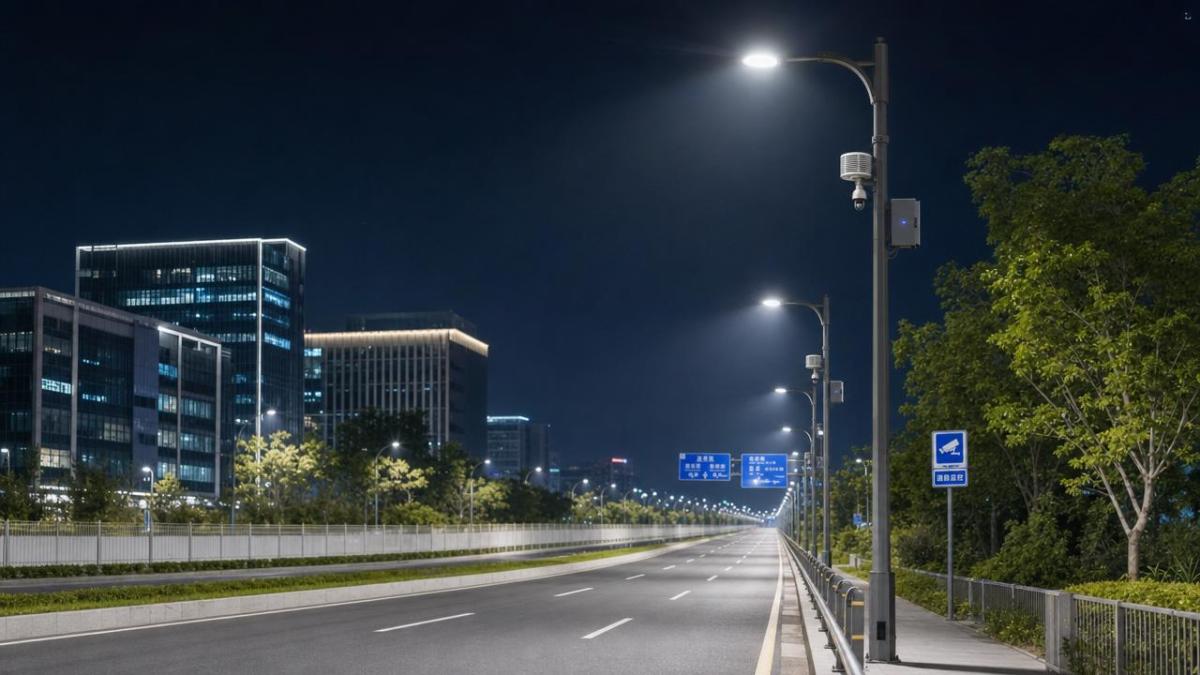
It also improves procurement discipline. Many smart streetlights projects look attractive on paper, yet miss ROI targets because dimming schedules were unrealistic, maintenance data was incomplete, or wireless coverage was assumed rather than tested.
In 2026, the strongest approach is not “buy smarter lights first.” It is “validate the return model first, then size the deployment around real operating conditions.”
Core smart streetlights ROI checklist
- Measure the baseline. Capture current energy use, lamp failure rates, truck rolls, outage response time, and pole inventory accuracy before estimating smart streetlights savings.
- Audit fixture condition. Separate poles, arms, wiring, and cabinets that need replacement, because hidden civil or electrical upgrades can erase expected ROI.
- Verify dimming potential. Model seasonal operating hours, traffic patterns, and roadway classes to confirm where adaptive lighting will deliver real savings without creating safety concerns.
- Check connectivity readiness. Test cellular, RF mesh, LoRaWAN, or hybrid coverage on actual streets, not vendor maps, to avoid unstable smart streetlights control performance.
- Evaluate the control platform. Confirm open protocols, API access, cybersecurity update paths, and dashboard usability so data from smart streetlights remains usable for years.
- Calculate maintenance reduction. Include longer LED life, driver reliability, remote diagnostics, and fewer night patrols when building the full smart streetlights ROI model.
- Estimate safety value carefully. Use local crash corridors, dark-spot complaints, and outage history to assess whether better lighting control can reduce incidents and liability exposure.
- Define sensor purpose first. Add cameras, air quality modules, or parking sensors only where there is a funded use case and a clear owner for the data.
- Review power quality and resilience. Examine voltage fluctuation, surge exposure, backup requirements, and extreme weather conditions that may shorten smart streetlights component life.
- Model total cost of ownership. Compare hardware, software licenses, installation, communications fees, warranty terms, and decommissioning costs across the full asset life.
- Test interoperability. Ensure smart streetlights can integrate with traffic systems, emergency response platforms, and city asset databases without custom rework at every upgrade.
- Set procurement safeguards. Require performance guarantees, spare parts availability, cybersecurity commitments, and service-level obligations before awarding large-volume contracts.
What to examine by deployment scenario
Dense urban corridors
In city centers, smart streetlights often support more than illumination. They may host traffic analytics, public Wi-Fi equipment, environmental sensing, or emergency call features. ROI therefore depends on multi-use value, not just lower kWh consumption.
Here, pole spacing, pedestrian activity, and data privacy rules need close review. A premium smart streetlights design only pays back when the city can actually use the network layer and manage the compliance burden.
Residential streets
On neighborhood roads, the strongest return usually comes from maintenance savings, remote outage detection, and scheduled dimming. Extra sensors may add cost without adding enough public value.
For these areas, smart streetlights should be judged against citizen complaints, repair backlog, and fixture uniformity. Simpler architectures often outperform feature-heavy systems over the long term.
Industrial zones and logistics roads
Roads serving freight yards, ports, warehouses, and plants need robust hardware. Dust, vibration, heavy vehicle movement, and irregular operating hours can change both lighting requirements and maintenance assumptions.
In these settings, smart streetlights ROI improves when fixture durability, ingress protection, surge resistance, and remote diagnostics reduce downtime in hard-to-service zones.
Parks, campuses, and mixed-use districts
These environments benefit from adaptive scenes, event scheduling, and occupancy-based dimming. However, returns depend on whether usage patterns are predictable enough to automate effectively.
Smart streetlights in public gathering areas should also be reviewed for glare control, visual comfort, and emergency override functions. Good optics can matter as much as connected controls.
Commonly missed factors that weaken ROI
Ignoring asset data quality
If the pole inventory is outdated, the financial model starts on weak ground. Missing fixture wattages, unknown circuit layouts, and inaccurate GIS records distort every smart streetlights savings estimate.
Overvaluing energy savings alone
Energy savings are important, but many smart streetlights projects gain more from reduced outages, lower patrol costs, and better maintenance planning. A narrow payback model can underrate real value or hide real cost.
Adding sensors without governance
Sensor-rich smart streetlights can create data ownership, privacy, and cybersecurity obligations. If retention rules, integration plans, and operating budgets are absent, the added technology becomes a liability.
Underestimating service contracts
Subscription fees, SIM charges, software renewals, and platform support can materially change long-term economics. Smart streetlights should be evaluated on full recurring cost, not hardware price alone.
Skipping pilot validation
A short pilot on representative streets reveals connectivity dead zones, citizen response, dimming acceptance, and installation complexity. Without that evidence, scaling smart streetlights becomes a high-risk assumption.
Practical steps to build a stronger business case
- Start with a 12-month baseline covering energy, failures, maintenance labor, and complaint logs.
- Segment streets by function so each smart streetlights profile matches real operating needs.
- Run pilot zones with clear KPI tracking for energy, outages, response time, and connectivity stability.
- Use scenario modeling for conservative, expected, and aggressive savings cases before budget approval.
- Require open standards and security update commitments in every smart streetlights specification.
- Tie expansion phases to measured results instead of assuming citywide performance from day one.
Summary and next action
The first question in 2026 is not whether smart streetlights are innovative. It is whether the planned system can produce reliable returns under local technical, financial, and operational conditions.
A disciplined checklist helps answer that question. By validating baseline costs, connectivity, maintenance savings, platform openness, and sensor purpose, cities can prioritize smart streetlights projects that are scalable, resilient, and defensible.
The most effective next step is to launch a structured pre-procurement assessment. Build the inventory, test the network, model total cost of ownership, and pilot a limited zone before committing to full deployment.
Recommended News