
Search News
Industry Portal
Hot Articles
What to Check Before Hiring an Access Control Installer
Time
Click Count
Why does the choice of an access control installer matter so much?
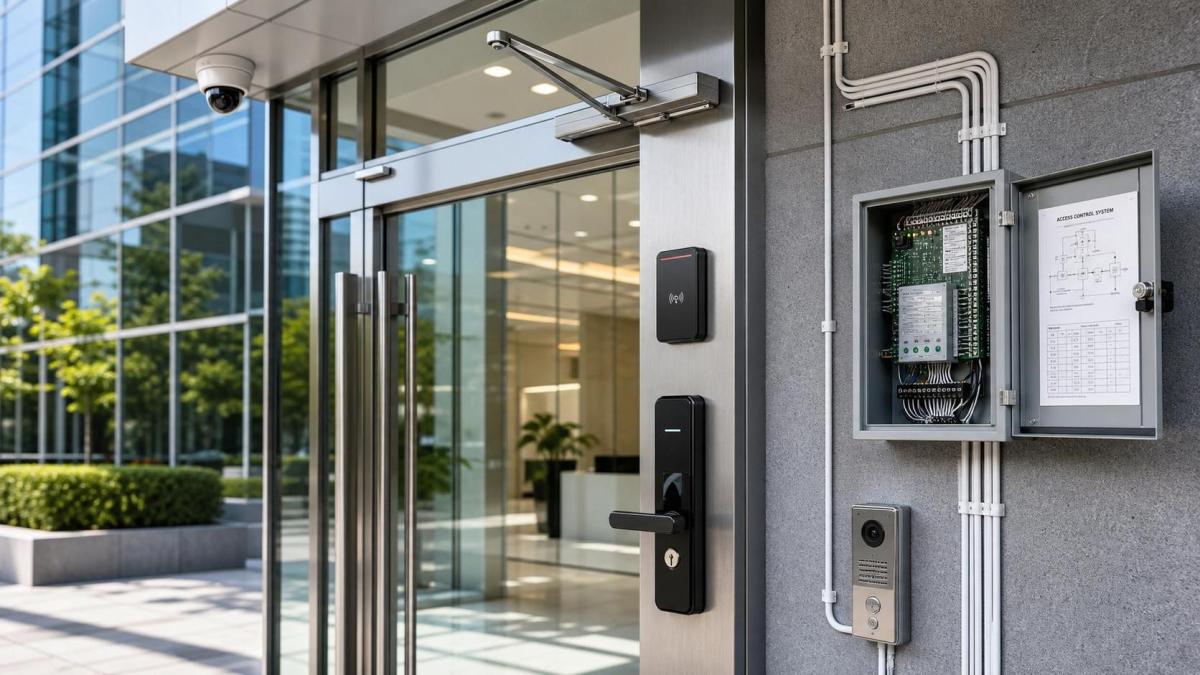
An access control system is not just readers, locks, and software. It is the working boundary between people, assets, data, and daily operations.
That is why hiring an access control installer deserves more attention than many teams first expect. A weak installer can leave hidden gaps.
Those gaps often appear later as badge failures, door misalignment, network conflicts, poor biometric performance, or compliance headaches during audits.
A capable access control installer looks beyond the device list. The real job includes door hardware, power design, cabling, life safety rules, software setup, and user workflows.
In commercial buildings, factories, campuses, and smart city projects, installation quality directly affects uptime, safety, and expansion cost.
SHSS often frames smart access as one part of a larger physical protection chain. A secure opening depends on strong hardware, reliable power, and correct system logic.
So the first practical question is not only, “Can this installer mount the equipment?” It is, “Can this installer deliver a dependable operating system for the doorway?”
What should you verify before shortlisting an access control installer?
Most problems can be avoided during prequalification. The best access control installer is usually the one with fewer assumptions and clearer documentation.
Start with credentials, but do not stop there. Certifications help, yet field experience and system thinking matter just as much.
- Manufacturer authorization for the brands being proposed.
- Experience with commercial or industrial access control installations.
- Knowledge of low-voltage standards, fire code coordination, and egress requirements.
- Ability to integrate video, intercom, alarms, elevators, and visitor systems.
- Clear commissioning, training, and support process after handover.
A useful shortcut is to ask for three recent projects that resemble your site conditions. Similarity matters more than a long but unrelated project list.
For example, a data room, a logistics warehouse, and a mixed-use tower demand different door behavior, credential logic, and fail-safe planning.
It also helps to see whether the installer understands biometric devices, not only card readers. Facial recognition and iris systems have stricter placement and privacy implications.
That is especially relevant in AIoT environments, where access control increasingly connects with analytics, edge devices, and centralized monitoring.
A quick screening table can keep the comparison grounded
Before asking for final pricing, compare each access control installer against operational criteria that affect long-term reliability.
How do you judge technical fit instead of just trusting the proposal?
This is where many access control projects drift off course. The quote may look complete, while the technical assumptions remain shallow.
A strong access control installer should ask detailed questions about openings, occupancy, security levels, traffic volume, and emergency behavior.
If the discussion stays at the reader model and software license count, that is usually not enough.
In practical terms, review these technical areas closely.
- Power architecture, battery backup, and cabinet layout.
- Lock type selection for each opening condition.
- Network topology, bandwidth, and cybersecurity controls.
- Biometric reader placement, lighting conditions, and user throughput.
- Interface points with elevators, turnstiles, gates, and visitor management.
Needle-moving questions are often simple. What happens during a power loss? What unlocks on fire alarm? How are anti-passback rules tested?
If the access control installer answers with clear sequences, not general promises, you are getting closer to a dependable partner.
SHSS regularly highlights this systems view across smart hardware categories. In access control, hardware strength and software intelligence only work when installation logic is equally disciplined.
Where do compliance and site risk usually get overlooked?
Compliance gaps rarely appear in the sales presentation. They show up during legal review, inspection, or after the system is already live.
That is why an access control installer should be able to discuss code, privacy, and operational risk in the same conversation.
For biometric projects, this point becomes sharper. Face or iris data may trigger stricter handling rules than standard card credentials.
A competent installer should clarify where data is stored, who can access it, how long it is retained, and whether consent or notices are required.
This matches the broader SHSS view that physical security now sits close to digital governance. A door event can also become a data event.
On the site side, door release behavior is another common blind spot. Incorrect fail-safe or fail-secure decisions can create safety conflicts.
There is also the human factor. Dust, vibration, weather exposure, forklift traffic, and shift changes can affect reader placement and hardware life.
For industrial and infrastructure settings, the access control installer should account for enclosure rating, cable protection, and maintenance access from day one.
Common mistakes that deserve early attention
- Choosing biometric readers without checking privacy obligations.
- Ignoring door condition and focusing only on software features.
- Underestimating after-hours support for critical entrances.
- Assuming future expansion will be easy without controller and license planning.
- Accepting incomplete testing before occupancy or system turnover.
What should you ask about cost, timeline, and post-install support?
Price matters, but the lowest quote from an access control installer can be expensive once rework, downtime, and late integration are added back.
A better way to compare proposals is to break total value into four parts: supply, installation, commissioning, and lifecycle support.
Ask whether the quote includes door interface relays, request-to-exit devices, power supplies, software setup, user enrollment, and acceptance testing.
The same goes for timeline. Equipment lead times, cable routes, frame preparation, and coordination with electricians or fire contractors often shape the schedule.
A realistic access control installer should identify these dependencies early, especially in retrofit buildings where hidden conditions are common.
Support deserves equal weight. Access control is not finished when the readers turn green. User permissions change, logs must be reviewed, and failed devices need replacement.
Useful support questions include response time, firmware update policy, spare stock, remote access method, and whether training is repeated after handover.
If the site is critical, define escalation paths in writing. That includes nights, weekends, and emergency door failures.
So how do you make the final hiring decision with confidence?
By this stage, the strongest access control installer is usually not the one with the most polished brochure. It is the one with the clearest operational answer set.
Look for evidence that the installer understands your opening types, risk profile, integration path, and expansion plan over several years.
Then confirm that the contract reflects those expectations. Scope, testing, training, support, and documentation should all be written down.
A practical final review can be kept simple.
- Match every critical opening to a defined hardware and release strategy.
- Verify integration points with other building and security systems.
- Confirm privacy and compliance responsibilities for credential data.
- Require commissioning records and operator training before sign-off.
- Set post-install support terms before the project starts.
When access control is treated as part of a wider security and hardware ecosystem, decisions tend to improve. That is the useful lesson behind the SHSS perspective.
Strong physical hardware, disciplined installation, and intelligent system design should reinforce each other, not operate as separate procurement items.
Before hiring any access control installer, map the site risks, list integration needs, and compare candidates against a written checklist. That step usually saves more than it costs.
Recommended News