
Search News
Industry Portal
Hot Articles
Maine Halts Large Data Centers Until 2027
Time
Click Count
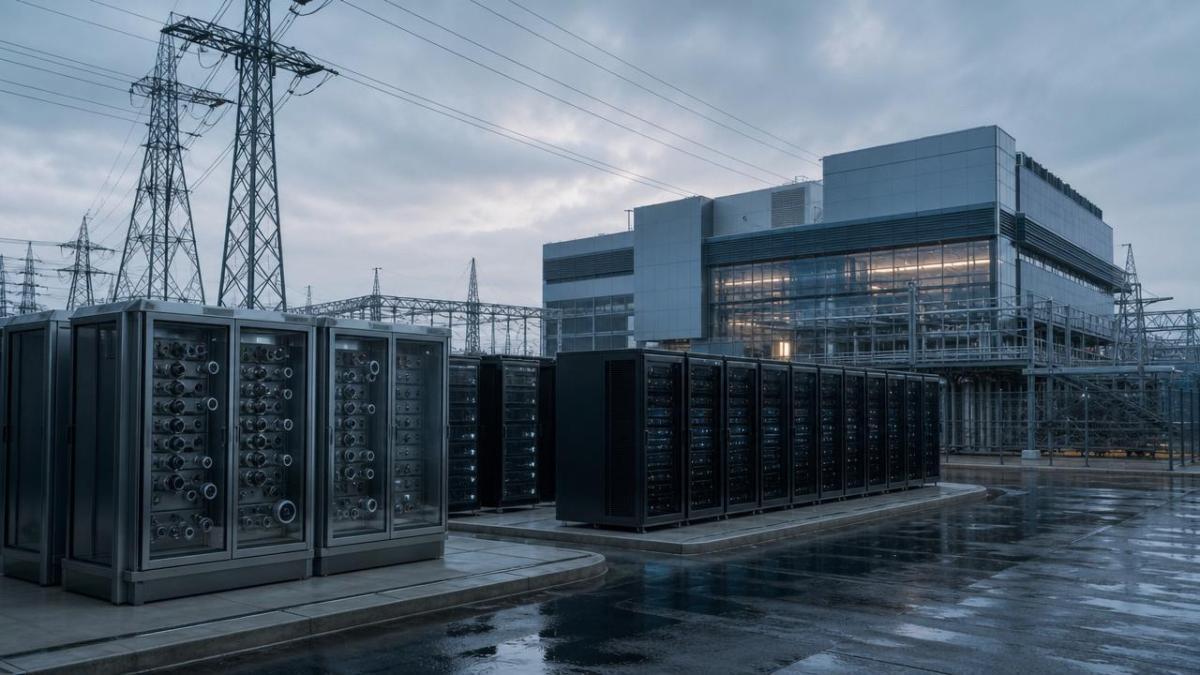
On April 14, 2026, Maine passed a bill that makes it the first U.S. state to bar new data centers with power demand above 20 megawatts until November 2027, as it evaluates the impact of AI infrastructure on the power grid and the environment. While the measure does not directly target hardware imports, it is highly relevant to exporters, buyers, and solution providers tied to localized computing deployment, including smart security systems, Biometric Locks, Cloud Security Gateways, and edge AI lighting controllers, because project timing and compliance adaptation may now face new constraints.
What Has Been Confirmed So Far
The confirmed information is limited but clear. Maine approved the bill on April 14, 2026, and the state has become the first in the United States to prohibit the construction of new data centers consuming more than 20 megawatts until November 2027. The stated purpose is to assess how AI-related infrastructure may affect grid capacity and environmental conditions. The measure does not directly regulate hardware imports, but the policy change creates an indirect pressure channel for products and systems that depend on local computing infrastructure.
Where the Pressure May Appear First
Projects tied to localized computing deployment
From an industry perspective, the most immediate sensitivity is likely to appear in solutions that rely on local computing capacity rather than simple device shipment alone. Smart security systems such as 3D facial recognition access control and Cloud Security Gateways may face slower deployment rhythms if supporting computing infrastructure is delayed or reassessed.
Chinese exporters of AI-enabled hardware
Analysis shows that Chinese suppliers exporting smart hardware to the U.S. may not face a direct import restriction from this measure, but they could encounter indirect policy transmission through customers' deployment schedules, specification changes, or added compliance review. This is especially relevant for suppliers of Biometric Locks, Cloud Security Gateways, and related intelligent hardware that are sold as part of broader AI infrastructure rollouts.
Buyers and channel-side planning
For buyers, distributors, and downstream integrators, the issue is less about whether a product can cross the border and more about whether the end-use environment remains aligned with the original implementation plan. If localized computing capacity becomes harder to expand in a specific market, purchasing pace, product mix, and delivery sequencing may all need adjustment.
What Companies Should Watch Now
Separate hardware trade from deployment dependency
What deserves closer attention is the difference between a rule that targets imports and a rule that affects deployment conditions. Companies should assess which product lines can still move under existing business logic and which ones depend heavily on local high-power data center expansion to achieve commercial rollout.
Track any follow-up wording or rule refinement
Observably, the current signal is important because the bill has a defined time horizon through November 2027 and is framed around evaluation of grid and environmental effects. Exporters, service providers, and procurement teams should continue monitoring whether later official wording changes the scope, interpretation, or practical compliance expectations around AI infrastructure projects.
Review delivery schedules and customer communication
For suppliers already serving U.S. customers, practical attention should focus on project timelines, documentation readiness, and communication with clients whose procurement plans are linked to localized computing resources. Delays in infrastructure readiness can translate into slower acceptance, revised installation timing, or requests for different technical configurations.
Recheck category exposure in sensitive applications
Products used in smart access control, cloud-connected security, and edge AI lighting control deserve a closer internal review because their business case may be more directly tied to local computing deployment assumptions. The key question is not only whether demand remains, but whether the original deployment path still fits the new policy environment.
How This Signal Should Be Read
Analysis shows that this development is better understood as a policy signal with operational implications rather than as a direct trade restriction. It does not establish a confirmed nationwide shift, and it does not by itself block hardware from entering the U.S. market. However, it does show that AI infrastructure is being examined through grid and environmental lenses, which can indirectly affect hardware suppliers whose products depend on localized compute expansion for full implementation.
Why the Industry Should Keep It in View
At this stage, it is more appropriate to understand the Maine measure as a meaningful but still evolving development. The immediate fact is the temporary halt on new high-power data centers in one state; the broader industry relevance lies in how such policy choices may reshape deployment tempo, compliance adaptation, and supply chain planning for AI-linked hardware and systems. For companies exposed to the U.S. market, the prudent reading is neither to overstate the impact nor to ignore it, but to treat it as a trigger for closer project-level risk review.
Basis of This Article
This article is based on the user-provided news title, event date, and event summary. For developments of this type, commonly relevant source categories may include official government announcements, company statements, industry association updates, authoritative media reporting, and standards-related documents. A specific official source link was not provided in the input, so the details should continue to be verified against later official disclosures. Ongoing attention should focus on any follow-up clarification of scope, implementation, and practical effects on AI infrastructure-related deployment.
Recommended News