
Search News
Industry Portal
Hot Articles
EU Rule Takes Effect for 3D Facial Recognition
Time
Click Count
From July 1, 2026, the EU has put EN IEC 63179:2026 into effect for 3D facial recognition terminals deployed in public spaces. The change brings new mandatory biometric liveness testing into the CE compliance path and directly affects manufacturers, OEM partners, exporters, procurement teams, and solution providers involved in access control, attendance, and security systems intended for the EU market. What deserves closer attention is that this is not only a technical standard update, but a market access requirement tied to customs clearance and product listing.
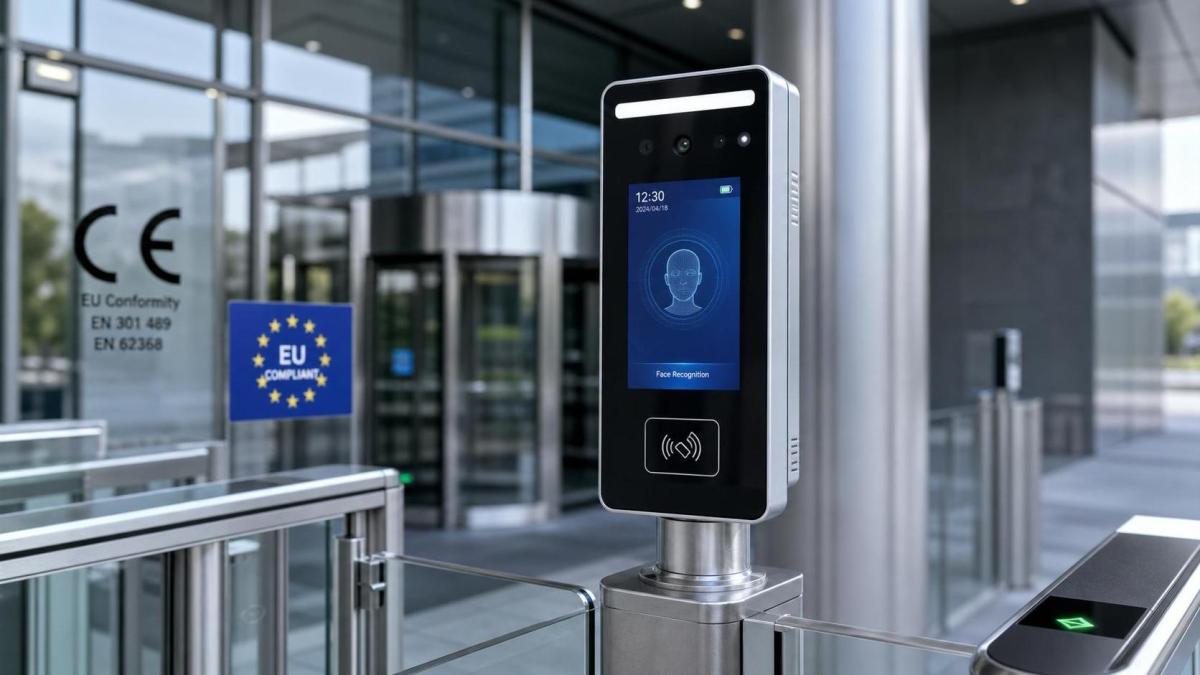
What the new requirement now covers
The confirmed change is that, as of July 1, 2026, the EU market formally implements EN IEC 63179:2026 for all 3D facial recognition terminals intended for deployment in public spaces, including access control, attendance, and security systems.
Under the information provided, the standard adds two required checks: a dynamic micro-expression disturbance test for depth maps and an infrared multispectral liveness penetration verification. The certification has also been incorporated into the CE marking compliance path.
The practical consequence stated in the event summary is clear: products without this certification will be barred from customs clearance and from being placed on sale. The requirement therefore creates a direct access condition for manufacturers and OEM partners exporting smart access control devices and smart building solutions to the EU.
Where the pressure points are likely to appear
Export-facing device suppliers
For exporters of 3D facial recognition terminals, the main impact is at the point of market entry. Because the new certification sits within the CE compliance route, affected companies need to pay closer attention to whether the target product scope includes public-space deployment and whether technical files, testing records, and conformity materials match the updated requirement. Analysis shows that shipment readiness is no longer only about hardware completion, but also about whether certification status can support customs and sales entry.
OEM and solution integration partners
OEM partners and providers of smart building or integrated access solutions may be affected even when they are not the original technology developer. Observably, if the end product offered into the EU includes covered 3D facial recognition functions for public-space use, the compliance burden can move upstream into specification alignment, model selection, and project documentation. This makes supplier qualification and product selection more sensitive in bid preparation and delivery planning.
Procurement and project delivery teams
Buyers, project contractors, and delivery teams may need to reassess product acceptance criteria for EU-facing projects. The reason is straightforward: a non-certified terminal is described as unable to clear customs or be listed for sale, which may affect procurement timing, replacement planning, and acceptance of substitute models. From an industry perspective, procurement teams should pay particular attention to whether product documentation explicitly reflects the required certification status before order confirmation.
Testing and compliance service links
Certification-related service providers and internal compliance teams are also likely to see workload shift toward the newly added liveness verification items. The provided information does not include execution detail or procedural timelines, so it would be premature to describe a settled operating model. Still, what deserves closer attention is whether companies have prepared the necessary test evidence and supporting technical materials for the updated CE path.
Practical issues companies should review now
Check whether product scope falls within the rule
Companies should first review whether their 3D facial recognition terminals are intended for public-space deployment in categories such as access control, attendance, or security systems. Analysis shows that product classification at the application level may become a key starting point for deciding whether the EN IEC 63179:2026 requirement applies to a specific model or project.
Revisit compliance files linked to CE marking
Because the certification is stated to be part of the CE compliance path, manufacturers and exporters should closely review technical documents, test reports, declaration materials, and other compliance files tied to EU market entry. The input does not provide a detailed document list, so this should be treated as a compliance review priority rather than as a confirmed checklist.
Reassess delivery schedules and order commitments
For ongoing EU business, companies should pay attention to whether certification readiness could affect shipment timing, customs processing, or product listing. Observably, where a project depends on covered facial recognition terminals, delivery planning and customer commitments may need adjustment if certification status is incomplete.
Watch for changes in tenders and supplier qualification language
It is more appropriate to understand the current update as something that may also influence procurement specifications and supplier screening. Companies involved in bids, framework agreements, or OEM supply should monitor whether tender documents, customer qualification requests, or technical specifications begin to reference EN IEC 63179:2026 or the two added liveness testing items more explicitly.
Why this looks like an execution signal, not just a technical update
Analysis shows that the most important feature of this development is its connection to enforceable market access. The event summary does not describe a proposal, consultation, or draft stage; it describes a standard already in force from July 1, 2026 and linked to CE compliance, customs clearance, and product listing. For that reason, it is more appropriate to understand this as a rule now entering execution rather than as a distant policy direction.
At the same time, observation should remain cautious. The input does not provide further detail on enforcement practice, transition handling, documentation thresholds, or market feedback. That means companies still need to watch how the requirement is interpreted in procurement documents, certification practice, customs-related review, and project acceptance across the EU-facing business chain.
How the industry may need to read this development
This update should be read as a concrete compliance threshold for covered 3D facial recognition products entering the EU market, especially those used in public-space access, attendance, and security scenarios. Its significance lies less in general policy signaling and more in its immediate connection to certification, trade access, and sales eligibility.
From an industry perspective, the rational conclusion is that the change already matters at the operational level, but some aspects of implementation still need continued observation. Companies should therefore treat it as a live compliance requirement while continuing to monitor execution language, supporting documentation expectations, and market-side responses.
Basis of this article and points that still require verification
This article is generated from the user-provided news title, event date, and event summary. The specific official source link was not provided in the input, so it still needs to be verified through subsequent review.
For this type of development, source categories commonly relevant include official notices, regulatory publications, customs or trade authority information, industry association updates, standards organization documents, and reporting by authoritative media. Because no specific official release link was supplied here, later verification should continue to focus on implementation details, certification interpretation, tender document changes, industry feedback, and how companies are carrying the requirement into actual export and delivery practice.
Recommended News