
Search News
Industry Portal
Hot Articles
3D Facial Recognition vs Traditional Biometrics: Accuracy, Spoofing, and Use Cases
Time
Click Count
3D Facial Recognition vs Traditional Biometrics: Accuracy, Spoofing, and Use Cases
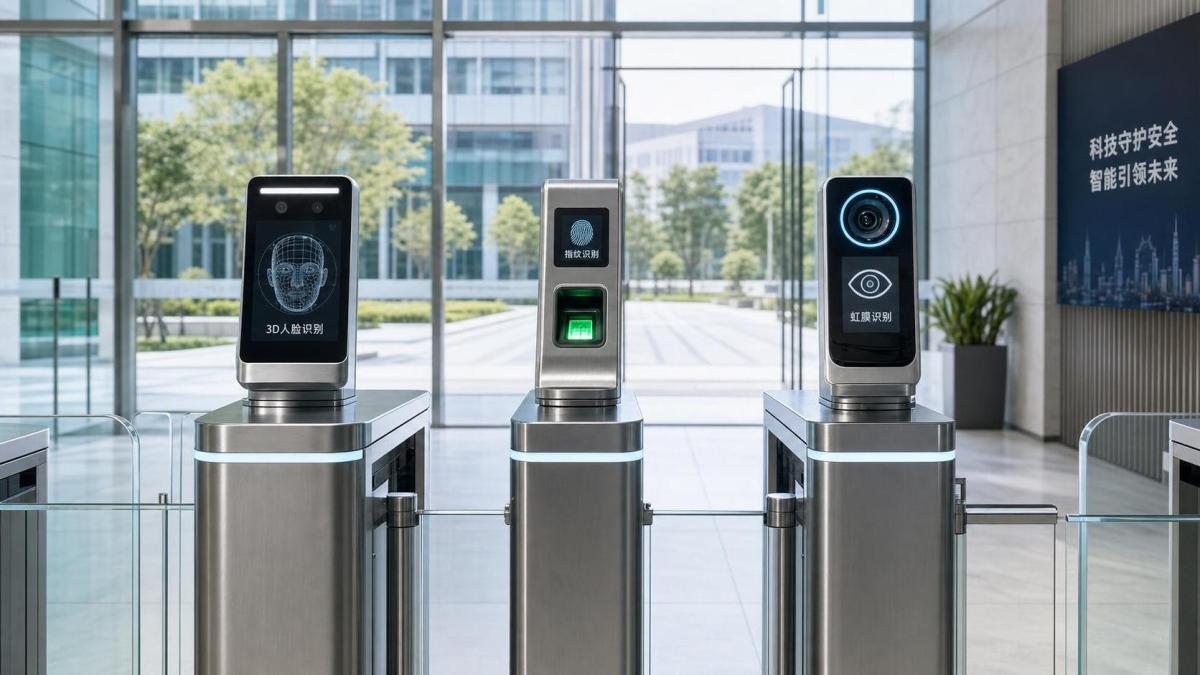
As enterprises reassess access control and identity assurance, 3D facial recognition is moving from innovation to selection priority.
The shift is not only about touchless entry. It is about measurable risk reduction, faster throughput, and stronger fraud resistance.
Traditional biometrics still play an important role. Fingerprint, iris, vein, and voice systems remain common across offices, factories, and critical sites.
Yet more buyers now ask whether 3D facial recognition delivers better real-world performance than older methods.
That question matters most when decisions involve mixed traffic levels, compliance exposure, and long-term operational cost.
In practical terms, the right answer depends on accuracy targets, spoofing threats, user friction, and site conditions.
This comparison breaks down where 3D facial recognition clearly wins, where traditional biometrics still fit, and how to choose with confidence.
Why the market is re-evaluating biometric choices
Recent changes in workplace design are driving the review. More sites need secure entry without slowing people down.
Hybrid operations also create new identity gaps. A badge alone no longer proves who is physically present at a restricted point.
At the same time, attack methods are getting cheaper. High-resolution photos, silicone fingerprints, and deepfake-assisted impersonation are easier to access.
This is where 3D facial recognition stands out. It adds depth sensing and liveness verification beyond flat image matching.
For many organizations, that means fewer false accepts without forcing users into slower, more intrusive workflows.
How 3D facial recognition differs from traditional biometrics
Traditional biometrics capture a single physical or behavioral trait. The system then compares a live sample against a stored template.
Fingerprint systems map ridge details. Iris systems analyze unique eye patterns. Voice tools focus on spectral and behavioral markers.
By contrast, 3D facial recognition builds a depth-aware facial model. It often uses structured light, time-of-flight, or stereo vision.
That extra layer matters. A printed face may match color and shape, but it usually fails depth consistency and liveness checks.
In business settings, this creates a practical balance. Users get touchless authentication while operators gain better anti-spoofing control.
- Fingerprint: mature, low device cost, sensitive to dirt, gloves, and worn skin.
- Iris: highly accurate, strong for high-security zones, more expensive and sometimes less comfortable.
- Voice: useful for remote workflows, weaker in noisy spaces and vulnerable to replay attacks.
- 3D facial recognition: fast, contactless, scalable, and usually stronger against presentation attacks.
Accuracy: what matters beyond lab numbers
Accuracy claims can be misleading when taken out of context. The real test is performance under operational stress.
For example, a system may look excellent in a controlled demo. Results can change under backlighting, heavy foot traffic, or shift changes.
3D facial recognition usually performs better than 2D face systems in variable lighting. Depth data reduces dependence on visible texture alone.
It also helps when users wear glasses, move quickly, or approach from slightly different angles.
Traditional biometrics can still beat it in very specific conditions. Iris remains exceptionally precise in tightly managed environments.
Fingerprint remains dependable where hands are clean and enrollment quality is high. That is often true in office environments, less so in industrial ones.
A stronger evaluation method is to compare metrics in context:
Spoofing resistance: where 3D facial recognition gains ground
Spoofing resistance is now a top selection factor. Convenience means little if an attacker can bypass the sensor cheaply.
Traditional biometric systems face different attack patterns. Fingerprints can be copied. Voice can be replayed or synthesized. Photos can fool weak face systems.
3D facial recognition reduces this risk through depth validation, micro-movement analysis, and infrared liveness detection.
That does not make it invulnerable. High-end masks and model-specific attacks still exist. The difference is attack cost and success probability.
From a procurement view, stronger spoofing resistance means fewer guard interventions, less incident review, and lower downstream liability.
In higher-risk sites, the best practice is still layered security. Pair 3D facial recognition with mobile credentials, PIN, or access-zone rules.
- Ask vendors how liveness is tested against masks, screens, and printed media.
- Request false acceptance data under real traffic conditions, not only lab certification.
- Check whether updates improve spoof detection without replacing hardware.
Use cases: where each biometric approach fits best
Not every facility needs the same biometric architecture. The strongest choice depends on traffic, threat level, and user behavior.
3D facial recognition works especially well in entrances where speed and low friction are both critical.
Typical examples include headquarters lobbies, commercial towers, smart campuses, logistics hubs, and data center perimeters.
It is also valuable in industrial facilities. Workers may wear gloves, carry tools, or move through checkpoints in continuous waves.
Traditional biometrics still make sense in narrower scenarios. Fingerprint can suit low-cost indoor deployments with controlled users.
Iris is ideal for highly restricted labs, server rooms, and regulated zones where user volume is lower but precision must stay extremely high.
- Choose 3D facial recognition for touchless flow, anti-spoofing, and multi-door scalability.
- Choose fingerprint for budget-sensitive, low-contamination indoor use.
- Choose iris for tight, high-security checkpoints with trained users.
- Choose multimodal systems when threat level and compliance pressure are both high.
Cost, integration, and long-term decision factors
Upfront device cost is only one part of the decision. Operational impact often matters more over three to five years.
3D facial recognition may cost more than basic fingerprint readers at first. Still, it can lower labor friction and speed up throughput.
That becomes meaningful in large buildings, shift-based manufacturing, and distributed sites with many daily verifications.
Integration is another major factor. Buyers should check compatibility with VMS, ACS, visitor management, and edge processing requirements.
Data governance also deserves close review. Biometric storage, retention policy, consent flow, and regional privacy rules can shape deployment design.
In many cases, the strongest option is local template processing with encrypted transmission and role-based administrative access.
For evaluators, a practical shortlist should include these questions:
- Can the system keep recognition speed high during peak entry times?
- Does 3D facial recognition work reliably in the site’s lighting and weather conditions?
- How strong is anti-spoofing against printed, replayed, and mask-based attacks?
- Will integration require custom middleware or support current infrastructure directly?
- How will privacy, retention, and audit requirements be managed over time?
A practical selection framework
If the goal is modern access control with strong security and fast passage, 3D facial recognition is often the leading option.
Its main value comes from depth-aware matching, contactless convenience, and stronger resilience against common spoofing methods.
Traditional biometrics are not obsolete. They remain effective when deployment conditions are stable and the use case is narrowly defined.
Still, for many current projects, the bigger signal is clear. Security decisions now favor systems that combine trust, speed, and adaptability.
A sensible next step is to run a pilot using real traffic, real lighting, and real exception cases.
That approach quickly shows whether 3D facial recognition delivers the operational gains and risk reduction the business actually needs.
When the decision must balance accuracy, spoofing resistance, and daily usability, evidence from a live pilot usually points to the right investment.
Recommended News