
Search News
Industry Portal
Hot Articles
Fastener Application Guide for Load and Vibration
Time
Click Count
The fastener application guide matters because load is rarely static in real systems. Bolts, nuts, washers, and threaded joints are expected to hold alignment while machines start, stop, shake, heat up, cool down, and age. In industrial buildings, smart equipment enclosures, lighting frames, security hardware, and heavy support structures, vibration can loosen a joint long before visible damage appears. That is why a reliable fastener application guide is not just a design note, but a practical basis for safety, uptime, and mechanical confidence.
Why vibration changes the fastening decision
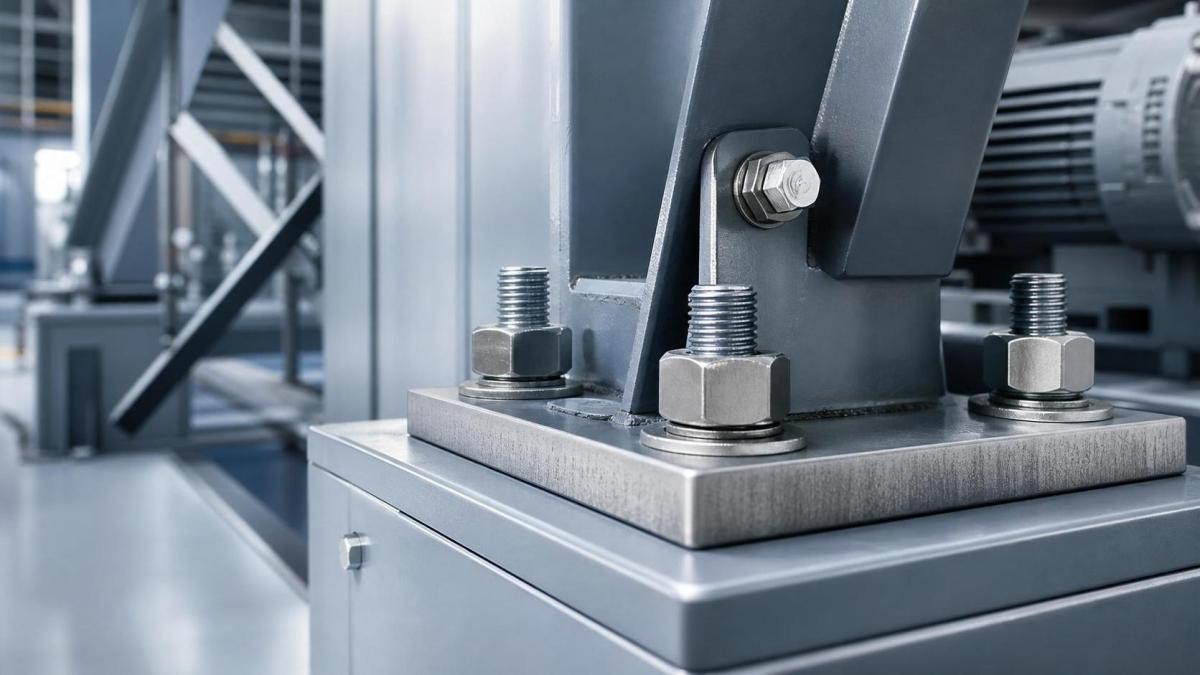
This is especially relevant in the SHSS context, where industrial brushless tools, high-strength hardware, smart lighting supports, and access-control housings all rely on stable connections. The system may appear simple, yet the demand on the joint is often severe. A fastening choice that ignores vibration can create maintenance burden, downtime, and hidden safety risk.
What a good fastener choice really balances
A practical fastener application guide always weighs several variables together. Material strength matters, but so do preload retention, thread geometry, installation method, and environmental exposure. In many projects, the real challenge is not selecting the strongest part on paper; it is selecting the joint that keeps its clamp load after repeated dynamic cycles.
Thread engagement length, surface finish, lubrication condition, and washer strategy all influence performance. So does the difference between tensile load and shear load. A fastener can look overdesigned in tension and still underperform if shear, bending, or transverse vibration dominates the assembly.
Where the real risk shows up
The most common failure mode is gradual, not sudden. A joint may pass inspection after installation, then drift out of spec after weeks of operation. That is why the fastener application guide should be read as a lifecycle tool, not a one-time selection sheet. It helps identify which parts need locking features, which need corrosion protection, and which need higher clamp consistency rather than merely a higher grade number.
In smart hardware and industrial infrastructure, that distinction is critical. A lighting mast exposed to wind loading, a security frame subject to repeated door slam vibration, or a tool housing with impact pulses all need different fastening logic. The same is true for equipment racks, metal enclosures, conveyors, HVAC modules, and modular construction joints.
Common scenarios to compare
- Structural joints: prioritize stable preload and fatigue resistance.
- Equipment frames: prioritize anti-loosening behavior and service access.
- Outdoor hardware: prioritize corrosion resistance and long-term clamp retention.
- Security enclosures: prioritize tamper resistance and repeatable assembly quality.
How to read the fastener data with more discipline
A strong fastener application guide does not stop at ultimate strength. It asks whether the joint can preserve preload under real load paths. That means checking torque-tension behavior, thread fit, coating effects, and service temperature. It also means asking whether the joint will be assembled consistently in production, because a theoretically perfect design can fail if installation scatter is too wide.
For technical evaluation, three questions are especially useful. Can the fastener maintain clamp force after vibration? Can the joint tolerate repeated load reversal without fatigue damage? Can the material and finish survive the surrounding environment without rapid degradation? These questions keep the discussion grounded in performance rather than catalog language.
This is where SHSS-style intelligence becomes practical. A portal centered on high-strength hardware, industrial tools, and smart city systems can connect fastening behavior with broader operational goals: stable installation, lower maintenance frequency, and better asset reliability. In that sense, the fastener application guide is part of a larger engineering chain, not an isolated purchasing decision.
Practical checks before final selection
Before locking in a choice, it helps to verify a few points against the real use case. The goal is to avoid over-specifying where the risk is low, while preventing under-specification where vibration is unavoidable.
- Match the fastener grade to the actual load path, not the nominal part size.
- Confirm whether vibration is continuous, intermittent, or impact-driven.
- Check whether locking features are needed for the service interval.
- Account for corrosion, temperature cycling, and installation variability.
- Review whether field access will allow retorque or inspection.
In many cases, the best answer is not a single “strongest” fastener. It is a fastening system that combines correct geometry, stable preload, and predictable assembly behavior. That is the practical value of a fastener application guide for load and vibration.
Turning guidance into a usable decision process
A useful workflow starts with the load environment, then moves to joint behavior, then to installation control. After that, environmental exposure and maintenance access should be reviewed. This sequence keeps the evaluation focused on performance over the full operating life, not just the first test result.
For projects connected to construction, industrial equipment, smart lighting, or access hardware, that discipline pays off quickly. Stable joints reduce rework, protect surrounding components, and support safer operation. More importantly, they give a clearer basis for comparison when different fastening options look similar on paper.
If the next step is evaluation, start by mapping load type, vibration level, and exposure conditions, then compare fastening options against those three variables. That approach keeps the fastener application guide grounded in real use, and it leads to choices that hold up where it matters most.
Recommended News