
Search News
Industry Portal
Hot Articles
Aerospace Hardware Selection: Fastener Failure Risks to Avoid
Time
Click Count
In aerospace hardware selection, even a small fastener mistake can trigger costly fatigue cracks, vibration loosening, or catastrophic structural failure. For technical evaluators, understanding material compatibility, load paths, corrosion exposure, and certification limits is essential to reducing risk. This article highlights the fastener failure risks to avoid, helping you make safer, more reliable decisions in demanding aerospace applications.
Why aerospace hardware failures start long before assembly
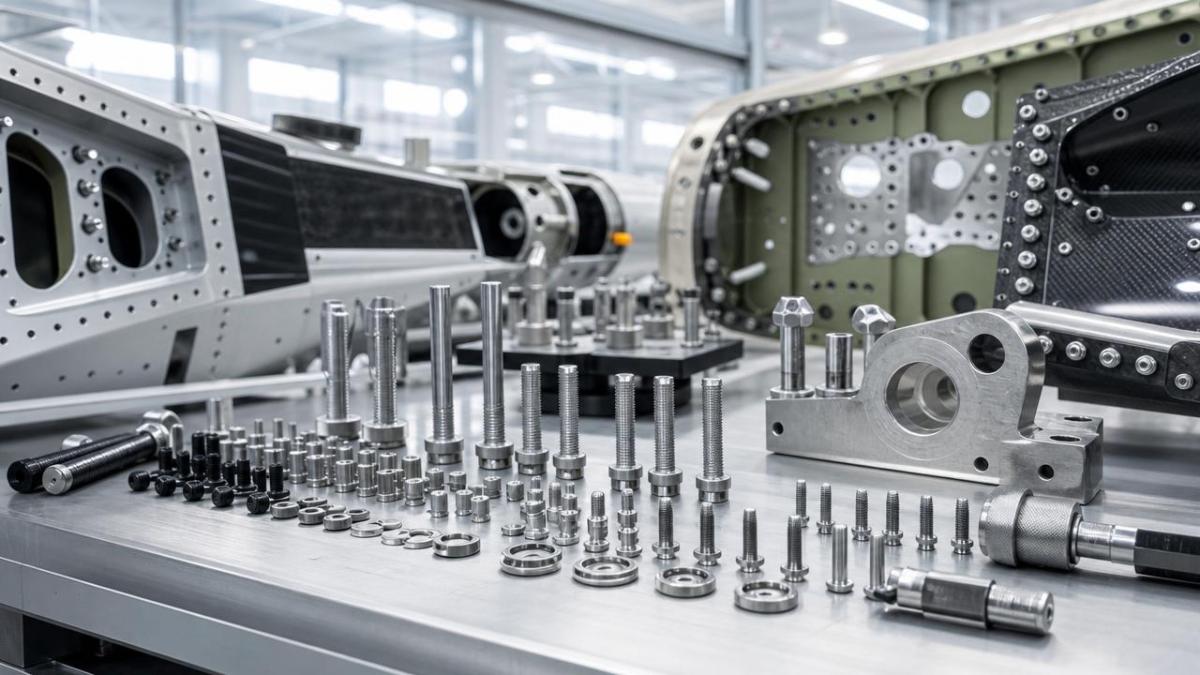
In most aerospace programs, fastener failure is rarely caused by one dramatic event. It usually begins earlier, during specification, sourcing, drawing review, or installation planning. That is why aerospace hardware evaluation must go beyond part dimensions and nominal strength.
Technical evaluators often work under tight schedules, incomplete field data, and mixed supplier documentation. In that environment, a bolt, rivet, nut, insert, or locking element can look compliant on paper while still carrying hidden fatigue, galling, corrosion, or traceability risks.
For SHSS, high-strength fasteners are not isolated commodities. They are load-transfer interfaces that connect manufacturing quality, maintenance reliability, and safety-critical performance. In aerospace hardware, the consequences of weak evaluation can propagate across structure, tooling, certification, and lifecycle cost.
- A material mismatch can accelerate galvanic corrosion and reduce service life long before visible damage appears.
- An unsuitable locking method can cause preload loss under vibration, thermal cycling, or repeated maintenance removal.
- Poor traceability can block qualification review, delay acceptance, and increase audit exposure during delivery.
Which fastener failure risks matter most in aerospace hardware selection?
The fastest way to improve aerospace hardware decisions is to focus on failure modes instead of catalog claims. When evaluators classify risk by mechanism, they can compare options more accurately across airframe, engine-adjacent, cabin, electronic enclosure, and ground-support applications.
The table below summarizes common fastener failure risks that frequently appear during aerospace hardware review, sourcing, and service planning.
A key lesson for aerospace hardware evaluation is that failure risks interact. For example, preload loss can increase micro-motion, and micro-motion can accelerate fretting and fatigue initiation. A strong material alone does not eliminate joint risk if installation, coating, and structural interface are poorly matched.
Red flags technical evaluators should not ignore
- Supplier drawings show incomplete material condition, finish, or heat-treatment references.
- Torque values are copied from general industrial practice rather than validated for the target joint.
- The selected aerospace hardware lacks clear lot traceability or supporting inspection records.
- Joint design assumes static load, while service conditions involve high vibration, thermal cycling, or pressure pulses.
How to judge material compatibility in aerospace hardware
Material compatibility is often the first hidden risk. In aerospace hardware, common choices such as alloy steel, stainless steel, titanium alloy, aluminum alloy, and nickel-based materials each bring trade-offs in strength, weight, corrosion behavior, conductivity, and installation response.
Technical evaluators should never approve fasteners by strength class alone. They must consider the fastener, the clamped materials, the coating system, the local environment, and service access. The correct question is not “Which is strongest?” but “Which combination stays reliable in this joint over time?”
The comparison table below helps structure material selection decisions for aerospace hardware in realistic engineering conditions.
For technical evaluators, material choice should be linked directly to joint environment. Marine air exposure, de-icing chemicals, condensation pockets, composite interfaces, and engine-area temperature spikes all change what “safe” aerospace hardware means in practice.
What to verify before approving a material pair
- Map the full joint stack, including washers, inserts, sleeves, sealants, and nearby conductive surfaces.
- Review whether the environment includes salt fog, trapped moisture, hydraulic fluid, or temperature swings.
- Check if the finish or coating is part of the corrosion-control strategy or only a manufacturing convenience.
- Confirm whether maintenance removal and reinstallation will increase galling or coating damage risk.
What load path and installation mistakes cause hidden failure?
Aerospace hardware selection often fails when the fastener is judged separately from the joint load path. A premium fastener can still underperform if the hole is oversized, the grip length is wrong, the clamp-up is uneven, or the installation method does not achieve the intended preload.
This is especially relevant for technical evaluators comparing alternatives under schedule pressure. A substitute part may match thread size and tensile value, yet still alter shear transfer, bearing pressure, head seating, or tool access. Those differences matter in fatigue-sensitive assemblies.
Frequent installation-related causes of aerospace hardware failure
- Incorrect grip length leaves threads inside the shear plane and concentrates stress where it should be smooth.
- Uncontrolled torque ignores friction variation from coatings, lubricants, or surface condition, causing preload scatter.
- Washer omission or wrong bearing surface causes local embedment and preload relaxation after installation.
- Hole quality problems such as burrs, poor alignment, or surface damage initiate crack growth under cyclic loading.
- Reused locking elements may no longer deliver reliable prevailing torque or retention performance.
SHSS recommends evaluating aerospace hardware through the broader fastening system: tool capability, installation consistency, operator access, and inspection method. This reflects the same systems mindset used across advanced industrial hardware, where fastening quality depends on both component design and execution discipline.
Which standards and documentation should technical evaluators check?
In aerospace hardware procurement, documentation quality can be as important as mechanical performance. Even a technically suitable fastener can become a liability if records do not support conformity review, source control, or end-use compliance.
The exact standard set depends on platform, geography, and customer requirements, but evaluators typically review drawing references, material certifications, process controls, dimensional inspection, lot traceability, and quality management evidence.
The following table offers a practical checklist for aerospace hardware compliance review.
A technical evaluator does not need every supplier to look identical, but the review logic should be consistent. Missing documentation is not just an administrative gap. In aerospace hardware, it can hide process drift, unauthorized substitution, or unclear accountability.
Practical compliance questions during sourcing
- Is the fastener manufactured to a recognized aerospace drawing or customer-controlled specification?
- Are coating and heat-treatment processes traceable to approved processors when required?
- Can the supplier support first article, dimensional reports, or sample validation when requested?
- Do the shipping labels, lot records, and certificates align without ambiguity?
How should technical evaluators compare aerospace hardware options under budget pressure?
Price pressure often leads teams to compare aerospace hardware as if it were standard industrial stock. That is a risky shortcut. A lower unit cost may create higher inspection cost, more installation rejects, longer qualification cycles, or greater maintenance burden.
The better method is total decision cost. That includes unit price, certification support, lead time reliability, installation consistency, service-life risk, and replacement impact. In safety-sensitive sectors, the “cheapest” fastener frequently becomes the most expensive choice after integration.
A simple procurement scoring model
- Assign a weighted score for structural fit: load path, environment, geometry, and maintenance access.
- Score documentation strength: certification package, lot traceability, and inspection transparency.
- Score execution risk: installation sensitivity, tooling demand, and field replacement difficulty.
- Add commercial factors: lead time, MOQ, sample availability, and continuity of supply.
This is where SHSS brings value beyond product listing. Our cross-disciplinary view of high-strength hardware, industrial tools, and safety-critical operating environments helps technical teams connect fastener selection with the realities of assembly torque, operator handling, inspection checkpoints, and lifecycle reliability.
Common misconceptions about aerospace hardware selection
“If the strength is higher, the fastener is safer.”
Not always. Higher strength can reduce ductility, change failure behavior, or require tighter process control. In some joints, a balanced combination of preload stability, corrosion resistance, and fatigue performance is more important than maximum tensile value.
“A direct dimensional substitute is acceptable.”
Dimensional similarity does not guarantee equivalent aerospace hardware performance. Head geometry, grip range, thread form, finish thickness, and locking behavior can all change how the joint carries load and how the part behaves in service.
“Corrosion only matters in external exposure.”
Internal cavities, trapped condensation, fluid ingress, and inaccessible maintenance zones can be just as harmful. Hidden corrosion is often more dangerous because it progresses without immediate visual detection.
“Documentation can be completed after urgent delivery.”
That approach creates avoidable program risk. For aerospace hardware, late paperwork can stall incoming inspection, trigger supplier escalation, or prevent release into controlled production flow.
FAQ: what technical evaluators ask most about aerospace hardware
How do I choose between titanium and stainless aerospace hardware?
Start with the joint objective. If weight reduction is critical, titanium may justify its cost, but you must manage galling and galvanic interaction carefully. If corrosion resistance and procurement simplicity are more important, stainless may be more practical, provided the required strength and preload consistency are verified.
What should I prioritize when lead time is short?
Do not sacrifice traceability or process clarity. First confirm whether a qualified equivalent exists within the approved specification envelope. Then review sample availability, certificate completeness, and installation compatibility. Short lead time is valuable only when the aerospace hardware can still pass receiving and integration checks.
Which aerospace hardware applications need the closest review?
Pay extra attention to joints exposed to cyclic vibration, thermal gradients, dissimilar metals, pressure boundaries, or difficult maintenance access. Engine-adjacent zones, flight-critical structure, composite interfaces, and removable inspection panels often deserve deeper evaluation.
Can standard industrial fasteners ever replace aerospace hardware?
Only if the engineering authority explicitly allows it and the application is non-critical. In most aerospace-related uses, the requirement is not just nominal strength. It includes documentation, process control, repeatability, and service behavior that general industrial hardware may not provide.
Why choose us for aerospace hardware evaluation support
SHSS supports technical evaluators who need more than a catalog comparison. We connect high-strength fastener intelligence with real-world assembly tools, structural loading logic, compliance review, and industrial safety expectations. That broader perspective helps reduce selection blind spots before they become quality incidents.
If you are reviewing aerospace hardware for a new project, a substitute part, or a risk-sensitive procurement package, you can consult us on specific decision points rather than generic product claims.
- Parameter confirmation for material, finish, strength, grip range, and locking method.
- Selection support for vibration-prone, corrosion-exposed, or weight-sensitive aerospace hardware applications.
- Lead time and supply discussion for samples, pilot quantities, and repeat procurement planning.
- Documentation review support covering traceability, certification expectations, and incoming inspection focus points.
- Quotation communication for customized fastener needs, alternative comparison, and project-based sourcing evaluation.
When aerospace hardware must perform under vibration, thermal stress, and strict compliance pressure, the right choice begins with the right questions. SHSS helps technical teams ask those questions early, compare options with engineering discipline, and move toward safer, more reliable fastening decisions.
Recommended News