
Search News
Industry Portal
Hot Articles
Lighting Application Solutions for Lower Energy Use
Time
Click Count
Lighting application solutions start with operational reality
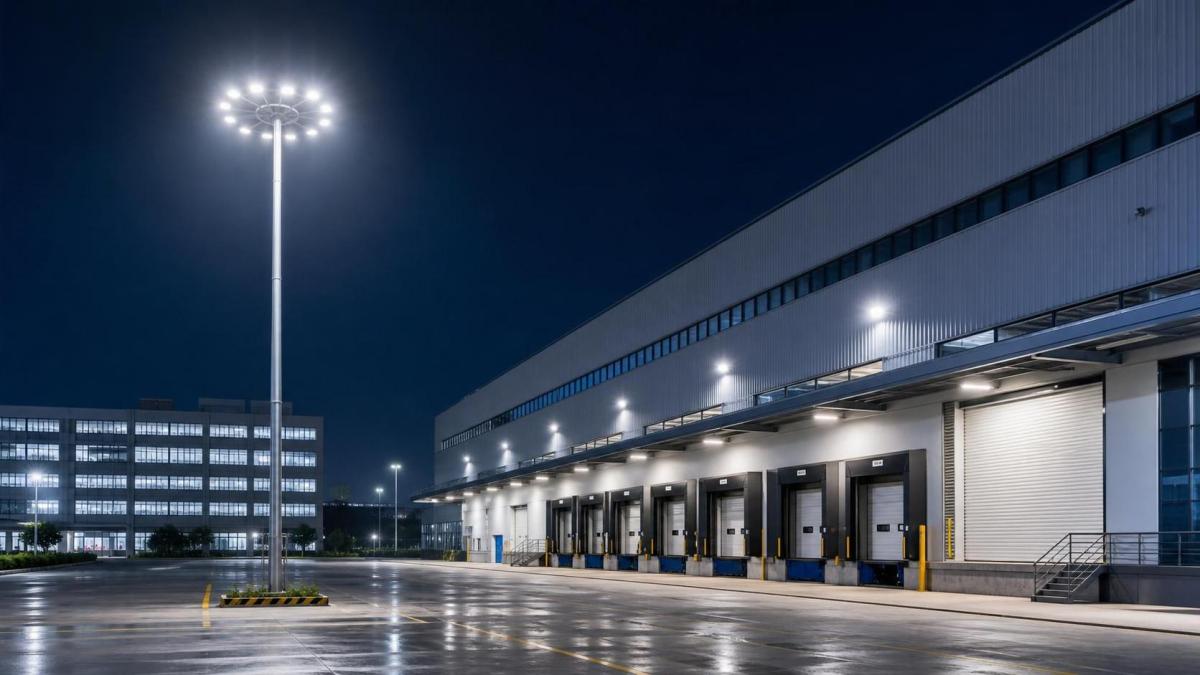
Lighting application solutions now shape energy strategy, maintenance planning, and space performance at the same time.
In mixed-use industrial, commercial, and civic environments, the best result rarely comes from choosing the highest lumen package alone.
The better approach is to read the site first.
Operating hours, occupancy patterns, ceiling height, daylight exposure, control compatibility, and safety requirements all change the answer.
That is why lighting application solutions for a warehouse, a retail floor, a corridor network, and a smart city street should never be treated as interchangeable.
Within the SHSS view of smart hardware ecosystems, lighting is not an isolated category.
It connects with AIoT controls, security infrastructure, building uptime, and cost recovery models over years, not weeks.
When lighting application solutions are planned this way, lower energy use becomes a measurable outcome rather than a hopeful claim.
Different sites ask different questions before fixtures are selected
In actual projects, demand differences usually come from how the space is used, not from industry labels alone.
A logistics aisle needs visual uniformity and sensor discipline.
A school corridor needs comfort, reliability, and simple scheduling.
A transport hub may need lighting application solutions that support surveillance image quality through the night.
Even within one facility, demand changes by zone.
Loading areas, offices, emergency exits, and perimeter paths rarely share the same control logic or dimming profile.
This is where many upgrades lose value.
Teams standardize hardware too early, then spend more later solving glare, under-lighting, false sensor triggers, or network incompatibility.
A practical comparison of scenario differences
This kind of comparison makes lighting application solutions easier to evaluate before capital is committed.
Where industrial and logistics sites usually gain the fastest savings
Industrial sites often present the clearest case for lower energy use because lighting hours are long and the baseline is measurable.
Even so, not every factory should follow the same smart lighting formula.
Assembly zones may need steady illuminance for precision work.
Storage zones can accept more aggressive dimming when occupancy is intermittent.
In facilities where SHSS-style automation thinking already supports tools, access systems, and uptime planning, lighting application solutions work best when tied to operating data.
Sensor placement matters more than many specifications suggest.
High racks can block detection angles.
Forklift routes can create false occupancy patterns.
Dust, heat, and vibration can shorten driver life if enclosure ratings and thermal design are ignored.
A common mistake is upgrading fixtures but leaving old circuit logic untouched.
That usually limits dimming flexibility and weakens the return on smart controls.
Commercial interiors need balance, not just maximum efficiency
In offices, healthcare waiting areas, education spaces, and retail floors, energy reduction still matters, but visual comfort changes the evaluation.
Lighting application solutions here influence attention, perceived quality, and how long fixtures remain acceptable before redesign pressure appears.
Lower wattage alone does not guarantee a better outcome.
If glare increases, if color consistency drifts, or if controls become annoying, occupants override the system and savings disappear.
More reliable lighting application solutions in these settings usually include three judgments.
- Match color temperature to activity instead of using one fixed tone across every zone.
- Use occupancy control with sensible delay times, especially in meeting rooms and restrooms.
- Keep manual override simple so users do not fight the automation.
This is also where interoperable protocols such as DALI or Zigbee earn their value.
They make later tuning easier when layouts, tenancy, or business hours change.
Outdoor and smart city deployment depends on lifecycle math
Street corridors, campuses, parking zones, and public pathways create a different decision model.
Here, lighting application solutions are judged over years of maintenance exposure, network reliability, and service response.
The fixture is only one part of the economics.
Pole access, outage visibility, weather resilience, and remote diagnostics often determine whether expected savings are real.
For this reason, smart streetlighting is often chosen less for novelty and more for predictable cost recovery.
Long-life luminaires, adaptive dimming during low traffic hours, and centralized fault reporting can cut both power use and truck-roll frequency.
That aligns with the SHSS perspective that infrastructure intelligence should support both safety and efficient urban operations.
What is often overlooked outdoors
- Over-lighting for reassurance often wastes energy and can worsen visual contrast.
- Remote control platforms need cybersecurity and device compatibility review, not only lighting review.
- Local weather, salt exposure, and surge risk can change lifecycle costs dramatically.
Common misjudgments when comparing lighting application solutions
Several errors repeat across otherwise well-planned projects.
The first is comparing fixture efficacy without comparing system behavior.
Controls, commissioning quality, and maintenance access can matter just as much as lumens per watt.
Another is assuming similar spaces have identical needs.
A clean production cell and a heavy fabrication bay may share dimensions but not environmental stress.
A third mistake is focusing on upfront cost while ignoring replacement disruption.
In high ceilings, secure areas, or public roads, labor and downtime can outweigh fixture price differences quickly.
The strongest lighting application solutions therefore include site audits, control mapping, and a realistic maintenance model before rollout.
How to move from broad intent to a workable lighting plan
A useful next step is to separate the project into zones by runtime, task criticality, occupancy variability, and maintenance difficulty.
That simple structure usually reveals which lighting application solutions deserve premium controls and which can remain straightforward.
Then verify five conditions before final specification.
- Confirm actual operating hours rather than planned hours.
- Check whether daylight, occupancy, and emergency systems must interact.
- Review protocol compatibility with existing building or city platforms.
- Estimate cleaning, driver replacement, and access costs over the service life.
- Test one representative zone before scaling site-wide.
Lighting application solutions deliver the best energy outcome when they are tuned to operational behavior, not selected from catalog data alone.
That is the practical path toward lower energy use, steadier performance, and a return profile that remains credible long after installation.
Recommended News