
Search News
Industry Portal
Hot Articles
Aerospace Titanium Rivets: Strength, Heat, and Fatigue Risks
Time
Click Count
Aerospace titanium rivets remain vital in lightweight structures where every gram, joint, and heat cycle matters.
Their high strength-to-weight ratio supports modern airframes, engines, satellites, and defense assemblies.
Yet the current industry shift is clear.
Performance expectations are rising faster than traditional fastening assumptions.
For SHSS and the wider industrial ecosystem, aerospace titanium rivets now sit at the intersection of structural reliability, thermal stress, and fatigue management.
Understanding hidden fatigue risks is no longer optional when safety margins face lighter designs, harsher vibration, and longer service intervals.
Why aerospace titanium rivets are under closer scrutiny now
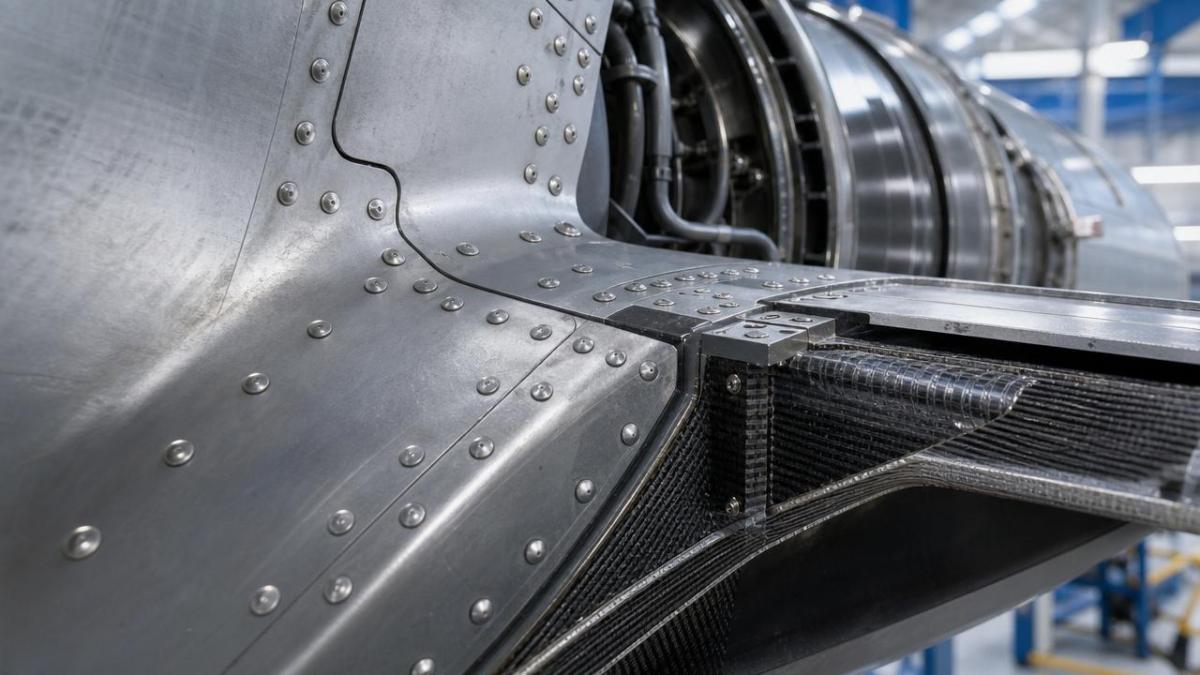
Aircraft structures are becoming thinner, lighter, and more integrated.
That evolution increases local stress sensitivity around joints, holes, and fastening lines.
Aerospace titanium rivets offer excellent corrosion resistance and heat tolerance.
However, fatigue damage often develops invisibly before visible deformation appears.
This matters more in high-vibration zones, mixed-material assemblies, and repeated pressurization cycles.
The trend is not a rejection of titanium fasteners.
It is a shift toward stricter joint-level analysis and life-cycle control.
The strongest trend signals come from lightweighting and thermal complexity
Several industry signals explain why aerospace titanium rivets receive more engineering attention today.
- More hybrid structures combine titanium, aluminum, and composites in one load path.
- Higher operating temperatures increase differential expansion at joint interfaces.
- Longer maintenance intervals raise the importance of fatigue prediction accuracy.
- Advanced air mobility platforms introduce frequent load cycling in compact frames.
- Defense and space programs demand reliability under shock, heat, and repeated vibration.
These shifts increase pressure on fastening design, inspection routines, and material traceability.
What changes inside the joint itself
The fastening line may look unchanged from the outside.
But the internal stress field often becomes less forgiving.
Small hole quality deviations, clamp-up variation, or installation damage can accelerate crack initiation.
In that environment, aerospace titanium rivets must be judged by behavior over time, not only by static strength.
The main forces driving fatigue risk in aerospace titanium rivets
The following table summarizes the key drivers behind long-term performance variation.
This explains why aerospace titanium rivets cannot be selected by catalog strength alone.
Heat resistance is a major advantage, but not a complete safety answer
Titanium performs well where elevated temperatures would challenge many conventional fasteners.
That benefit supports engine-adjacent structures, hot air ducts, and demanding aerospace skins.
Still, heat resistance should not be confused with fatigue immunity.
Thermal stability helps preserve strength.
It does not eliminate stress reversals, interface wear, or cyclic microplasticity.
In some assemblies, repeated thermal gradients can intensify local fatigue conditions.
That is especially true when aerospace titanium rivets connect dissimilar materials with different expansion rates.
Where hidden failures often begin
- Under-head contact zones
- Shank-to-hole interfaces
- Areas with slight installation misalignment
- Joints exposed to combined vibration and temperature fluctuation
The impact extends beyond aerospace into broader industrial decision-making
The fastening lessons from aerospace influence many sectors tracked by SHSS.
High-strength hardware decisions increasingly depend on fatigue reliability, not only nominal load rating.
This affects rail systems, offshore platforms, defense hardware, high-speed equipment, and smart infrastructure enclosures.
In these contexts, aerospace titanium rivets represent a benchmark for advanced fastening thinking.
The wider message is simple.
As systems become lighter and smarter, joints become more critical and less tolerant of uncertainty.
Operational effects seen across the value chain
- Design reviews increasingly include joint fatigue simulations.
- Material traceability is receiving greater audit attention.
- Installation consistency is becoming a quality differentiator.
- Inspection plans are shifting toward early crack detection.
The priority is moving from fastener selection to joint-system verification
A notable trend is the move away from isolated part evaluation.
Teams now examine the entire joint system, including substrate, hole condition, tooling, and service environment.
That is the most practical way to manage aerospace titanium rivets in demanding structures.
A technically strong rivet can still underperform in a poorly controlled joint stack-up.
Key points that deserve immediate attention
- Verify hole preparation quality and dimensional consistency.
- Control installation force, upset geometry, and tooling condition.
- Assess thermal expansion compatibility across joined materials.
- Use fatigue data relevant to actual vibration and temperature profiles.
- Review inspection intervals for hidden crack growth exposure.
- Link material certification with traceable process records.
Practical judgment calls can reduce uncertainty before failures emerge
The most effective response is structured decision-making before service risk accumulates.
These steps support safer use of aerospace titanium rivets under modern operating demands.
What the next phase likely looks like for aerospace titanium rivets
The next phase will likely emphasize digital traceability, better fatigue modeling, and tighter installation validation.
Data from structural testing, field inspection, and process monitoring will become more connected.
That shift aligns with SHSS’s broader focus on safety-critical hardware intelligence.
For aerospace titanium rivets, the winning approach is no longer just material excellence.
It is verified performance across the full life cycle.
A practical next step is to review current joint designs where heat, vibration, and lightweighting overlap.
Map those locations against installation records, material combinations, and inspection findings.
That simple exercise often reveals where aerospace titanium rivets deserve deeper fatigue assessment before hidden risks become costly failures.
Recommended News