
Search News
Industry Portal
Hot Articles
Shanghai Plan Signals Higher-End Fastener Demand
Time
Click Count
On June 1, 2026, Shanghai signaled a policy direction that matters well beyond industrial planning: the city government’s executive meeting gave in-principle approval to the 15th Five-Year plan for accelerating new industrialization and building a modern industrial system, with automotive, steel, and petrochemical sectors set to move further up the value chain. For fastener makers, exporters, buyers, certification-related businesses, and supply-chain teams, this is worth watching because the policy signal is tied to higher requirements in product specification alignment, certification readiness, procurement qualification, and delivery capability for stress-critical fastening applications.
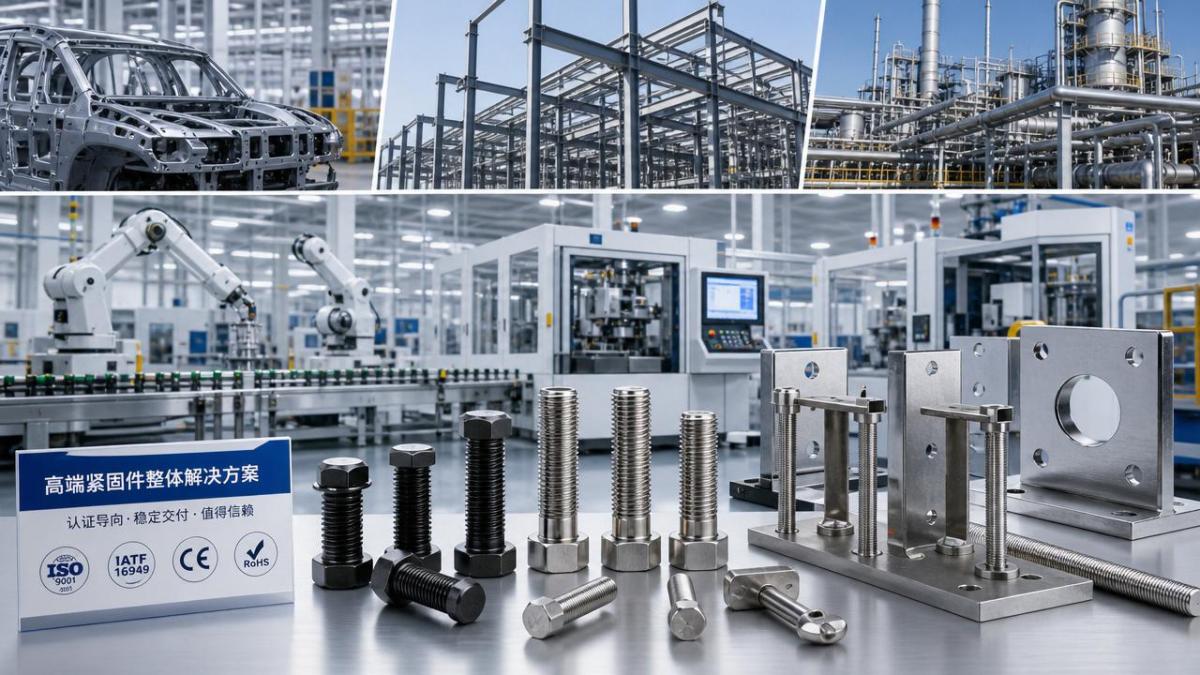
What the June 1 approval clearly sets out
The confirmed facts are limited but commercially meaningful. On June 1, Shanghai’s municipal government executive meeting gave in-principle approval to the plan titled the 15th Five-Year plan for accelerating new industrialization and building a modern industrial system. The plan explicitly states that traditional pillar industries including automotive, steel, and petrochemicals should extend toward the higher end of the value chain. Based on the event summary provided, this direction is expected to support stronger domestic substitution and export growth for specialized fasteners used in high-stress scenarios, including Aerospace/Wind Fasteners, High-strength Bolts, and Curtain Wall Embedments. The same summary also indicates that Chinese suppliers already certified to EN 15273 and ASTM A193 B8M Class 2 may be in a comparatively favorable position.
Where the policy signal may start to reshape business decisions
Specification-driven demand may tighten for manufacturers
From an industry perspective, manufacturers of specialized fasteners may feel the impact first because a move toward higher-value industrial applications usually shifts attention from general-purpose volume to application-specific compliance. The likely pressure point is not only production capacity, but also the ability to align products with technical specifications, certification status, and service-condition requirements in automotive, steel, and petrochemical projects. What deserves closer attention is whether procurement documents and technical bid requirements begin to place greater weight on proven certification, material traceability, and application matching.
Procurement teams may face stricter supplier screening
For buyers and sourcing teams, the relevance of this policy signal lies in supplier qualification and document review. If high-stress application fasteners gain policy-backed demand, procurement processes may give more weight to certification records, test documentation, and consistency between technical files and actual delivery lots. Analysis shows that purchasing decisions may increasingly depend on whether suppliers can present complete compliance materials for categories such as Aerospace/Wind Fasteners, High-strength Bolts, and Curtain Wall Embedments, rather than competing only on lead time or price.
Export-oriented suppliers may see compliance become a stronger commercial filter
Export businesses mentioned in the event summary should read this as a trade-and-compliance signal as much as an industrial one. The summary specifically highlights potential export increment and notes the relative advantage of Chinese suppliers that have already obtained EN 15273 and ASTM A193 B8M Class 2 certification. Observably, this does not confirm immediate order growth, but it does suggest that certification-backed suppliers may be better positioned when overseas buyers, project contractors, or channel partners compare technical credibility, documentation readiness, and qualification history.
Testing and certification service providers may need to track changing inquiry patterns
Certification-related enterprises and testing service institutions may also be affected because any shift toward higher-end industrial fastener applications tends to raise demand for supporting documentation, test evidence, and standard-based review. It is more appropriate to understand this as an early signal that inquiries could become more concentrated around recognized standards and application-specific verification, especially where purchasers want to reduce qualification risk before tendering or delivery.
What companies should review now
Check whether current certifications match target applications
Analysis shows that companies serving stress-critical fastening scenarios should first review whether their existing certifications, test reports, and technical documents actually correspond to the applications they are trying to enter. The event summary specifically names EN 15273 and ASTM A193 B8M Class 2, so businesses linked to those standards should pay attention to how such credentials are presented in bids, customer communication, and export documentation.
Prepare for closer alignment between documents and delivered products
What deserves closer attention is the consistency between catalog claims, quality files, inspection records, and delivered goods. If procurement shifts toward higher-specification fasteners, gaps between marketing language and verifiable technical evidence may become a practical barrier in qualification or delivery acceptance. This is especially relevant for suppliers seeking domestic substitution opportunities while also serving export channels.
Watch for changes in tender wording and qualification thresholds
The provided information does not include detailed implementation rules, so companies should not assume that formal procurement thresholds have already changed. Even so, it is reasonable to monitor later official wording, tender documents, and customer qualification checklists for any stronger reference to certification status, product category definition, technical bid alignment, or traceability requirements in automotive, steel, and petrochemical projects.
Reassess delivery planning for higher-stress product categories
For supply-chain and sales teams, a practical point is whether current production scheduling, batch management, and after-sales support are adequate for higher-stress fastener categories. Analysis shows that once projects emphasize more specialized applications, delivery discussions may involve not only timing, but also lot consistency, quality traceability, and post-delivery documentation handling.
Why this looks more like an execution signal than a finished rule set
Observably, this development is best read as a meaningful execution signal rather than a fully detailed operating rule. The policy direction is clear: Shanghai wants traditional pillar industries to move further up the value chain, and the supplied event summary directly links that shift to stronger demand for specialized fasteners in higher-stress applications. At the same time, the current information does not provide detailed enforcement language, procurement clauses, or implementation schedules. That is why the market still needs to watch how this policy direction is translated into project specifications, qualification language, certification emphasis, and buyer behavior.
How the market may reasonably interpret this stage
A balanced reading is that the June 1 development creates a clearer industrial-policy backdrop for higher-end fastener demand, especially where domestic substitution and export capability depend on standard-based credibility. It should not yet be treated as proof of immediate market conversion or finalized compliance thresholds. It is more appropriate to understand this as a policy-backed directional change that may influence sourcing logic, certification value, and technical qualification standards as downstream execution becomes clearer.
About the basis of this article
This article is generated from the user-provided news title, event date, and event summary. For developments of this kind, source types typically associated with verification may include official government announcements, regulatory releases, trade or customs authority information, industry association updates, standards organization documents, and reporting by authoritative media. A specific official source link was not provided in the input, so that point still requires follow-up verification. Subsequent attention should remain on any detailed policy wording, certification interpretation, tender-document changes, industry feedback, and how enterprises actually implement related procurement and delivery requirements.
Recommended News