
Search News
Industry Portal
Hot Articles
Industrial Fasteners: Selection Mistakes That Raise Project Costs
Time
Click Count
Choosing industrial fasteners is rarely a small purchasing decision—it can determine whether a project stays on budget or absorbs costly delays, rework, safety risks, and premature failures. For procurement teams, the challenge is not only finding the lowest unit price, but also verifying strength grades, coatings, standards compliance, supplier reliability, and lifecycle performance. This guide highlights the most common selection mistakes that quietly raise total project costs and explains how smarter sourcing decisions can protect structural integrity, reduce downtime, and improve long-term value.
Why Industrial Fasteners Become Cost Multipliers in Complex Projects
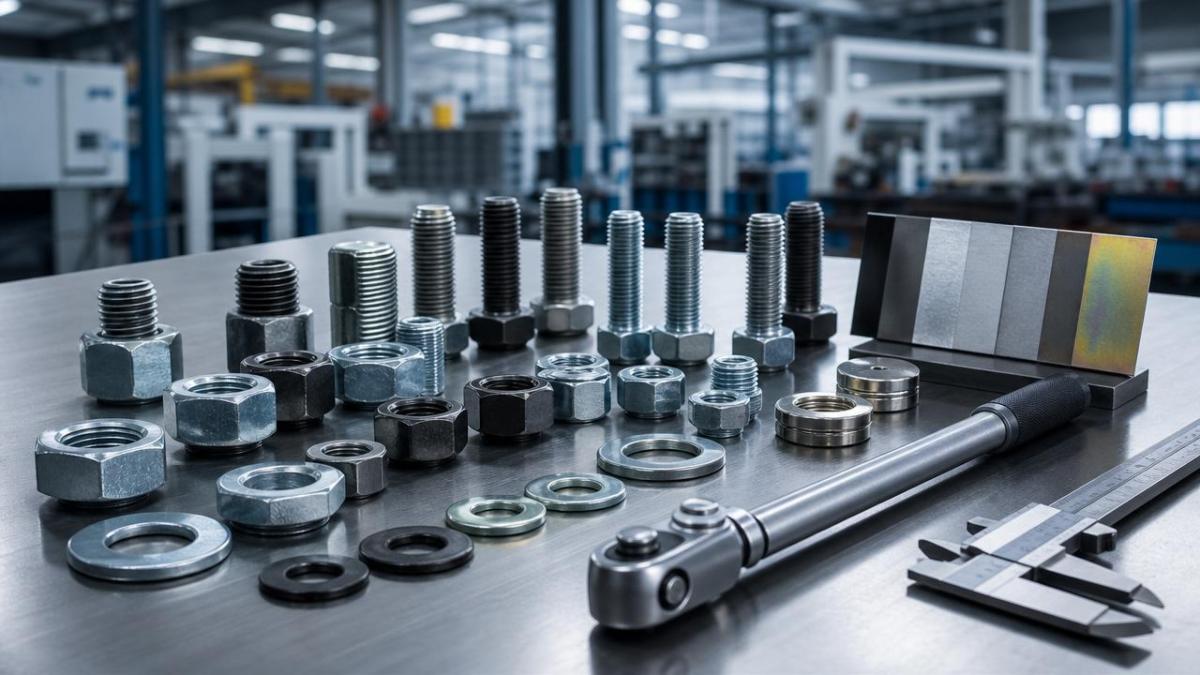
Industrial fasteners are small components, but they often carry load paths, vibration control, sealing pressure, and maintenance accessibility across machinery, infrastructure, energy, logistics, and smart-city assets.
A low-cost bolt can become expensive when it causes delayed installation, thread seizure, corrosion replacement, warranty disputes, or unplanned shutdowns during critical production windows.
For procurement personnel, the real decision is not “which supplier is cheapest,” but “which specification keeps total project risk within acceptable limits.”
The procurement cost chain
- Engineering cost rises when drawings lack clear grade, thread, coating, or installation torque requirements.
- Logistics cost increases when mixed standards, incomplete packaging, or poor traceability delay site receiving inspection.
- Maintenance cost expands when industrial fasteners corrode, loosen, gall, or fail earlier than the connected asset.
- Compliance cost appears when missing certificates block acceptance by owners, auditors, insurers, or public-sector supervisors.
SHSS views fasteners as “steel sutures” of industrial civilization: small interfaces where metallurgy, installation discipline, and procurement judgment meet.
Mistake 1: Buying by Unit Price Instead of Total Installed Cost
The lowest quotation for industrial fasteners may exclude inspection documents, protective packaging, stable lead times, coating consistency, or technical support during installation problems.
Procurement teams should compare total installed cost, including installation time, rejection rate, inventory complexity, maintenance intervals, and replacement consequences.
The table below shows how visible unit savings can disappear when fasteners are evaluated across the full project cost chain.
A cheaper fastener is useful only when it satisfies the same mechanical, environmental, compliance, and delivery requirements without creating hidden downstream costs.
Mistake 2: Misreading Strength Grades and Load Requirements
Industrial fasteners are selected by tensile strength, yield strength, proof load, shear exposure, fatigue behavior, and joint design, not by appearance or diameter alone.
Over-specification wastes budget and may create brittleness concerns. Under-specification raises the risk of deformation, loosening, fracture, or failed acceptance tests.
What procurement should confirm before sourcing
- Confirm whether the joint is mainly tensile-loaded, shear-loaded, fatigue-loaded, or exposed to combined dynamic stress.
- Check whether the drawing specifies ISO, DIN, ASTM, ASME, SAE, or project-specific mechanical requirements.
- Verify whether heat treatment, thread rolling, hardness range, and proof-load testing are required for the lot.
- Align washers, nuts, inserts, and mating materials so the assembled joint performs as a system.
For high-strength hardware, SHSS emphasizes cross-checking procurement language with structural mechanics, because “same size” rarely means “same load capacity.”
Mistake 3: Treating Coatings as Cosmetic Choices
Coatings influence corrosion resistance, friction coefficient, torque-tension relationship, hydrogen embrittlement risk, electrical compatibility, and long-term maintenance intervals.
Procurement teams often request “zinc plated” without clarifying exposure level, thickness, post-treatment, or whether assembly torque has been validated.
Use the following comparison to match industrial fasteners with practical operating environments and avoid unnecessary coating upgrades or dangerous underspecification.
Coating decisions should be linked to installation torque, service environment, and inspection criteria, not only to the color or initial surface brightness.
Mistake 4: Ignoring Standards, Certificates, and Lot Traceability
Industrial fasteners used in construction, transportation, pressure equipment, energy facilities, and industrial machinery may require documented compliance before acceptance.
A shipment without proper material certificates can sit unused while teams argue over responsibility, replacement freight, or emergency local sourcing.
Documentation that should not be left until delivery
- Material test reports should match the ordered grade, heat number, hardness range, and mechanical performance requirements.
- Dimensional inspection records should correspond to the relevant standard and the specific fastener geometry.
- Coating reports should clarify process, thickness range, appearance acceptance, and corrosion-resistance expectations.
- Packaging labels should connect product, lot number, purchase order, quantity, and certificate references.
SHSS encourages procurement teams to request document samples before placing volume orders, especially when industrial fasteners enter regulated or owner-inspected projects.
Mistake 5: Separating Fasteners from Tools, Torque, and Site Workflow
A fastener purchase fails when the selected bolt cannot be installed consistently with available tools, operator skill, access space, and torque-control requirements.
In modern assembly, BLDC power tools, calibrated torque wrenches, pneumatic tools, and automated tightening systems interact directly with fastener friction and thread quality.
Procurement questions for installation readiness
- Will installers use impact tools, controlled torque tools, angle tightening, or hand tools on the same joint type?
- Does the fastener coating change friction enough to require torque-table adjustment or joint validation?
- Are replacement nuts, washers, and locking elements available in the same delivery window?
- Can packaging support line-side picking, outdoor storage, and batch separation at the worksite?
SHSS connects fasteners with industrial tools and PPE intelligence because safe fastening depends on components, workers, equipment, and procedures working together.
How Procurement Teams Should Build a Fastener Selection Matrix
A selection matrix reduces subjective decisions and creates a defensible record when budgets, delivery pressure, and engineering requirements compete.
The following matrix helps buyers compare industrial fasteners before price negotiation, especially for multi-site construction, machinery OEM, and maintenance programs.
This matrix makes negotiations clearer: buyers can reduce price where risk is low and protect budget where performance requirements are non-negotiable.
Application Scenarios: Where Selection Errors Are Most Expensive
Industrial fasteners behave differently across sectors, so procurement should avoid copying specifications from one project into another without reassessment.
Construction and infrastructure
Bridge, steel-frame, tunnel, and municipal projects require traceability, corrosion planning, and site-friendly packaging because installation windows are narrow and inspections are strict.
Industrial machinery and manufacturing
Machinery buyers should prioritize thread consistency, torque repeatability, vibration resistance, and replenishment reliability for maintenance teams and assembly lines.
Smart-city and facility systems
Lighting poles, access-control housings, security equipment, and utility cabinets need fasteners that resist weather, tampering, and maintenance damage.
Energy and heavy-duty operations
Wind, power, petrochemical, and mining applications demand careful control of grade, coating, locking method, and inspection records because failure consequences are severe.
Cost-Saving Alternatives That Do Not Sacrifice Safety
Cost control does not always mean choosing cheaper industrial fasteners. It may mean simplifying specifications, reducing SKU variation, or improving stocking strategy.
Practical alternatives for buyers
- Standardize non-critical sizes across projects to improve purchasing volume and reduce emergency replenishment.
- Use premium coatings only where exposure data justifies them, not across every low-risk indoor joint.
- Create approved substitute rules for equivalent standards, but require engineering approval for load-bearing changes.
- Bundle bolts, nuts, washers, and locking elements to prevent assembly mismatch and line-side shortages.
The best savings usually come from controlling variation and uncertainty, rather than cutting the specification of critical fasteners.
FAQ: Common Questions When Buying Industrial Fasteners
How do I know whether a fastener is over-specified?
Compare the specified grade with actual load, environment, inspection requirement, and maintenance access. Over-specification often appears in low-load indoor assemblies using unnecessarily high grades.
What documents should I request before placing a bulk order?
Request material certificates, dimensional inspection format, coating documentation, packaging labels, and traceability method. For critical projects, ask for sample reports before shipment.
Are stainless steel fasteners always the safest option?
No. Stainless steel improves corrosion resistance in many environments, but it may not match required strength or galling performance without proper selection and lubrication.
How can procurement reduce lead-time risk?
Classify fasteners by criticality, forecast recurring sizes, approve qualified alternatives, and confirm supplier stock plans before project peaks or shutdown maintenance periods.
Why Choose SHSS for Fastener Procurement Intelligence
SHSS supports procurement teams by connecting industrial fasteners with structural mechanics, tool performance, safety systems, and lifecycle cost thinking.
Our intelligence perspective helps buyers ask sharper questions before committing budget: grade suitability, coating logic, torque compatibility, document readiness, and delivery risk.
Procurement teams can consult SHSS for parameter confirmation, product selection logic, certification requirements, sample evaluation, delivery-cycle planning, and quotation comparison criteria.
When every bolt, beam of light, biometric gate, and protective layer supports safer operations, better purchasing decisions become part of industrial resilience.
Recommended News