
Search News
Industry Portal
Hot Articles
Scalable Data Center Access Security: What Matters Most
Time
Click Count
Scalable data center access security is no longer a narrow facilities issue. It now sits at the intersection of uptime, compliance, cyber-physical risk, and operating efficiency.
As data estates spread across colocation sites, edge nodes, and hybrid campuses, access control must scale without creating blind spots or slowing essential work.
That makes the topic especially relevant in an AIoT-driven market, where physical infrastructure and intelligent verification increasingly work as one system.
Why access security has become a growth question
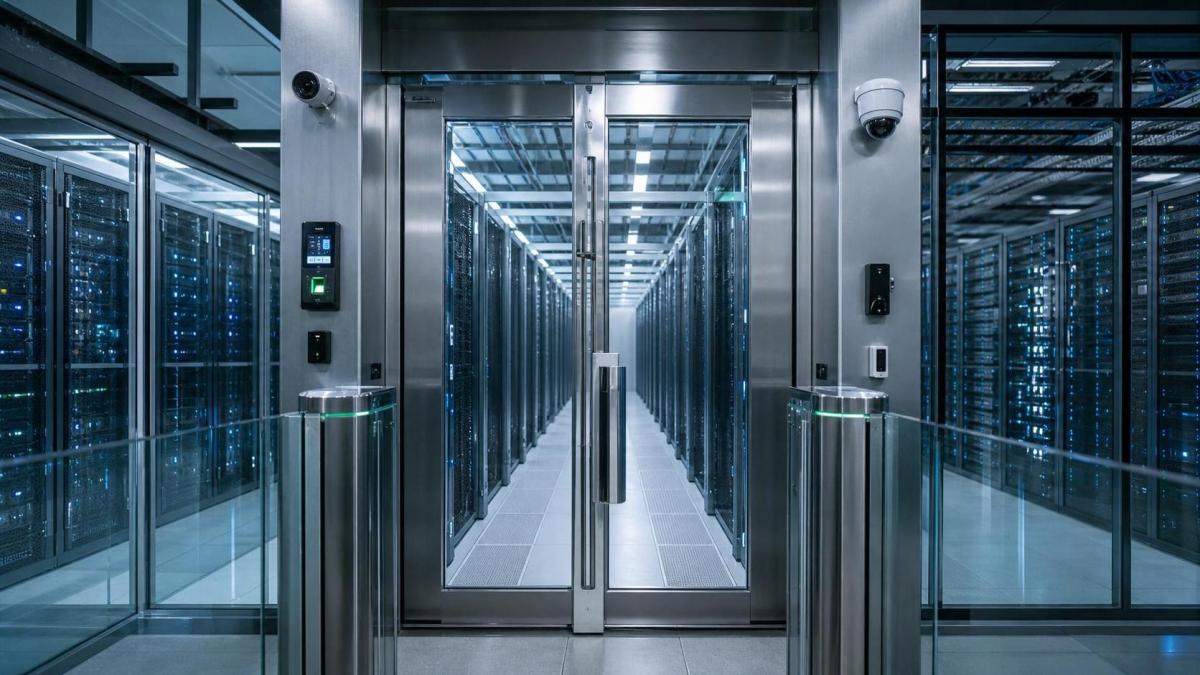
A small server room can survive with badges, logs, and local rules. A distributed data center footprint cannot.
Expansion changes the problem. More doors, more vendors, more temporary staff, and more mixed environments create more exceptions.
In practice, scalable data center access security means building a control model that stays reliable as sites, users, and policies multiply.
The goal is not only to stop unauthorized entry. It is to preserve continuity during maintenance, incident response, and operational growth.
That is why leading programs treat physical access as part of resilience planning, not just perimeter management.
What scalable data center access security really includes
The term covers more than readers, locks, and guard posts. It describes an integrated stack of identity, policy, hardware, and auditability.
At the identity layer, organizations are moving from cards alone toward biometric verification, mobile credentials, and role-based permissions.
At the control layer, centralized platforms coordinate who can enter, where they can go, and under what conditions.
At the infrastructure layer, reliable door hardware, power backup, sensors, lighting, and tamper-resistant components determine whether the policy works in reality.
This broader view matters. A biometric terminal with weak mounting, poor lighting, or inconsistent fail-safe logic can still create exposure.
SHSS often frames this well through its focus on both smart access and physical hardware. Data center protection depends on both.
The shift from isolated devices to coordinated systems
Older deployments were often site-specific. One building had one vendor, one controller, and one local process.
That model breaks down during expansion. It produces fragmented permissions, uneven reporting, and expensive administration.
Scalable data center access security replaces isolated control points with unified rules, standardized events, and cross-site visibility.
The industry signals worth paying attention to
Several trends are raising the bar.
- Hybrid infrastructure means critical workloads now live beyond one fortified campus.
- Compliance scrutiny is expanding around identity records, visitor tracking, and biometric data governance.
- Edge computing increases the number of smaller sites with lighter on-site staffing.
- Contractor access has become more dynamic, especially during retrofits and capacity upgrades.
- Convergence between OT, IT, and physical security is making siloed decision-making harder to defend.
The privacy side deserves special attention. Biometric controls improve assurance, but they also raise retention, consent, storage, and regional compliance questions.
This is where disciplined policy design matters as much as technical accuracy.
Where business value actually appears
The strongest case for scalable data center access security is not abstract risk reduction alone. It creates measurable operating value.
The commercial effect often appears in avoided disruption. One failed access workflow during an outage can cost more than years of system optimization.
The physical layer still decides performance
Digital credentials receive most of the attention, yet physical reliability still determines whether a secure design holds under pressure.
Door assemblies, locking strength, fasteners, enclosure integrity, and emergency egress logic all matter in data center environments.
This is one reason the SHSS perspective is useful. It connects biometric intelligence with hardware durability instead of treating them separately.
Well-specified high-strength hardware reduces failure under vibration, repeated use, and forced-entry attempts. Smart lighting can also improve camera visibility and safer movement.
Even maintenance safety contributes. Access points serving high-density equipment rooms should account for PPE workflows and contractor movement, not just authentication logic.
Biometrics are powerful, but only when well governed
Biometric authentication helps reduce lost-card risk and weak shared credentials. It also speeds high-assurance entry when designed correctly.
Still, not every environment needs the same method. Facial recognition, iris recognition, and multimodal verification each fit different threat and throughput profiles.
The right choice depends on environmental conditions, privacy obligations, spoof resistance, and fallback procedures during outages.
Common scenarios that shape system design
Scalable data center access security is rarely one uniform deployment. Different zones need different control intensity.
- Campus entrances need rapid throughput, visitor management, and broad surveillance integration.
- Server halls need tighter segmentation, anti-tailgating measures, and stronger identity assurance.
- Network rooms and power spaces often require dual authorization or stricter escort logic.
- Edge facilities need resilient remote administration because local supervision may be limited.
- Temporary project zones need permissions that expire automatically and leave full audit trails.
That zoning model usually works better than a one-size-fits-all approach. It aligns investment with actual exposure.
How to judge whether a solution will scale
The practical question is not whether a system works today. It is whether it remains manageable after expansion, regulation changes, and turnover.
Several checkpoints help separate durable architecture from short-term fixes.
Look for policy consistency
Permissions should be governed centrally, with local exceptions tightly defined. Manual overrides should be visible, not buried in site-specific habits.
Test failure modes, not just normal entry
Review what happens during network loss, controller failure, power events, and emergency evacuation. Many access programs look strong until these moments.
Check integration maturity
Scalable data center access security should integrate with video, incident management, visitor workflows, and identity systems without custom fragility.
Measure lifecycle cost
Initial hardware cost matters less than administrative overhead, upgrade complexity, maintenance demands, and replacement cycles across multiple sites.
Treat compliance as a design input
Data retention rules, biometric handling, and regional privacy requirements should shape architecture from the start, not after procurement.
A sensible next step
A strong program usually begins with a simple discipline: map access zones, user types, operational exceptions, and evidence requirements before comparing technologies.
From there, evaluate scalable data center access security through both digital and physical lenses. Authentication strength, mounting integrity, lighting, privacy controls, and remote manageability should be judged together.
That approach creates a clearer basis for investment. It also reflects the broader SHSS view that modern security depends on intelligent systems anchored by dependable hardware.
For organizations planning expansion, retrofit, or policy standardization, the immediate task is not to chase the newest feature. It is to define what must remain secure, usable, and auditable at every future site.
Recommended News