
Search News
Industry Portal
Hot Articles
IoT Security Risks That Disrupt Connected Facility Uptime
Time
Click Count
IoT Security Risks That Disrupt Connected Facility Uptime
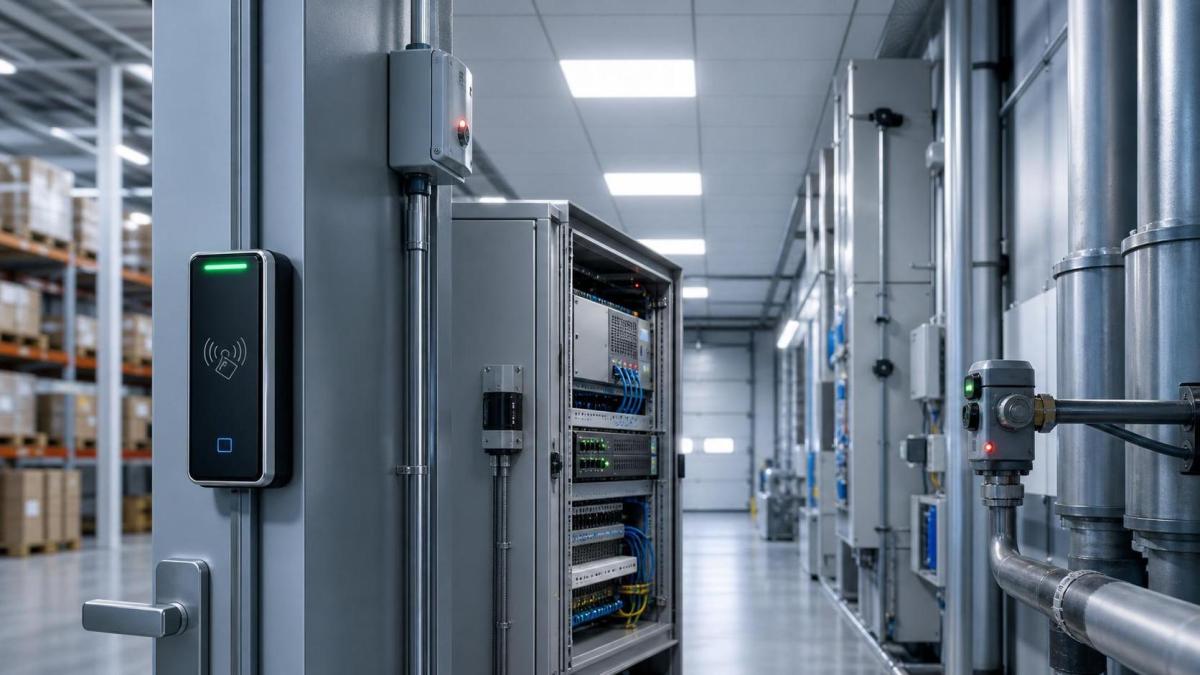
IoT security failures can do more than trigger alerts. They can stop doors, disable lighting, interrupt connected tools, and weaken safety controls across critical sites.
That matters because facility uptime now depends on connected devices working together. Access systems, sensors, controllers, lighting, and edge gateways share data constantly.
When one weak point is exposed, the effect can move fast. A small device issue can become an operations issue within minutes.
For connected facilities, IoT security is no longer an IT-only topic. It directly affects safety, compliance, labor efficiency, and project delivery.
In practical terms, the real question is simple. Which IoT security risks can disrupt uptime, and what should be done first?
Why IoT Security Became an Uptime Issue
Modern facilities run on mixed hardware environments. Smart locks, biometric readers, LED controls, power tools, and PPE monitoring are often tied into one networked architecture.
This integration improves visibility and automation. It also expands the attack surface in ways many deployment teams still underestimate.
A connected badge reader may rely on cloud identity checks. Smart lighting may depend on gateways using Zigbee or DALI integrations. Tool tracking may depend on mobile apps and wireless credentials.
If those links fail, operations do not simply slow down. In many cases, work stops until systems are trusted again.
This is why IoT security must be viewed as operational risk management. The goal is not only preventing breaches. The goal is maintaining controlled continuity.
The Main IoT Security Risks That Break Continuity
Not every device weakness will cause major disruption. The highest-risk issues are the ones that spread across systems or block essential workflows.
Weak Authentication and Shared Credentials
Default passwords remain one of the most common IoT security problems. Shared installer accounts create the same exposure.
Once attackers gain access to one controller, they may change rules, lock out users, or move deeper into the environment.
Unpatched Firmware and Unsupported Devices
Many facilities still operate devices with outdated firmware. Some are no longer supported by vendors at all.
That creates known openings for remote exploitation. In uptime terms, this is a quiet risk that becomes serious without warning.
Flat Networks and Poor Segmentation
When access control, lighting, cameras, and admin workstations share broad network access, one compromise can travel laterally.
Strong IoT security depends on separation. Without it, local incidents can affect multiple building functions at once.
Cloud Dependency Without Local Fallback
Some smart systems fail badly when internet links or cloud services are interrupted. That is a resilience design problem as much as a cyber problem.
If a biometric entry system cannot validate identity offline, physical access may halt during an outage.
Third-Party Access and Vendor Blind Spots
Maintenance vendors often need remote support access. If those channels are weak, they become a practical entry point.
In real projects, vendor oversight is often where IoT security policy breaks down first.
How These Risks Affect Connected Facility Systems
The impact of weak IoT security becomes clearer when viewed by operational function. Different smart hardware categories fail in different ways.
Smart Access and Biometric Security
Compromised readers or controllers can deny entry, allow unauthorized movement, or corrupt identity logs. That affects safety, auditability, and emergency response.
If biometric data handling is weak, the issue expands into privacy and compliance exposure as well.
Commercial and Smart LED Lighting
Lighting outages create immediate productivity and safety problems. In warehouses, plants, and public areas, lighting control failure can stop normal work.
A compromised gateway can also trigger erratic scheduling, sensor errors, or energy waste that hides the original cyber cause.
Connected Tools and Asset Tracking
Industrial tools increasingly connect through batteries, chargers, mobile apps, and fleet dashboards. Poor IoT security can disrupt authorization, telemetry, or location records.
That may not sound critical at first. On active projects, it can delay inspections, maintenance, and workforce coordination.
PPE and Environmental Monitoring
Wearable alerts, gas monitoring, and connected safety systems support frontline decisions. If signals are delayed or spoofed, the risk shifts from inconvenience to direct harm.
This is where IoT security and life safety clearly intersect.
Early Warning Signs Teams Should Not Ignore
Most serious failures are preceded by smaller signals. Teams that catch them early protect uptime more effectively.
- Frequent device reboots without a clear maintenance reason.
- Unexpected credential failures on trusted access points.
- Delayed sensor reporting or gaps in telemetry history.
- Unauthorized configuration changes after vendor service sessions.
- Legacy devices that cannot support current encryption or logging.
- Cloud-connected systems with no documented offline operating mode.
These are not small housekeeping issues. They often point to weak IoT security controls or fragile resilience design.
A Practical IoT Security Response Plan
The best response plan is operational, not theoretical. It should reduce exposure while keeping systems usable during active project delivery.
1. Map Critical Devices by Uptime Impact
Start with systems that can stop work or create safety risk. Access control, lighting, gateways, environmental sensors, and key tool platforms belong at the top.
2. Remove Shared Logins and Enforce Strong Access Rules
Every admin action should be attributable. Use unique accounts, strong passwords, role-based permissions, and multifactor authentication where supported.
3. Segment Networks by Function
Separate building systems from office traffic. Separate life safety functions from lower-priority devices. Good segmentation limits how far incidents can spread.
4. Build a Firmware and Support Lifecycle
Create a schedule for updates, testing, and retirement. Unsupported devices should be flagged as business risk, not treated as normal assets.
5. Demand Offline Operating Modes
Critical systems need graceful fallback. Doors should have controlled emergency logic. Lighting should retain safe local behavior. Essential monitoring should keep recording locally.
6. Control Vendor Access as Tightly as Internal Access
Require time-limited sessions, logging, approval workflows, and contract-level security obligations. Vendor convenience should never outrank facility resilience.
Risk Priorities at a Glance
What Better IoT Security Looks Like in Practice
Better IoT security does not mean adding friction everywhere. It means designing connected systems that remain trustworthy under pressure.
That includes secure biometric workflows, resilient lighting controls, supportable tool ecosystems, and reliable PPE monitoring with clear fallback procedures.
From a project delivery view, the strongest posture is simple. Know which smart assets matter most, reduce preventable exposure, and prepare for degraded operation before a failure occurs.
IoT security becomes far more effective when it is tied to uptime metrics, maintenance cycles, procurement standards, and acceptance testing.
Facilities are becoming more connected every year. The teams that stay operational will be the ones that treat IoT security as part of infrastructure reliability, not an afterthought.
Recommended News