
Search News
Industry Portal
Hot Articles
Data Center Security Risks: 7 Gaps That Raise Breach Exposure
Time
Click Count
Why does data center security now sit alongside financial and operational risk?
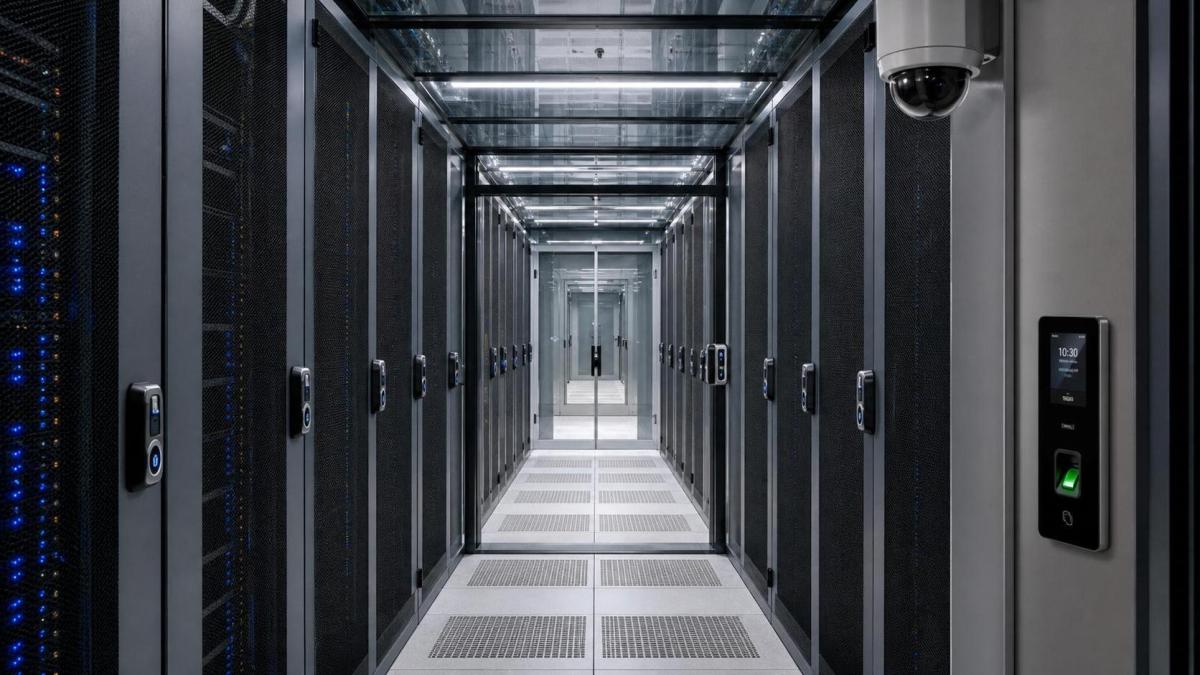
Data center security has moved far beyond server rooms and firewall settings.
A single weakness can interrupt production, freeze logistics, expose regulated data, and damage long-term trust.
That is why breach exposure is now judged like any other business continuity threat.
In practice, the biggest failures rarely begin with dramatic attacks.
They usually start with small gaps: a shared badge, poor visitor control, unpatched cameras, weak lighting coverage, or incomplete audit trails.
For facilities supporting AIoT, industrial systems, and connected infrastructure, physical and digital controls are now tightly linked.
This is where the SHSS view is useful.
The same logic that protects a high-load fastener or a biometric gate also applies to data center security: resilience depends on every layer holding under stress.
The seven gaps below are the ones that most often raise breach exposure without immediate warning signs.
Which gaps most often weaken data center security before anyone notices?
Most organizations do not fail because they ignore security completely.
They fail because controls look adequate on paper while real-world conditions are messy.
A practical way to assess data center security is to review these seven common gaps.
This table works best as a board-level review tool.
It helps separate visible controls from controls that actually reduce risk.
Is physical access still the biggest weakness in data center security?
Very often, yes.
Organizations usually invest heavily in cyber controls, yet still allow weak entry procedures at the perimeter.
If the wrong person reaches cages, consoles, backup media, or network hardware, digital controls lose value quickly.
More mature data center security programs treat doors, mantraps, biometric readers, rack locks, and surveillance as one chain.
That chain is only as strong as its weakest point.
Biometric security is especially relevant here.
Advanced iris or structured-light facial systems reduce badge sharing and impersonation, particularly in low-light conditions.
Still, technology alone is not enough.
- Require identity verification tied to a defined access role.
- Use anti-tailgating controls at sensitive entry points.
- Separate visitor routes from operations routes.
- Log every exception, not only successful entries.
In real facilities, exceptions are where data center security often breaks down.
What gets overlooked beyond doors and badges?
Two areas are repeatedly underestimated: environmental visibility and hardware integrity.
The first sounds simple.
Yet poor lighting, low camera contrast, and unmonitored loading zones reduce detection quality during the moments that matter most.
Smart LED lighting improves more than energy efficiency.
When designed with surveillance in mind, it supports cleaner video, safer inspections, and better nighttime perimeter awareness.
The second issue is more mechanical than many teams expect.
Cabinet hinges, enclosure locks, mounting points, and high-strength fasteners affect whether a barrier remains secure under vibration, repeated servicing, or forced access attempts.
SHSS often frames this well: digital trust still depends on physical anchors.
If enclosures, doors, or support hardware degrade early, breach exposure rises quietly.
A useful checkpoint is to inspect not only security devices, but also the components holding them in place.
How should data center security be judged before budget is approved?
The best decisions come from comparing exposure, not comparing line items alone.
A cheaper access system may look efficient until retraining, false rejections, audit gaps, and maintenance visits are included.
The same applies to surveillance, locking systems, and mechanical components.
Before approval, ask whether the investment improves detection, delay, evidence quality, and recovery speed.
That creates a more accurate data center security business case.
A practical decision checklist
- Can entry events be tied to a specific person without ambiguity?
- Will the system still perform during low light, shift changes, or power transitions?
- Are retention, privacy, and biometric data rules clearly documented?
- Do physical barriers use components rated for frequent use and forced-entry resistance?
- Can incident records support insurance, legal review, and customer assurance?
If several answers are uncertain, the security budget is probably addressing symptoms, not root causes.
Why do compliance and incident response still fail after controls are installed?
Because installation is not the same as governance.
Many teams deploy readers, cameras, locks, and monitoring tools, then assume the hard part is complete.
Later, an audit asks who accessed a biometric zone, how consent was handled, or whether video records were retained correctly.
That is where compliance blind spots appear.
For data center security, policy discipline matters as much as equipment quality.
Cross-functional review is especially important where biometric data, cloud storage, and third-party maintenance overlap.
The same goes for incident response.
A breach is rarely contained by one team acting alone.
Security staff, facilities, legal, operations, and service providers must know who leads, who approves shutdowns, and who preserves evidence.
Without rehearsal, even strong data center security can slow down at the wrong moment.
What should the next step look like if breach exposure needs to come down?
Start with a layered review rather than a technology shopping list.
Map the path from outer perimeter to critical racks and identify where identity, visibility, mechanical integrity, and audit evidence become weak.
Then rank each gap by business impact, not by convenience.
In many cases, the right move is not a full rebuild.
It may be a sharper biometric policy, stronger enclosure hardware, better smart lighting placement, or clearer contractor controls.
The strongest data center security strategies are usually stitched together from reliable physical controls, verifiable identity, durable hardware, and disciplined response planning.
That layered approach fits modern facilities far better than a single-system mindset.
If the goal is lower breach exposure, begin by validating the seven gaps above against real operating conditions, maintenance routines, and compliance obligations.
That is usually where the most valuable security improvements become visible.
Recommended News