
Search News
Industry Portal
Hot Articles
Alibaba, Baidu Added to 1260H List as Cloud Gateway Risk Rises
Time
Click Count
On June 19, 2026, the U.S. war department updated its 1260H military-related enterprise list and, for the first time, included Alibaba, Baidu, and other Chinese AI and cloud service groups. For the market around Cloud Security Gateways, the development is notable not simply as a list update, but as a compliance signal that may affect market access, terminal deployment, and cross-border data arrangements for hardware devices relying on those cloud-linked security functions. That makes the change relevant to importers, exporters, equipment vendors, procurement teams, and compliance functions that must now reassess certification paths and GDPR/CCPA-compatible system design.
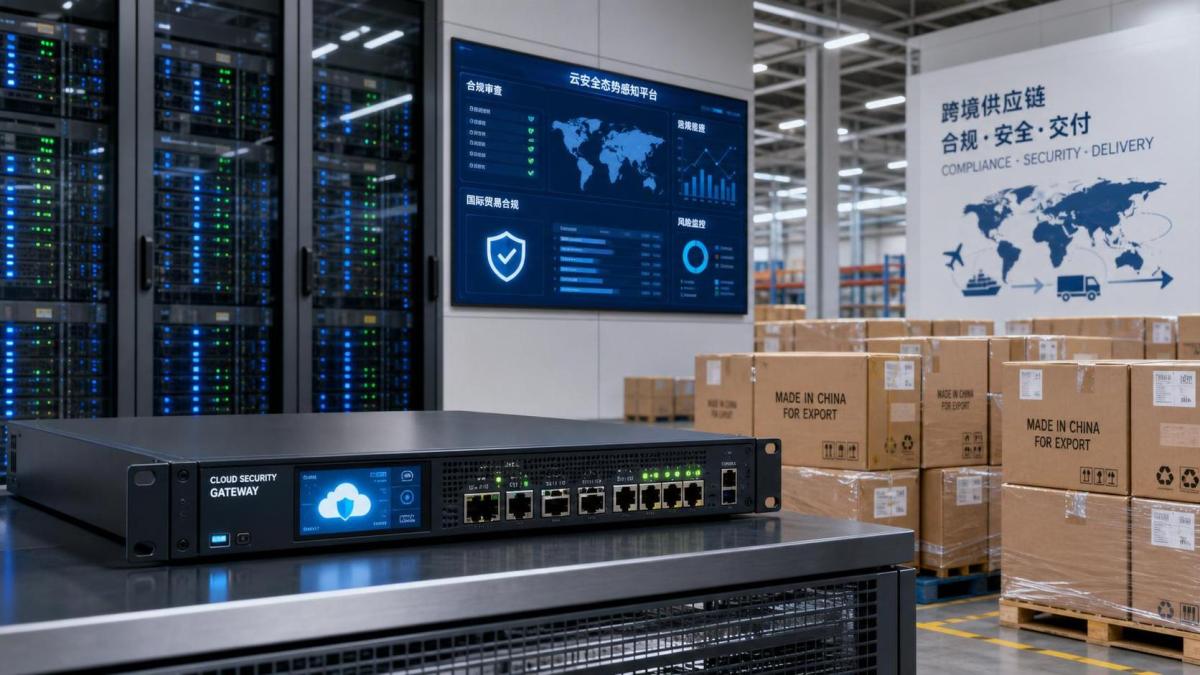
What the June 19 list update confirms
The confirmed facts are limited but material. The list update took place on June 19, 2026. The 1260H military-related enterprise list was updated by the U.S. war department. Alibaba and Baidu were added for the first time, alongside other Chinese AI and cloud service companies. According to the event summary provided, this directly affects hardware devices equipped with Cloud Security Gateways in terms of access to the U.S. market and allied markets, terminal-side deployment, and cross-border data compliance. The same summary also indicates that importers need to reassess supply-chain certification routes and GDPR/CCPA-compatible architectures.
Where the pressure is likely to appear first
Market-entry reviews for device importers
From an industry perspective, importers may be among the first parties affected because they sit at the point where supplier background, product configuration, and compliance documentation converge. The practical impact is likely to center on admissibility reviews, supplier mapping, and whether existing certification pathways remain usable for devices that embed or depend on Cloud Security Gateways linked to the named cloud ecosystems. What deserves closer attention is whether procurement files, technical declarations, and supplier qualification records are still sufficient for market-entry review.
Export and delivery risk for hardware vendors
For hardware manufacturers and exporters, the issue is not limited to shipment itself. Analysis shows the more immediate concern is whether cloud security architecture becomes a review item during customer onboarding, tender evaluation, or delivery acceptance. If a device uses a gateway design associated with the newly listed companies, vendors may need to prepare for additional questions around technical documentation, service architecture, and deployment boundaries, especially where customers require alignment with GDPR or CCPA expectations.
Procurement and channel decisions in downstream distribution
Distributors, resellers, and procurement teams may also face a change in how they screen products before ordering. Observably, the effect is less about a single rule text in isolation and more about the possibility that customer-side compliance teams ask for clearer visibility into cloud dependencies, data flows, and vendor qualifications. This can influence product selection, substitute model evaluation, bid documentation, and delivery scheduling.
Certification and compliance service workloads
Certification-related firms, testing support providers, and compliance advisors may see demand shift toward reassessment work rather than first-time filings alone. The event summary specifically points to renewed review of supply-chain certification routes and GDPR/CCPA-compatible architecture, which suggests that document verification, architecture interpretation, and evidence preparation could become more important in affected transactions.
What companies should review now
Check cloud dependency in product documentation
Companies should first identify whether their hardware products, gateway modules, or deployment solutions rely on cloud security functions connected to the newly listed firms. Analysis shows this is a basic screening step for judging whether the issue is remote, indirect, or commercially immediate.
Revisit certification paths and supporting files
Importers and vendors should review existing certification files, supplier declarations, technical materials, and bid documents to confirm whether they accurately describe cloud architecture, service dependencies, and compliance positioning. Where the input summary mentions certification-route reassessment, it is more appropriate to understand that as a prompt for document review rather than proof that all previous certifications have already become invalid.
Assess GDPR/CCPA compatibility architecture
Because the supplied facts explicitly mention GDPR and CCPA compatibility, companies should pay attention to how device deployment, data routing, and terminal-side security design are described in internal and customer-facing materials. At this stage, the key point is not to assume a settled enforcement outcome, but to be ready for closer scrutiny of architecture explanations and compliance representations.
Watch delivery timing and customer-side review cycles
Where products are already in tendering, import review, or deployment planning, teams should monitor whether customers, channels, or service partners begin asking for additional review steps. Observably, this is especially relevant for transactions in which supplier qualification, after-sales support commitments, and data handling descriptions are part of the delivery package.
Why this matters beyond the list update itself
Analysis shows this development is better understood as a compliance and execution signal than as a fully defined end-state. The confirmed facts establish that the list has changed and that Cloud Security Gateway-related hardware may face implications in market access, deployment, and cross-border data compliance. What remains open is how different market participants, certification processes, procurement documents, and customer review standards will interpret and apply that signal in practice. For that reason, continued attention to official wording, transaction-level review behavior, and downstream document requirements is likely to matter more than headline reaction alone.
How to read the current stage
At the current stage, this event is best read as an already visible rule-development signal with practical implications for trade, procurement, certification, and delivery planning. It does not by itself confirm a single uniform market outcome across all products and transactions, but it does indicate that companies connected to Cloud Security Gateways should prepare for more intensive review of supply-chain structure, compliance narratives, and data-governance design. A neutral reading is that the compliance burden has become more immediate, while the exact execution path still requires observation.
Basis of this article and what still needs verification
This article is generated from the user-provided news title, event date, and event summary. For developments of this kind, relevant source types usually include official notices, regulatory releases, trade or customs authority information, industry association updates, standards-related documents, and reporting from authoritative media. A specific official source link was not provided in the input, so the underlying text and subsequent implementation details still require ongoing verification. What deserves continued attention is any later clarification on enforcement language, certification interpretation, tender document changes, market feedback, and how companies actually adjust execution.
Recommended News