
Search News
Industry Portal
Hot Articles
IoT Security Risks in Connected Facilities and How to Mitigate Them
Time
Click Count
Why IoT Security Changes Once Facilities Become Truly Connected
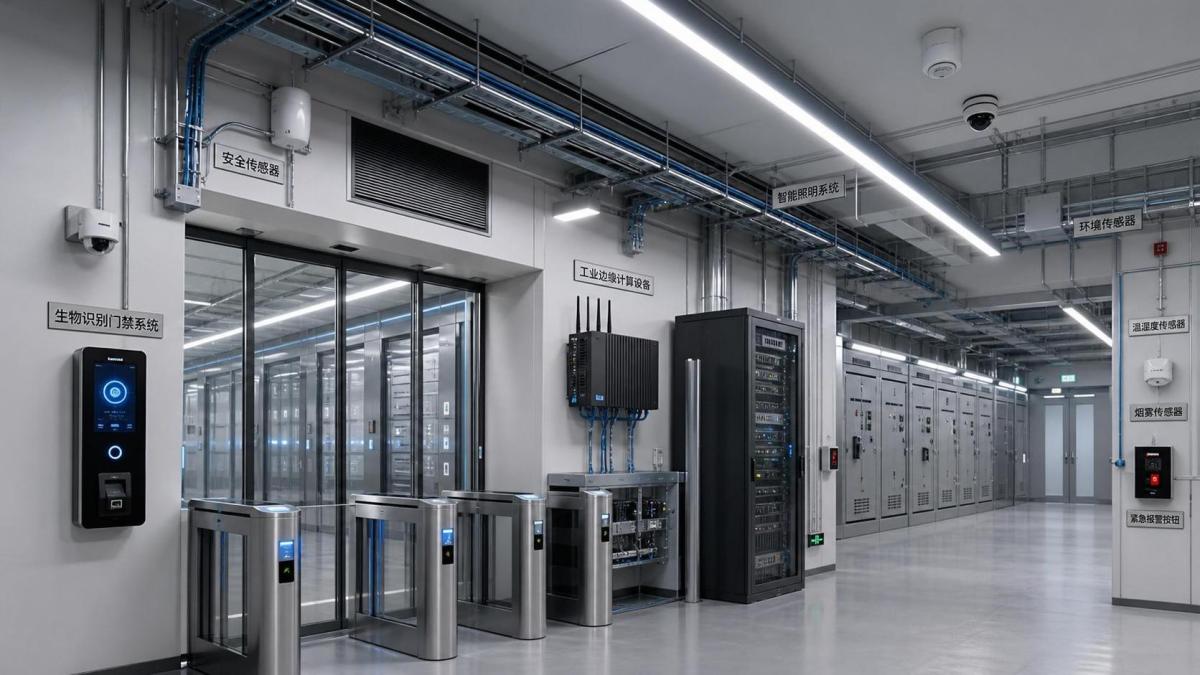
IoT security becomes more complex when connected facilities mix digital control with physical consequence.
A badge reader failure is not only an IT issue.
It can block entry, interrupt shift changes, and weaken emergency response.
The same is true for smart lighting, sensor networks, biometric access, and connected industrial tools.
In practice, IoT security is tied to uptime, compliance, worker safety, and asset integrity.
That is why connected facilities cannot judge risk by device count alone.
They need to ask which devices control movement, which collect sensitive data, and which affect real-world operations.
For a platform such as SHSS, this matters across smart access, industrial hardware, intelligent lighting, and protective infrastructure.
Each area has different failure costs, so IoT security priorities also differ.
The First Useful Split Is Not by Device Type, but by Operational Impact
Many facilities start with a technical inventory.
That helps, but it rarely explains where IoT security controls should be strongest.
A more reliable method is to group connected assets by consequence.
Some devices mainly expose data.
Others can interrupt access, disable visibility, or affect machinery workflows.
That distinction changes the mitigation path.
This kind of split reflects how SHSS reads connected infrastructure.
Physical reliability and digital trust are no longer separate conversations.
Access Control Environments Need More Than Strong Login Protection
Smart access systems are often treated as a narrow authentication layer.
That is too limited for serious IoT security planning.
In commercial buildings and data-sensitive sites, biometric readers sit at the boundary between cyber identity and physical entry.
A weak configuration can expose facial templates, allow replay attempts, or create a building-wide lockout during outages.
The better question is not whether a reader is accurate.
It is whether the whole access chain stays trusted under failure.
What matters most in these locations
- Separate biometric templates from general building networks.
- Use signed firmware and verified update channels.
- Define fallback entry rules for outages and fire events.
- Limit cloud synchronization to data that is operationally necessary.
- Audit who can change thresholds, schedules, and identity permissions.
A common misjudgment is assuming fast recognition equals strong IoT security.
Recognition speed helps throughput, but risk usually sits in storage, network paths, and exception handling.
Lighting Networks Often Look Low-Risk Until They Affect Safety and Movement
Connected lighting is frequently underestimated because it appears non-critical.
Yet in logistics halls, campuses, tunnels, and smart streets, lighting directly shapes movement and visibility.
If attackers alter schedules, brightness, or occupancy triggers, the result can be confusion, blind spots, and avoidable incidents.
IoT security here is less about protecting a lamp.
It is about protecting a control fabric built on DALI, Zigbee, gateways, and sensors.
More advanced environments, including vertical farms and public infrastructure, raise the stakes further.
Lighting settings may affect plant cycles, inspection quality, or pedestrian confidence.
In these cases, IoT security should include network segmentation, trusted commissioning, and clear override authority.
It also helps to map which nodes are allowed to talk across zones.
Without that map, a lighting controller can become an easy stepping stone into broader building systems.
Industrial Tooling and Edge Equipment Create a Different Risk Profile
Connected facilities increasingly use BLDC tools, charging stations, torque tracking, and edge-managed maintenance data.
These assets do not behave like office IoT endpoints.
Their risk is closely tied to calibration, usage conditions, and real-time operational continuity.
If settings are changed silently, fastening quality can drift before anyone notices.
If a device stops syncing, maintenance records may look healthy while field performance declines.
That is why IoT security in industrial hardware should focus on trusted device identity, tamper-evident logs, and resilient offline behavior.
Useful checks before rollout
- Confirm whether tools remain safe during network loss.
- Verify that torque, usage, and service records cannot be altered unnoticed.
- Restrict pairing and commissioning to approved local methods.
- Set patch windows that do not collide with production peaks.
This is where SHSS’s cross-view of mechanical reliability and digital control becomes useful.
A secure connected tool is not only encrypted.
It also preserves the physical precision the workflow depends on.
Safety Sensors and Protective Systems Need Redundancy, Not Blind Trust
Facilities using environmental sensors, worker alerts, and PPE-linked monitoring often expect data to be inherently trustworthy.
That assumption creates dangerous gaps.
If a gas reading is delayed, spoofed, or dropped, the effect is immediate.
The same applies to connected alarms around dust, heat, or restricted zones.
IoT security for these systems must include validation logic and backup paths.
A single dashboard is not enough.
Critical alerts should be cross-checked, time-stamped, and routed through more than one channel when practical.
More importantly, the response plan must be tied to sensor confidence.
A verified alarm may trigger evacuation.
A questionable signal may trigger manual inspection and local isolation first.
Where IoT Security Programs Commonly Go Off Track
Several mistakes appear across otherwise well-equipped facilities.
- Treating all connected devices as equal, even when operational impact differs sharply.
- Focusing on purchase specifications while ignoring update governance and maintenance access.
- Leaving smart lighting or sensor gateways on shared networks with broader building services.
- Collecting biometric or occupancy data without clear retention and jurisdiction rules.
- Assuming similar buildings require identical controls, despite different traffic, hazards, and downtime tolerance.
The pattern is clear.
Weak IoT security usually begins with weak context.
When facility teams skip the operational setting, they often buy controls that look strong but fit poorly.
A Practical Way to Match Mitigation to the Right Environment
The most effective IoT security roadmap starts with a short set of field questions.
- Which connected assets can stop access, visibility, or safe operation?
- Which devices store sensitive identity or occupancy data?
- Which systems must keep working during network loss?
- Which vendors control patches, credentials, and remote diagnostics?
- Which regulatory rules apply to biometric, location, or worker safety data?
From there, priorities become clearer.
High-impact systems need stronger segmentation, tighter identity control, and tested fallback modes.
Data-heavy systems need stricter retention rules and access logging.
Operational tools need integrity checks that protect both digital records and physical performance.
In real deployments, IoT security works best when it is aligned with how facilities move, lock, illuminate, fasten, and protect.
The next sensible step is to map devices by consequence, confirm hidden dependencies, and set mitigation standards by scenario rather than by label.
Recommended News