
Search News
Industry Portal
Hot Articles
Heat Treatment Defects: Causes, Inspection Points, and Fixes
Time
Click Count
Why do heat treatment defects matter long before a part actually fails?
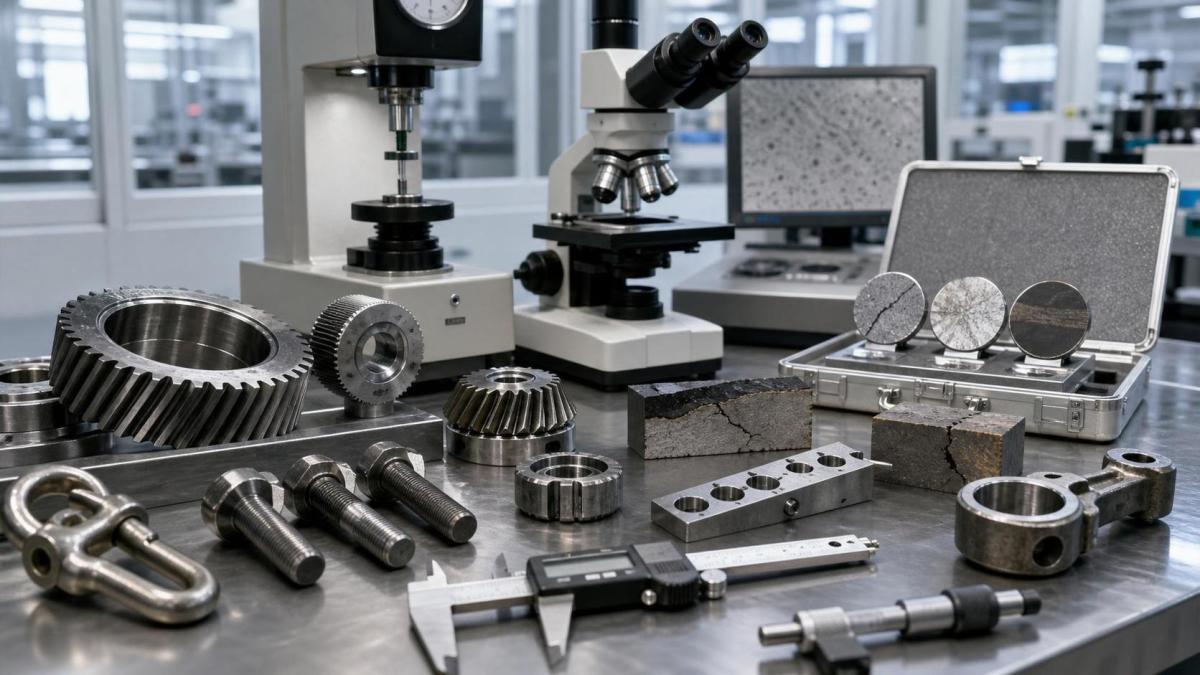
Heat treatment problems rarely announce themselves early. A fastener may still tighten. A tool shaft may still rotate. A lock component may still move smoothly.
The risk appears later, under vibration, impact, humidity, overload, or repeated cycles. That is why heat treatment deserves close attention during maintenance reviews.
In practical field service, many returns blamed on design or assembly are actually linked to poor hardening, tempering, quenching, or case control.
This is especially true in high-strength hardware, brushless tool drive parts, security system metal components, lighting brackets, and PPE connectors.
SHSS often tracks these issues across industries because the same heat treatment mistake can appear in very different products. The damage mechanism is usually similar.
A bolt with low core strength, a gear with decarburization, or a latch with quench cracks may all pass casual visual checks at first.
The real problem is hidden loss of hardness balance, toughness, wear resistance, or dimensional stability. Once that balance is lost, service life drops quickly.
So the useful question is not only, “Is the part broken?” It is also, “Did heat treatment quietly set this failure in motion?”
Which heat treatment defects show up most often in service complaints?
Some defects repeat across product categories. They look different on the surface, yet they often come from the same process control gaps.
The most common heat treatment defects include quench cracks, decarburization, soft spots, excessive hardness, insufficient hardness, distortion, and brittle fracture after tempering errors.
Surface oxidation is another warning sign. It may not always cause failure alone, but it often signals unstable furnace atmosphere or poor temperature discipline.
A quick comparison table helps narrow the first diagnosis before lab work begins.
In service work, the mistake is assuming all breakage means “material was weak.” Sometimes the opposite is true. The part may be too hard and too brittle.
That distinction matters because the fix is completely different. Replacing a brittle part with the same hardness target only repeats the failure.
Where should inspection start when heat treatment is suspected?
Start with the failure location, not the paperwork. The fracture origin, wear band, thread crest, bore edge, or contact face usually tells the first part of the story.
Then match that location to the expected heat treatment result. For example, a case-hardened part should not show a soft worn surface after limited use.
A useful inspection routine often includes four layers.
- Visual checks for scale, discoloration, crack lines, distortion, and unusual wear patterns.
- Dimensional checks for bowing, twist, hole shift, thread growth, or mating interference.
- Hardness checks on surface and core, especially where service stress is highest.
- Metallographic review when repeated failures suggest decarburization, grain problems, or wrong case depth.
If the part belongs to safety-critical assemblies, hardness data alone is not enough. Case depth and microstructure may decide whether the result is acceptable.
This is common in high-strength fasteners and anti-tamper hardware, where a part must resist both wear and shock loading.
For brushless tool gears or impact sockets, inspect root areas and contact flanks carefully. Soft spots and untempered zones often concentrate there.
For smart access systems, small latches and strike parts deserve equal care. Minor heat treatment variation can create noisy operation, sticking, or premature edge chipping.
What usually causes these defects: process error, material mismatch, or later misuse?
The honest answer is often a combination. Heat treatment defects rarely come from one isolated variable.
Process control is still the biggest driver. Wrong furnace temperature, poor soak time, unstable atmosphere, delayed quenching, and uneven load arrangement create predictable trouble.
Material mismatch is the second major source. If the steel chemistry does not fit the intended heat treatment route, even a disciplined process may produce inconsistent results.
Later misuse also matters. Overload, poor lubrication, welding on treated parts, uncontrolled regrinding, or local heating during repair can undo the original heat treatment balance.
A simple judgment table can help separate root causes during failure review.
In real maintenance cases, repeated returns often happen because only the symptom was replaced. The heat treatment route and service environment were never reviewed together.
That is where cross-industry intelligence becomes useful. A fastening issue, a motor output shaft issue, and a door strike issue may share the same metallurgical root cause.
Can heat treatment defects be fixed, or does the part need replacement?
Not every defect allows salvage. The right decision depends on part function, safety level, geometry, and whether the damage is only metallurgical or already structural.
Replacement is usually the safer route when quench cracks, deep decarburization, severe distortion, or brittle fracture have already appeared in service.
Re-heat treatment may be possible for some soft parts, incomplete hardening cases, or components that missed the required tempering window, but only after confirming material suitability.
What should be avoided is uncontrolled local reheating. It may reduce hardness in one area while leaving harmful residual stress somewhere else.
- If cracks are present, reject first and investigate process history.
- If hardness is low but geometry is stable, evaluate re-treatment with full testing.
- If only one lot fails, quarantine matching batches before field recurrence grows.
- If replacement parts are installed, verify the corrected heat treatment specification, not only the drawing number.
This is especially important in sectors where “absolute safety” depends on hidden material performance, not just visible fit and finish.
Whether the part supports structural loads, tool torque, access security, or protective hardware, the repair decision should reflect actual service stress.
How can future heat treatment failures be prevented instead of chased one by one?
The most effective prevention method is to connect field evidence back to process control. That sounds obvious, but many organizations stop at replacement statistics.
A stronger approach is to build a short feedback loop between service findings, incoming inspection, supplier heat treatment records, and design limits.
In practice, prevention usually improves when these checkpoints are kept consistent.
- Define hardness ranges by function, not by habit alone.
- Add case depth or decarburization checks for wear-critical parts.
- Record failure location photos before disassembly cleaning.
- Compare failed parts with unused parts from the same lot.
- Review any repair step that introduces uncontrolled heating.
For SHSS-related sectors, this matters because products sit at the boundary between durability and trust. A hardened bolt, a smart lock cam, or a tool spindle must all stay reliable under pressure.
Heat treatment is often the hidden bridge between design intent and real-world endurance. If that bridge is weak, service failures become expensive and repetitive.
A practical next step is to sort recent failures by symptom, hardness result, and service time. Patterns usually appear faster than expected.
From there, confirm which parts need stricter inspection points, which suppliers need process evidence, and which repair methods should be revised or stopped.
That kind of structured review does more than solve one complaint. It reduces repeat breakdowns, protects safety margins, and keeps heat treatment under control where it matters most.
Recommended News