
Search News
Industry Portal
Hot Articles
Fracture Mechanics for Steel Structures: When Crack Growth Becomes a Design Risk
Time
Click Count
When Small Cracks Stop Being Routine
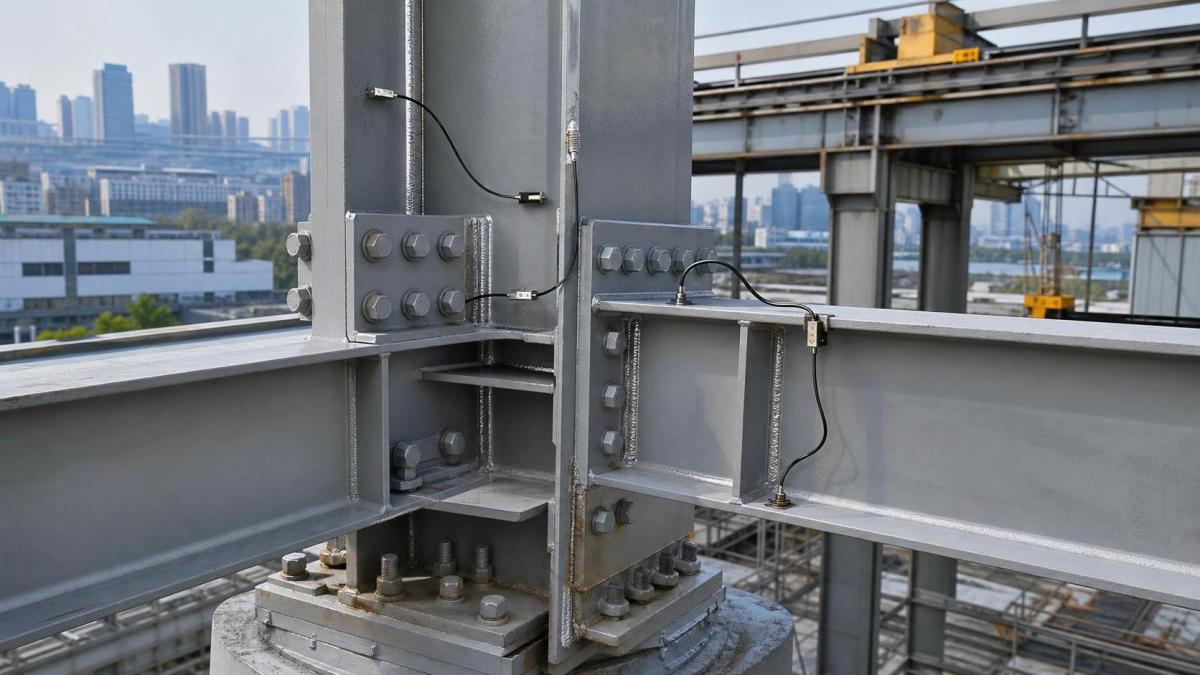
In steel construction, visible damage usually arrives late.
Long before distortion or collapse appears, a small flaw may already be growing under repeated stress.
That is where fracture mechanics for steel structures changes the conversation.
It helps determine when a crack is still manageable, and when it has become a design-level risk.
This matters across construction, industry, transport, energy, and smart-city assets.
A bridge splice, a crane runway beam, a stadium truss, and a security gate frame may all use steel.
Their crack behavior is not judged the same way.
At SHSS, structural reliability is viewed the same way other safety systems are judged.
Absolute performance depends on small components, hidden stress paths, and disciplined inspection logic.
For that reason, fracture mechanics for steel structures is no longer limited to failure investigation.
It has become a practical tool for design review, maintenance planning, and lifecycle control.
Different Operating Conditions Create Different Crack Risks
The same steel grade can perform very differently under different service conditions.
Load frequency is one variable, but it is rarely the only one.
Connection geometry, weld quality, restraint, temperature, corrosion, and access for inspection all matter.
In actual projects, crack growth becomes more dangerous when these factors combine.
A welded node with poor detail control may tolerate static loads for years.
Under vibration, thermal cycling, or impact, the same detail can move into a different risk class.
This is why fracture mechanics for steel structures should be tied to real duty cycles.
Design values alone do not tell the whole story.
A useful starting point is to separate structures by failure consequences and crack detectability.
The table looks simple, but the implication is not.
Fracture mechanics for steel structures works best when crack risk is linked to actual service behavior.
Bridges and Long-Span Frames Need Early Detail Discipline
In bridges and long-span roofs, many cracks begin at ordinary-looking details.
Cover plate terminations, cope holes, welded attachments, and retrofitted brackets are common examples.
The risk is not just peak load.
Repeated traffic, wind-induced vibration, and stiffness changes around connections often control crack growth.
Here, fracture mechanics for steel structures is most valuable before distress becomes visible.
It helps estimate whether an assumed flaw size can remain stable between inspection cycles.
That decision affects weld finishing, plate thickness transitions, and access for nondestructive testing.
A frequent mistake is to rely only on nominal stress checks.
When geometry creates local concentration, nominal compliance can still hide meaningful crack-driving force.
In these structures, the smarter choice is often a cleaner detail rather than heavier steel.
Industrial Equipment Supports Face Messier Load Histories
Industrial frames rarely experience textbook loading.
Tooling supports, machine bases, access platforms, and conveyor structures see starts, stops, impacts, and misalignment.
That creates irregular stress ranges and local vibration.
In facilities connected to heavy fastening systems or high-torque brushless tools, dynamic transfer can be surprisingly severe.
The crack issue is often concentrated near welded attachments and bolted interfaces.
Fracture mechanics for steel structures helps judge whether a discovered crack can be monitored or demands redesign.
More importantly, it forces a better question.
Is the crack the main problem, or is the load path unstable?
If load sharing is poor, repair alone will not last.
This is where structural mechanics and hardware intelligence naturally meet.
The same discipline used to validate high-strength fasteners should also verify local stress transfer around them.
Cold Service and Critical Access Points Raise the Consequence Level
Not every crack grows quickly, but some cracks become dangerous with little warning.
This is especially true in low-temperature service and critical access infrastructure.
Examples include exposed platforms, logistics gateways, perimeter steelwork, and data-center entry structures.
Those elements may appear secondary, yet they often support security equipment, lighting, or emergency circulation.
A brittle fracture event in these locations can cause wider operational disruption.
For these cases, fracture mechanics for steel structures should include toughness selection and crack arrest thinking.
The usual error is to treat all exterior steel as one environmental category.
In reality, temperature gradients, impact exposure, and maintenance access vary significantly across one site.
Where failure would disable secure circulation or smart-city operations, the tolerance for uncertain crack growth should be lower.
What Usually Gets Misjudged Before Problems Escalate
Several misjudgments appear repeatedly when fracture issues are reviewed after the fact.
- A crack is treated as a workmanship defect, even though the detail is fundamentally fatigue-prone.
- Toughness data is checked at purchase stage, but not linked to actual minimum service temperature.
- Inspection plans assume access is available, while the detail is later hidden by equipment or cladding.
- Bolted and welded zones are reviewed separately, although the local stiffness interaction drives the damage.
- Lifecycle cost focuses on repair price, not shutdown time or temporary support requirements.
These are practical reasons why fracture mechanics for steel structures belongs in early coordination.
It reduces the gap between design intent and field reality.
A Practical Way to Match Analysis Depth to the Situation
Not every project needs the same level of fracture assessment.
The useful approach is to scale the effort to consequence, uncertainty, and inspection limitations.
For ordinary, accessible details with low consequence, screening checks may be enough.
For fatigue-sensitive nodes, low-temperature service, or hard-to-reach joints, deeper evaluation is justified.
A workable decision path often includes the following steps.
- Map where stress concentration, restraint, and inspection difficulty overlap.
- Define realistic flaw assumptions for fabrication and service damage.
- Check whether crack growth stays acceptable within planned inspection intervals.
- Revise the detail, material toughness, or access strategy if the margin is weak.
- Tie the final decision to maintenance documentation, not just design notes.
This is also where cross-disciplinary review adds value.
A portal like SHSS is useful because structural risk rarely sits alone.
Fasteners, lighting supports, access-control steelwork, and protective infrastructure often share the same reliability chain.
Next-Step Checks Before Crack Growth Becomes a Design Risk
The value of fracture mechanics for steel structures is not academic precision by itself.
Its value is better judgment under real operating conditions.
Where steel details support urban mobility, industrial uptime, or secure facilities, small cracks deserve earlier attention.
A sensible next step is to review the structure by service scenario, not by drawing package alone.
Compare load variability, temperature exposure, detail sensitivity, and inspection access.
Then confirm whether current material choices, joint details, and maintenance intervals still match the real duty cycle.
That is usually the point where fracture mechanics for steel structures stops being a specialist topic.
It becomes a practical filter for safer design, more reliable assets, and fewer expensive surprises over time.
Recommended News