
Search News
Industry Portal
Hot Articles
Metal Fatigue Analysis: Early Failure Signs You Should Not Ignore
Time
Click Count
Metal fatigue analysis starts with the signs most teams miss
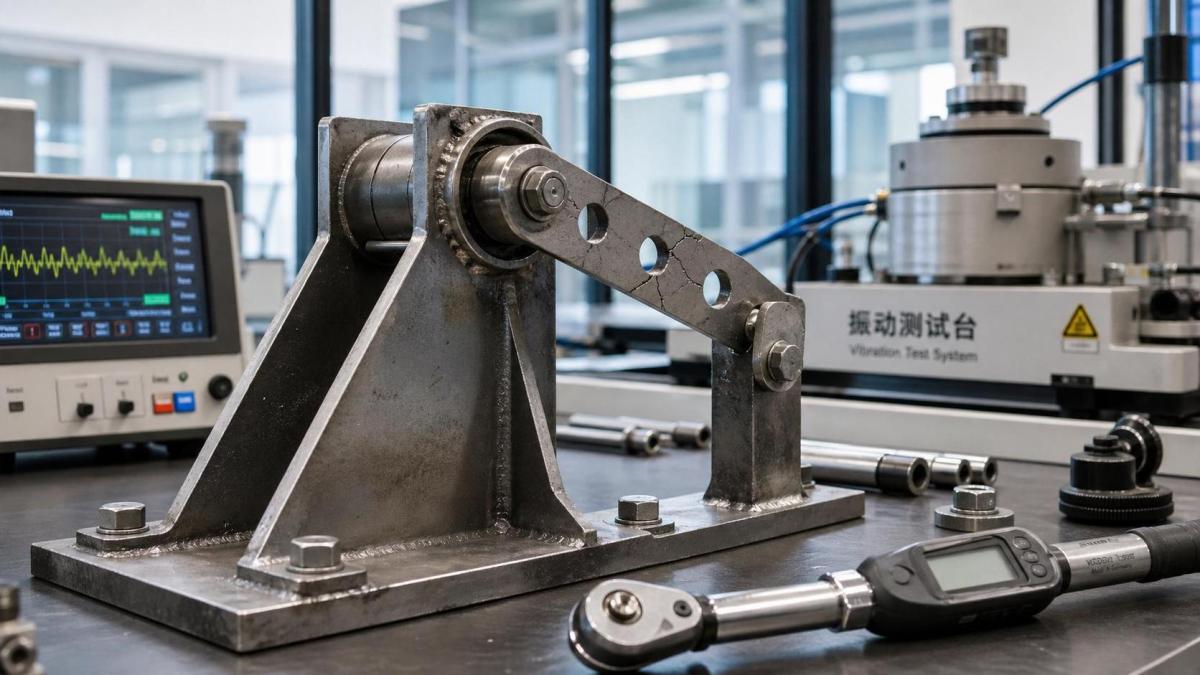
Metal fatigue analysis matters whenever parts face repeated stress, not only extreme overload.
That is why early failure often surprises otherwise stable systems.
A bracket may pass installation checks, then crack months later under vibration, torque pulses, or thermal cycling.
In practical terms, the risk spans more than heavy machinery.
It appears in high-strength fasteners, brushless tools, smart access hardware, lighting mounts, hinges, and protective equipment frames.
For SHSS-focused sectors, this makes metal fatigue analysis part of everyday reliability control.
The common mistake is waiting for visible breakage.
By then, the damage path is already advanced, and the corrective cost is usually much higher.
A better approach is to link inspection findings with operating history.
Microcracks, deformation, strange noise, and performance drift rarely appear alone.
They tend to cluster around repeated load paths, weak geometry, poor installation, or unsuitable material treatment.
What does metal fatigue analysis actually tell you?
It answers a very practical question: why did a part weaken under normal-looking service conditions?
Unlike a single overload failure, fatigue damage grows in stages.
A small defect forms first, usually at a stress concentration.
Then repeated loading extends the crack until the remaining section cannot carry the load.
This is why metal fatigue analysis is useful even after a small warning sign.
It helps separate cosmetic wear from a structural threat.
In high-strength hardware, thread roots, under-head fillets, and punched edges deserve close attention.
In powered tools, gearbox housings, spindle interfaces, and battery locking points may show early cyclic stress effects.
In biometric security devices, door closers, mounting plates, hinges, and metal enclosures often face hidden repetition.
Even smart lighting structures can fatigue from wind load, vibration, and frequent repositioning.
So the value of metal fatigue analysis is not theoretical.
It shows whether a pattern of use is eating into service life faster than expected.
Which early failure signs deserve immediate attention?
Not every mark means failure is near, but some indicators should move inspection forward quickly.
The table below helps prioritize what metal fatigue analysis should focus on first.
More often than not, sound and movement changes appear before a complete fracture.
That is especially true in assemblies with multiple bolted or riveted interfaces.
A smart lock bracket, for example, may still operate electronically while its support plate begins to fatigue.
The same pattern appears in LED mast arms and industrial driver housings.
When a symptom repeats after retightening or minor adjustment, metal fatigue analysis should move from routine inspection to root-cause review.
Where do fatigue risks show up across tools, security systems, lighting, and PPE?
This is where context matters.
The same crack pattern can have different causes depending on the asset and duty cycle.
Fasteners and high-strength hardware
Frequent vibration, poor preload control, and mixed-material joints are common fatigue drivers.
Thread damage, seating marks, and corrosion pits can accelerate crack growth.
Industrial brushless tools
High torque density creates repeated load reversals in compact metal parts.
If housings or couplings start vibrating differently, metal fatigue analysis becomes more urgent than a simple wear check.
Smart access and biometric security
Electronic accuracy often hides mechanical decline.
Repeated door cycles load hinges, strike plates, brackets, and frame anchors thousands of times.
A device may authenticate in milliseconds yet fail physically at the mounting interface.
Commercial smart lighting
Outdoor fixtures face wind, thermal expansion, and maintenance repositioning.
Small cracks around brackets or pole attachments can grow unnoticed between service intervals.
PPE and protective hardware
Metal frames, buckles, clips, and connectors can fatigue under repeated bending and shock.
This is easy to underestimate because the visible textile or polymer layer looks intact.
Across all these categories, SHSS-style intelligence is useful because it connects structure, operating behavior, and compliance expectations in one review path.
How do you separate normal wear from a fatigue problem?
A practical distinction starts with location, repetition, and progression.
Normal wear spreads across contact surfaces.
Fatigue damage usually concentrates around a specific geometry or joint.
Another clue is whether the symptom returns after maintenance.
If a bracket keeps loosening or noise comes back quickly, the issue may be structural, not procedural.
The more reliable judgment method combines records rather than relying on eyesight alone.
- Compare cycle count against original service assumptions.
- Review whether vibration, temperature, or duty pattern has changed.
- Check if cracks start near holes, weld toes, bends, or thread roots.
- Look for paired evidence such as noise plus movement, or deformation plus output drift.
- Confirm whether repairs addressed cause, not only symptom.
In actual field use, metal fatigue analysis becomes stronger when inspection data and operational data are reviewed together.
That approach often reveals why one installation fails early while another survives under the same nominal specification.
What are the common mistakes that make failures arrive sooner?
Some failures begin long before the first crack is visible.
They are built into design choices, installation habits, or maintenance shortcuts.
- Treating high static strength as proof of high fatigue life.
- Ignoring preload variation in fastened joints.
- Using surface inspection only when subsurface cracks are possible.
- Replacing a failed part without checking alignment, resonance, or support stiffness.
- Assuming electronics performance means mechanical safety remains unchanged.
That last point matters in AIoT hardware.
A biometric terminal can still process faces correctly while a fatigued mounting arm shifts under repeated access cycles.
Likewise, a smart luminaire may keep its lighting schedule while structural fatigue develops at the attachment point.
Metal fatigue analysis should therefore be included in reliability reviews, not left only to failure investigation.
What should the next inspection cycle include?
A useful next step is not to inspect everything equally.
Start with parts carrying repeated loads, parts near motion interfaces, and parts whose failure would trigger safety or downtime consequences.
Then build a short decision path around metal fatigue analysis.
- Map critical joints and note their load direction changes.
- Set visual and dimensional checkpoints for recurring weak zones.
- Record noise, vibration, and performance drift as inspection data.
- Escalate repeated symptoms to crack detection or failure analysis.
- Use findings to refine maintenance intervals and replacement timing.
For organizations working across tools, fasteners, smart security, lighting, and PPE, this creates a more unified reliability language.
That is also where SHSS thinking fits naturally.
It connects structural mechanics, field conditions, and safety expectations without turning the issue into a sales pitch.
If an asset already shows microcracks, distortion, unusual sound, or recurring looseness, waiting for the next major shutdown is rarely the best choice.
Review the load path, confirm the root cause, and update the inspection standard before the warning becomes a fracture.
Recommended News