
Search News
Industry Portal
Hot Articles
Metal Fatigue Analysis: When Cracks Become Critical
Time
Click Count
Why does metal fatigue analysis matter before any crack is visible?
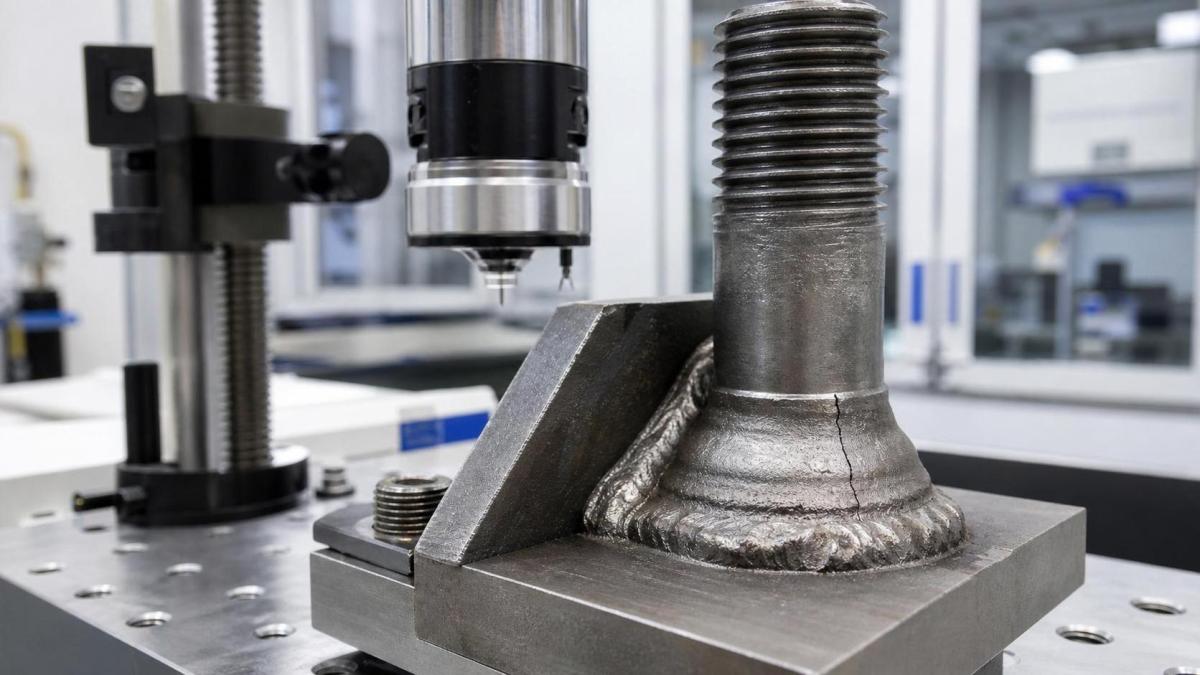
Metal fatigue analysis starts with a simple fact: failure usually begins long before damage can be seen with the naked eye.
Tiny cyclic loads create microcracks at stress concentrators, surface defects, thread roots, weld toes, or sharp geometric transitions.
That is why fatigue is so important across smart hardware, industrial tools, access systems, lighting structures, fasteners, and protective equipment hardware.
In practical terms, metal fatigue analysis connects material behavior with safety decisions, maintenance timing, warranty exposure, and lifecycle cost.
A BLDC tool spindle, a biometric lock bracket, a high-strength bolt, or a smart pole mounting arm may all survive static tests yet fail under repeated service loads.
More often, the concern is not maximum force alone. It is the combination of load range, cycle count, vibration, environment, and local geometry.
This is where metal fatigue analysis becomes useful. It turns hidden damage growth into a measurable engineering question: how long until the crack becomes critical?
For SHSS, this question fits naturally with a broader view of physical safety. Whether guarding structural integrity or access security, reliability depends on weak points being understood early.
When does a crack become critical rather than acceptable?
A crack becomes critical when continued operation can no longer be justified against fracture risk, function loss, or compliance limits.
That threshold is not defined by crack length alone. Location, orientation, thickness, residual stress, load path, and toughness all change the answer.
In metal fatigue analysis, engineers usually compare actual crack conditions with allowable limits derived from fracture mechanics and service assumptions.
A short surface crack near a low-stress region may remain manageable. A similar crack at a threaded root or welded support may be far more dangerous.
The practical judgment often combines three questions.
- Is the crack still below the critical size for expected peak loading?
- How fast is it growing under the real load spectrum?
- Can inspection reliably detect growth before unstable fracture occurs?
If one of those answers is uncertain, the component may already be too close to risk.
That is why conservative metal fatigue analysis usually treats uncertainty as a design input, not a paperwork detail.
A quick judgment table helps frame the decision
In real reviews, a compact screen is often more useful than a long theory note.
If several items fall into the higher concern column, metal fatigue analysis should move from screening to detailed assessment.
Which components usually need closer fatigue review?
Not every metal part deserves the same effort. Closer review is usually justified where repeated loading combines with safety, access, or downtime consequences.
In industrial brushless tools, rotating shafts, gear interfaces, housings near impact loads, and fastening points are common fatigue hotspots.
For biometric security hardware, door closers, lock bodies, mounting plates, hinge supports, and enclosure brackets see frequent cyclic stress.
High-strength fasteners deserve special attention because they transfer force through small threaded volumes where local stress rises quickly.
Smart lighting systems also face fatigue risk. Poles, arms, anchors, and brackets experience wind-induced vibration and thermal cycling over long service periods.
Even PPE hardware can enter the discussion. Buckles, clips, connectors, and support frames may not look structural, but repeated use can still drive crack initiation.
This cross-sector view is especially relevant to SHSS because physical reliability is shared across tools, security, lighting, and protective systems.
A useful rule is simple: if failure creates unsafe release, access loss, falling hazards, or expensive service interruption, metal fatigue analysis should be part of the evaluation.
How is metal fatigue analysis actually performed in practice?
The process is less mysterious than it sounds. Most assessments combine material data, geometry review, load history, and crack growth logic.
At an early stage, analysts often start with S-N data, stress concentration factors, and expected cycle counts.
If a crack already exists, fracture mechanics becomes more important. Then the focus shifts to crack size, stress intensity, and growth rate per cycle.
In actual application, the workflow usually looks like this.
- Define the service load spectrum, not just a nominal load.
- Identify local stress raisers through design review or simulation.
- Check material condition, heat treatment, hardness, and surface finish.
- Estimate initiation life and crack growth life separately.
- Compare inspection intervals with predicted crack propagation speed.
That last point is often overlooked. A part may be acceptable on paper but unsafe if inspection cannot keep pace with crack growth.
For metal fatigue analysis in critical hardware, reliability depends as much on assumptions as on formulas.
What data gaps cause the biggest mistakes?
The most common problem is using ideal laboratory loads to judge messy field conditions.
Variable torque, impact starts, vibration coupling, corrosion, and installation error can all shorten fatigue life beyond original estimates.
Another mistake is treating all cracks as equivalent. Surface cracks, embedded flaws, and thread-root defects do not behave the same way.
What warning signs suggest fatigue risk is being underestimated?
The early signs are usually indirect. That is why fatigue failures often surprise teams that only look for obvious deformation.
Recurring fastener loosening, local coating damage, unexplained vibration, noise changes, or repeated replacement at the same point are all useful clues.
A polished crescent mark near a fracture zone can also indicate crack growth over time rather than sudden overload.
In access and smart city hardware, misalignment may appear before fracture. Doors sag, brackets drift, poles oscillate more, or connectors begin fretting.
For metal fatigue analysis, repeated field complaints should never be dismissed as isolated service noise without checking pattern and location.
A more grounded response is to review load paths, inspect critical features, and compare service history against expected cycle consumption.
How do you compare repair, redesign, and replacement decisions?
Once a fatigue crack is confirmed, the next step is not always immediate disposal. The right response depends on function, urgency, and residual life.
Repair may be reasonable when the crack is accessible, the load can be reduced, and post-repair validation is practical.
Redesign is often the better long-term choice when the same location fails repeatedly or when geometry itself creates the problem.
Replacement becomes necessary when inspection confidence is low, crack growth is fast, or safety margins are already consumed.
A short comparison can make the choice clearer.
This is where metal fatigue analysis supports cost decisions, not just safety decisions. It helps separate urgent action from expensive overreaction.
What should be checked next if fatigue is a real concern?
A useful next step is to build a small evaluation checklist around the highest-risk components and service conditions.
- Map where cyclic loads, vibration, or thermal swings are concentrated.
- Review whether geometry, threads, welds, or corners amplify stress.
- Confirm material certificates, treatment history, and surface condition.
- Match inspection methods to the smallest crack that matters.
- Decide whether current maintenance intervals reflect real crack growth risk.
Metal fatigue analysis is most valuable when it is linked to actual operating evidence, not used as an isolated calculation.
Across the SHSS landscape, that means viewing mechanical endurance the same way one views secure access or protective barriers: as a last line of defense that must be verified early.
If cracks are suspected, the smartest move is to compare load history, defect location, and inspection capability before deciding on continued service.
That approach keeps metal fatigue analysis practical, decision-focused, and closely tied to safety, uptime, and lifecycle value.
Recommended News