
Search News
Industry Portal
Hot Articles
Smart Lock Options: Biometric vs Keypad vs App Access
Time
Click Count
Choosing a smart lock now reaches far beyond convenience. In commercial buildings, industrial sites, mixed-use facilities, and smart city projects, door access has become part of a wider security architecture.
That shift explains why biometric, keypad, and app-based entry are being compared more carefully. Each smart lock option affects speed, traceability, user control, compliance exposure, and the practical resilience of daily operations.
For environments shaped by AIoT, edge devices, and stricter physical security expectations, the best choice is rarely universal. It depends on the door, the risk profile, and the level of control required.
Why smart lock choices matter more today
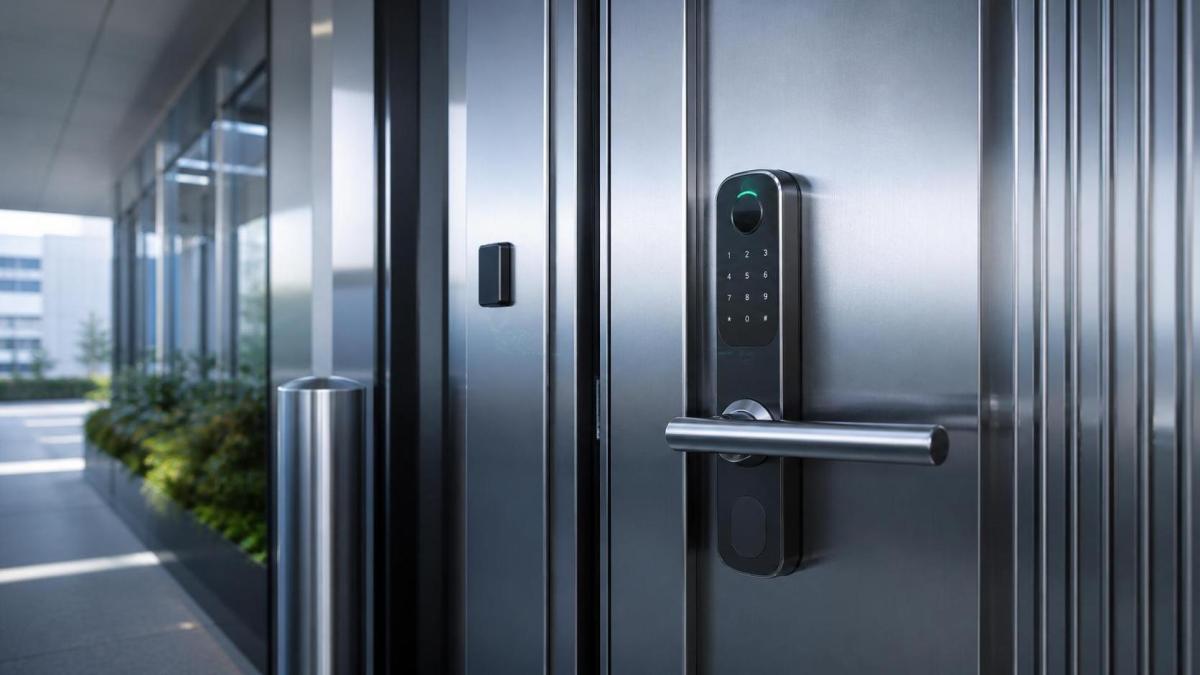
A modern smart lock is no longer an isolated hardware upgrade. It often connects with visitor management, surveillance, building automation, and incident reporting.
This is especially relevant in sectors where SHSS tracks physical protection closely. Access control now sits beside structural hardware, smart lighting, PPE, and industrial tools as part of one safety chain.
In that chain, the door is a decision point. It determines who enters, when they enter, how events are logged, and how quickly credentials can be changed after risk appears.
A traditional key struggles in this context. It cannot verify identity, issue temporary permissions, or feed data into a broader security process.
Understanding the three main smart lock paths
Most enterprise evaluations begin with three access models. They solve the same basic problem, but they do so in very different ways.
Biometric access
A biometric smart lock uses a physical trait as the credential. Fingerprint, facial recognition, and iris recognition are the most common forms.
Its strongest advantage is identity binding. A code can be shared, and a phone can be borrowed, but a biometric factor is far harder to transfer casually.
This matters in data rooms, controlled offices, laboratories, logistics zones, and buildings with restricted internal circulation.
Keypad entry
A keypad smart lock relies on PIN codes. It is familiar, relatively simple to deploy, and often effective where many short-term users need access.
The strength of keypad access lies in flexibility. Codes can be assigned by shift, by contractor window, or by service visit without issuing physical keys.
Its weakness is equally clear. Codes can be observed, guessed, shared, or reused too long if governance is weak.
App-based control
An app-enabled smart lock uses mobile credentials, usually through Bluetooth, Wi-Fi, NFC, or cloud-linked identity systems.
This option performs well when centralized administration matters. Permissions can be changed remotely, access can be time-limited, and event records are easier to aggregate.
For distributed sites, temporary teams, and hybrid workplaces, app access often aligns well with operational reality.
Where the differences become practical
At first glance, every smart lock promises keyless entry. In actual deployment, the better question is how each method behaves under pressure.
Biometric systems usually deliver the strongest confidence in who entered. That is valuable when accountability is more important than raw throughput.
Keypad systems are often easier to explain to users and visitors. They also remain practical in locations where phones are restricted or network conditions are inconsistent.
App-based systems stand out when access rights change frequently. They reduce the lag between policy decisions and on-site enforcement.
The business issues behind the hardware
A smart lock decision often fails when it is framed as a feature checklist. The deeper issue is governance.
Biometric access raises the highest bar for data responsibility. Templates, storage practices, retention periods, and consent frameworks require close review, especially under GDPR and similar rules.
This is where the SHSS perspective is useful. In physical security, performance and compliance should advance together rather than compete.
Keypad systems create a different management challenge. Security depends less on the hardware itself and more on code rotation discipline, access review frequency, and audit clarity.
App-based access shifts attention toward credential lifecycle control. Lost devices, revoked roles, authentication standards, and cloud permissions all become part of the smart lock discussion.
Typical deployment scenarios across sectors
Different doors carry different risks. That is why a single facility may need more than one smart lock model.
- Office entrances often benefit from app access, especially where schedules change and visitor permissions must be managed remotely.
- Server rooms, archives, and regulated storage areas usually justify biometric smart lock controls because traceable identity matters more than convenience.
- Warehouses, maintenance spaces, and service corridors often suit keypad systems when many authorized people need simple, controlled entry.
- Construction compounds and temporary project sites may combine keypad and app credentials to balance speed, turnover, and revocation needs.
- Healthcare, laboratories, and sensitive manufacturing lines may use layered smart lock access to separate public, staff, and restricted zones.
In many advanced facilities, smart lock strategy now resembles layered physical design. High-strength hardware protects structure, lighting improves visibility, PPE reduces injury exposure, and access control defines authorized movement.
How to evaluate the right smart lock mix
The most effective selection process starts with doors, not product catalogs. Every opening should be mapped by consequence, traffic, and management burden.
Questions that sharpen the decision
- Does the door protect convenience assets or critical assets?
- Is identity verification essential, or is controlled group access enough?
- How often do users, roles, or contractors change?
- What audit trail is needed after an incident?
- Can the site support mobile credentials, network dependency, and policy enforcement?
- Are biometric data rules acceptable within the operating region?
These questions usually reveal that no single smart lock type wins across every door. A portfolio approach is often stronger than standardizing too early.
What to watch before rollout
A smart lock can look advanced on paper and still create friction in practice. Rollout success depends on details that are easy to overlook.
- Check integration with existing access platforms, surveillance, alarms, and facility software.
- Review fallback methods for outages, battery events, and emergency egress.
- Confirm whether credentials can be revoked instantly across every site.
- Test throughput during shift changes, deliveries, and visitor peaks.
- Define ownership for audits, permissions, and exception handling before activation.
In other words, smart lock performance is never only about unlocking. It is about how cleanly the system behaves when operations become busy, irregular, or security-sensitive.
A practical direction for next steps
Biometric, keypad, and app access each have a legitimate place in modern access control. The right answer depends on where identity certainty, operational flexibility, and compliance pressure intersect.
A useful next step is to rank doors by risk, turnover, and audit needs, then match each zone to the most suitable smart lock method rather than forcing one standard everywhere.
From there, compare vendors on credential management, integration depth, fallback design, and data governance. That approach turns the smart lock discussion into a clearer physical security decision.
Recommended News