
Search News
Industry Portal
Hot Articles
Industrial Fasteners: How to Compare Strength, Coating, and Total Cost
Time
Click Count
Industrial Fasteners: How to Compare Strength, Coating, and Total Cost
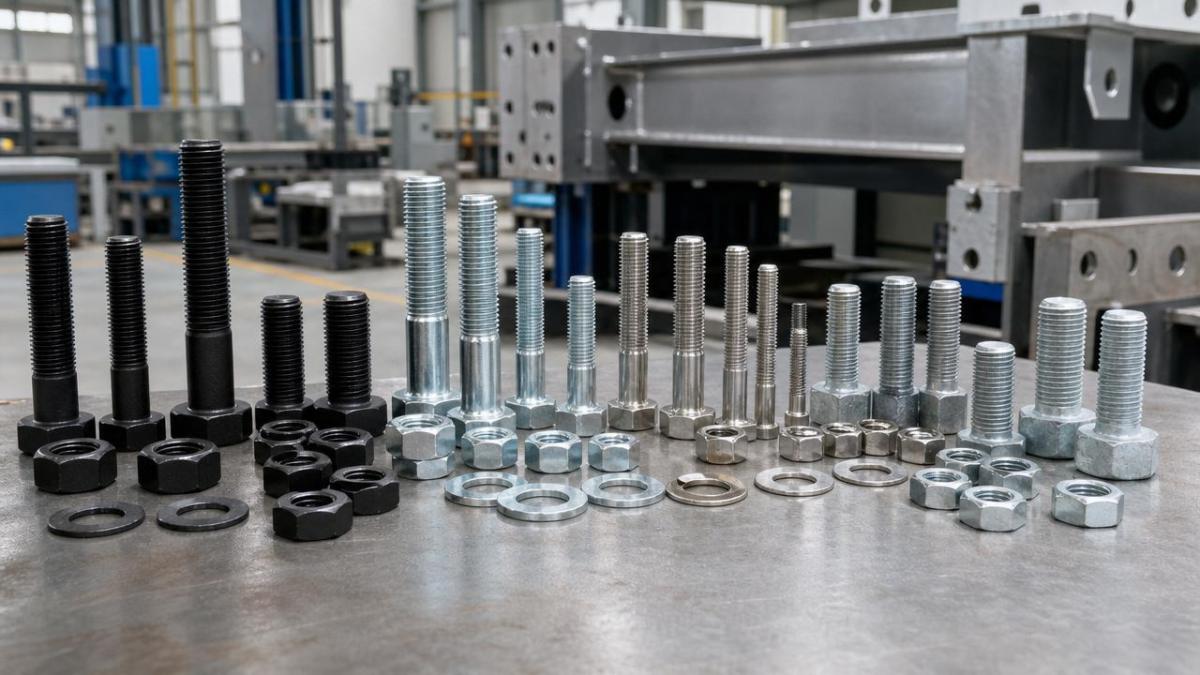
Choosing industrial fasteners is not just about size or unit price.
It affects safety, maintenance frequency, downtime exposure, and long-term project margin.
That is why industrial fasteners should be compared as a system decision, not a catalog decision.
In practical sourcing, three questions matter most.
Can the fastener carry the real load?
Will the coating survive the environment?
And what will the full installed cost look like over the service life?
This guide breaks down how to compare industrial fasteners with a practical, decision-focused lens.
The goal is simple.
Reduce risk, improve consistency, and avoid paying more later for a cheaper choice today.
Start with strength, not price
The first screening step for industrial fasteners is mechanical performance.
If the strength grade is wrong, coating and price become secondary issues.
Many sourcing errors happen because load conditions are simplified too early.
Static load is only part of the picture.
Vibration, impact, joint movement, thermal cycling, and preload loss also shape performance.
What to verify in strength comparison
- Property class or grade, such as 8.8, 10.9, or 12.9.
- Tensile strength, yield strength, and proof load.
- Shear performance in the actual joint design.
- Thread engagement, clamp load, and torque range.
- Fatigue resistance under repeated stress cycles.
- Material compatibility with mating parts.
For example, a high-strength bolt may look like the safer option.
But if the base material is soft, over-tightening can damage the joint before the bolt reaches design preload.
In other words, stronger is not always better.
Better fit is better.
A useful sourcing shortcut
Ask suppliers for application-based validation, not just material certificates.
A compliant certificate confirms a standard.
It does not prove the industrial fasteners will perform in your exact assembly.
Recent market changes make this even more important.
More products now operate faster, vibrate harder, and run longer between maintenance windows.
Compare coatings by environment, not by appearance
The next decision layer is corrosion protection.
This is where many industrial fasteners are under-specified or over-bought.
A bright finish can look premium and still fail early in aggressive conditions.
What matters is not visual appeal.
What matters is exposure profile.
Key coating options to review
- Zinc plating for general indoor use and lower-cost applications.
- Hot-dip galvanizing for outdoor structural environments.
- Mechanical galvanizing where coating consistency matters.
- Geomet or flake coatings for high corrosion resistance.
- Stainless steel where moisture or chemicals are persistent.
- Special coatings for salt spray, marine, or chemical plants.
In actual projects, the environment is often mixed.
There may be humidity, cleaning chemicals, UV exposure, and occasional coastal air.
That mix should drive coating selection.
Not habit, and not the last project spec copied forward.
Watch the hidden trade-offs
Coating thickness can affect thread fit and torque behavior.
Some plated high-strength industrial fasteners also need close attention to hydrogen embrittlement risk.
This matters especially in critical joints with higher hardness levels.
A lower-priced coating can become very expensive if it increases failure analysis, replacement labor, or shutdown events.
Calculate total cost, not just piece price
This is usually the point where the best sourcing decisions separate from the fastest ones.
Industrial fasteners may represent a small share of BOM value.
But they can drive a much larger share of field risk.
That is why total cost should include direct and indirect factors.
Include these cost elements
- Unit price and minimum order quantity.
- Freight, packaging, and import duty.
- Installation time and torque control requirements.
- Inspection, traceability, and certification costs.
- Replacement cycle and maintenance labor.
- Downtime cost if fasteners fail or loosen.
- Warranty exposure and reputation impact.
A common example is outdoor equipment.
One fastener option may cost 12% less at purchase.
Yet it may require earlier replacement, more site visits, and more claims handling.
Over three years, the cheaper line item becomes the more expensive decision.
A simple decision table
Ask better supplier questions
Good sourcing outcomes depend on better inputs.
When comparing industrial fasteners, supplier conversations should move beyond price sheets quickly.
The more useful signal is process control.
Questions worth asking
- Which standards apply to this fastener and this coating?
- What test data supports fatigue and corrosion claims?
- How is lot traceability managed?
- What are the controls for heat treatment and thread rolling?
- What is the rejection rate and corrective action process?
- Can the supplier support stable lead times for repeat orders?
This also helps compare industrial fasteners across regions and factories more fairly.
Two products can share the same nominal specification.
Their real consistency may still be very different.
Build a practical comparison framework
To make sourcing faster and more repeatable, use a weighted comparison model.
This avoids emotional decisions during urgent buying cycles.
A simple model works well for most industrial fasteners.
- 30% for mechanical strength and fit for application.
- 25% for coating suitability and corrosion life.
- 20% for total delivered and installed cost.
- 15% for supplier quality control and traceability.
- 10% for lead time stability and service support.
The exact weight can shift by project.
For outdoor infrastructure, coating may deserve more weight.
For high-vibration equipment, fatigue performance may carry more value.
What matters is having one clear method before quotations arrive.
Final takeaway for better industrial fasteners sourcing
The best industrial fasteners are not simply the strongest or the cheapest.
They are the ones that match the load, resist the environment, and control total cost over time.
That is the real basis for confident procurement.
A smart review process starts with strength verification, then checks coating fit, then measures lifecycle economics.
From there, supplier discipline becomes the deciding edge.
If the next buying cycle includes industrial fasteners for structural, mechanical, or outdoor use, build the comparison sheet before requesting quotes.
That one step usually saves more money than negotiating the last few cents off unit price.
Recommended News