
Search News
Industry Portal
Hot Articles
Precision Aerospace Hardware: Key Tolerance Checks Before Approval
Time
Click Count
Before approval, precision aerospace hardware is judged by far more than nominal size. Tiny deviations in threads, holes, surface finish, or material condition can change load transfer, assembly accuracy, fatigue life, and traceable compliance.
That matters across advanced manufacturing because aerospace hardware sits at the same intersection SHSS tracks closely: mechanical strength, process discipline, operational safety, and measurable reliability under demanding service conditions.
In practice, tolerance checks are not a paperwork ritual. They are a screening method that helps prevent rejection in final assembly, hidden crack initiation, seal failure, vibration loosening, and expensive downstream rework.
Why tolerance control carries unusual weight
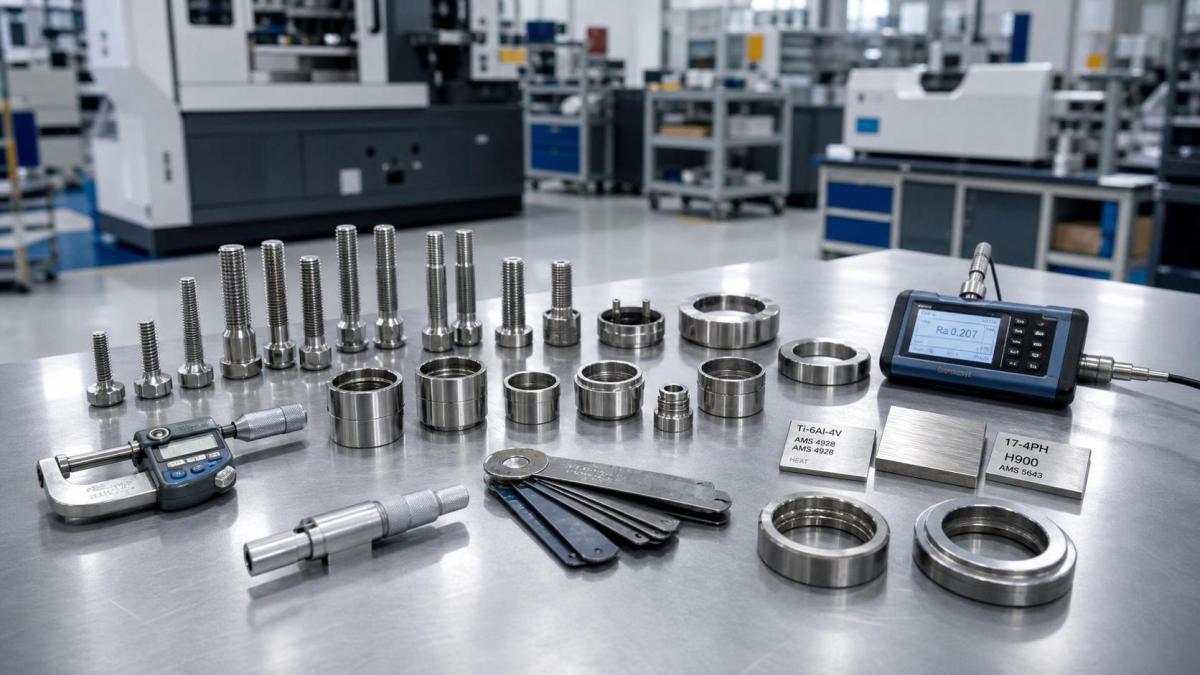
Aerospace fasteners, pins, bushings, collars, rivets, and threaded inserts often look small. Their function is not small. They keep structural members aligned while transferring cyclic loads through joints that may face heat, vibration, pressure, and corrosion.
For that reason, precision aerospace hardware is evaluated as part geometry, part process history, and part risk signal. A dimension within drawing limits may still raise concern if thread form, plating thickness, or surface damage suggests weak process control.
This is also why high-strength hardware knowledge from broader industry remains relevant. The same discipline seen in critical industrial fasteners applies here, but with tighter acceptance windows and a lower tolerance for uncertainty.
What inspectors are really checking
The core question is simple: will the part fit, clamp, hold, and survive exactly as intended? Approval depends on whether the measured condition supports that outcome without relying on adjustment or assumption.
For precision aerospace hardware, tolerance review usually combines dimensional inspection, visual examination, material verification, and documentation control. None of these should be treated in isolation.
Critical dimensions
Diameter, shank length, head height, grip length, hole size, countersink angle, and concentricity are common checkpoints. Small errors here can create stack-up problems across multi-part assemblies.
On close-tolerance hardware, even a minor oversize may force installation stress. A slight undersize may reduce interference, loosen alignment, or shift load paths during operation.
Thread geometry
Thread pitch, flank angle, pitch diameter, root radius, lead accuracy, and runout deserve careful attention. A thread can appear acceptable visually while still failing functional gauging or torque performance.
For precision aerospace hardware, thread defects often become fatigue starters. Rolled thread quality, burr presence, crest truncation, and damaged starts should never be dismissed as cosmetic issues.
Surface and edge condition
Nicks, laps, scratches, tool marks, plating blisters, burns, and sharp transitions change stress concentration behavior. On highly loaded hardware, surface integrity is often as important as dimensional conformity.
This becomes especially important after machining, heat treatment, shot peening, or coating. Each process can improve performance, but each can also introduce defects if control drifts.
Tolerance checks that deserve the closest review
Not every measurement carries the same risk. The most valuable review effort goes to features that directly affect fit, preload retention, structural continuity, and environmental resistance.
A useful pattern is to treat fit-critical and fatigue-critical features as first-tier controls. These are the dimensions and conditions most likely to turn a conforming report into a field problem.
Where approval decisions usually become difficult
Borderline cases rarely involve one obvious failure. More often, several small deviations appear together. Each may seem minor, but their combined effect can push risk beyond an acceptable threshold.
A common example is hardware that passes basic dimensions but shows plating thickness variation, thread drag, and inconsistent surface finish. For precision aerospace hardware, that combination can point to unstable process capability.
Another difficult area is substitution. Equivalent-looking parts may differ in alloy, hardness range, coating chemistry, or manufacturing route. Approval should follow specification and traceability, not visual similarity.
Documentation is part of the tolerance picture
Dimensional results mean less without supporting records. Material certs, heat treatment records, lot traceability, process approvals, calibration status, and inspection method consistency all influence confidence in acceptance.
This reflects a broader SHSS view of hardware assurance. Absolute safety is built not only through strength, but through disciplined intelligence linking physical performance to verified process evidence.
How these checks apply in real operating contexts
Tolerance priorities shift with installation environment. Airframe joints, engine-adjacent assemblies, access panels, landing systems, and vibration-heavy structures do not fail in the same way, so review should follow service exposure.
- In vibration-dense areas, thread form, locking features, and seating contact deserve extra scrutiny.
- In corrosive or humid environments, coating uniformity and surface damage become more consequential.
- In precision alignment points, hole position, concentricity, and shank tolerance should lead the inspection plan.
- In fatigue-sensitive structures, edge quality and residual surface defects can outweigh minor cosmetic concerns elsewhere.
That service-based reading is often what separates routine checking from effective approval. The drawing sets the limit, but the application reveals where the limit matters most.
Practical ways to strengthen approval decisions
A better approval process for precision aerospace hardware does not always mean more inspection. It usually means sharper prioritization, stronger method discipline, and cleaner escalation when findings cluster around high-risk features.
Useful practices on the floor and in review
- Match measurement tools to tolerance tightness and feature geometry.
- Use functional gauging where thread performance matters more than appearance.
- Separate cosmetic variation from fatigue-relevant surface damage.
- Flag repeated near-limit results by lot, machine, or supplier source.
- Review coating and heat treatment effects alongside final dimensions.
- Escalate mixed signals instead of approving on one passing metric.
Where possible, connect inspection findings back to installation data, torque behavior, service returns, or teardown evidence. That feedback loop improves future acceptance criteria and supplier conversations.
What to review next
For organizations handling precision aerospace hardware, the next step is usually not a broad process reset. It is a focused review of which tolerance checks most often drive rework, hold points, or approval uncertainty.
Start with fit-critical dimensions, thread acceptance, surface integrity, and lot traceability. Then compare those controls against actual service conditions, supplier capability, and the cost of a missed defect.
That approach turns inspection from a final gate into an informed safeguard. In aerospace, that distinction matters because reliability is rarely lost in one dramatic error. It is usually lost in small deviations that were accepted too casually.
Recommended News