
Search News
Industry Portal
Hot Articles
Physical Security Equipment Trends Shaping Facility Upgrades in 2026
Time
Click Count
Physical security equipment is becoming infrastructure, not just hardware
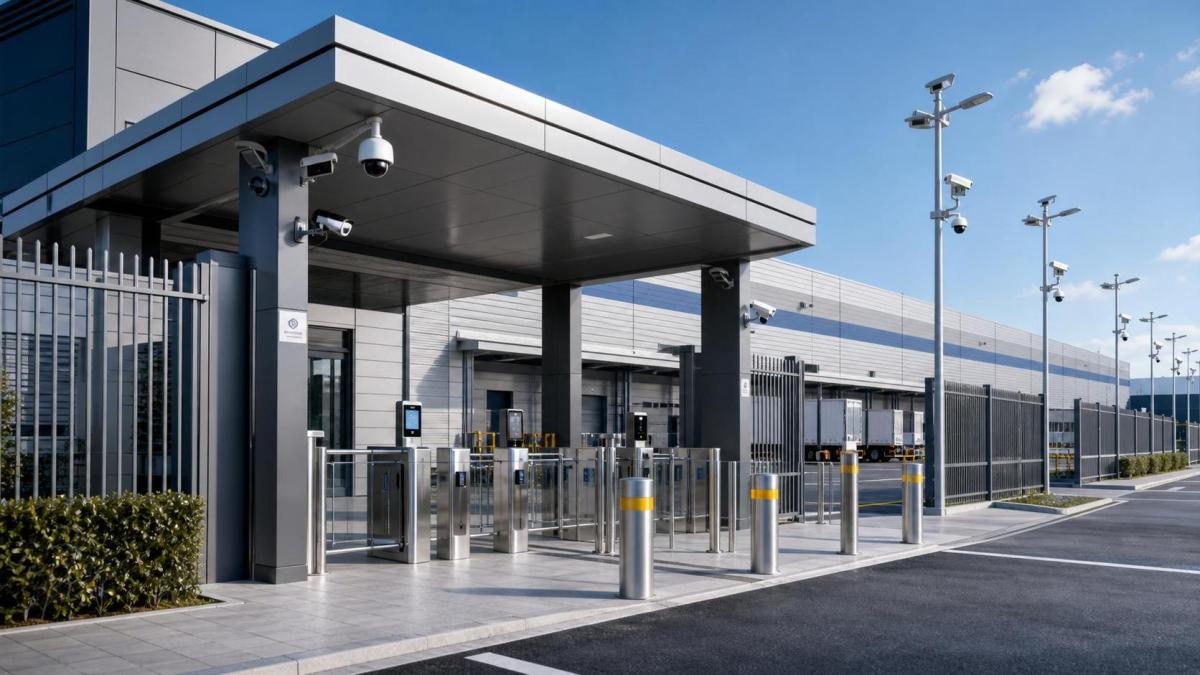
Facility upgrades planned for 2026 are no longer centered on replacing aging cameras or adding more locks.
The bigger shift is structural. Physical security equipment is being evaluated as part of operational infrastructure, alongside lighting, connectivity, compliance, and workforce protection.
That change is visible across logistics hubs, commercial buildings, industrial plants, campuses, and smart city projects.
What used to sit in separate budgets now needs to work together. Access control affects data governance. Surveillance affects network architecture. Perimeter protection affects maintenance planning.
This is why physical security equipment is attracting more attention during facility modernization reviews.
The market signal is clear: buyers are moving away from isolated devices and toward systems that can prove resilience, interoperability, and life-cycle value.
That direction also fits a broader SHSS view of modern sites.
Security hardware now sits beside smart lighting, high-strength hardware, biometric verification, industrial tools, and PPE as part of one physical risk chain.
In practice, a facility is only as strong as its weakest physical anchor and its slowest response layer.
Why this shift is becoming more obvious heading into 2026
Several pressures are converging at once, and they are changing what physical security equipment is expected to deliver.
- Hybrid risk is rising, with physical intrusion and cyber exposure increasingly linked through connected devices.
- Compliance demands are expanding, especially where biometric data, visitor records, and cloud video storage are involved.
- Labor constraints are pushing facilities toward automation, remote monitoring, and reduced manual guarding dependence.
- Capital discipline is tighter, so upgrades must show measurable payback instead of generic security improvement claims.
- Critical infrastructure concerns are making resilience a board-level issue, not a site-level maintenance topic.
More importantly, these drivers reinforce one another.
A connected access system may improve throughput, but it also raises data retention questions.
An AI camera can reduce monitoring effort, but it also changes bandwidth, storage, and incident review workflows.
This is why physical security equipment decisions now sit closer to digital transformation than many expected a few years ago.
The strongest demand is moving toward connected layers
The most noticeable upgrade pattern is not one device category replacing another.
It is the stacking of connected layers, where physical security equipment supports detection, verification, response, and recovery in one chain.
Biometric access is shifting from convenience to control quality
Biometric systems are no longer chosen only for keyless entry.
The stronger appeal is higher certainty in identity verification, especially in data centers, labs, restricted manufacturing zones, and multi-tenant facilities.
Face, iris, and structured-light systems are gaining ground because they reduce credential sharing, tailgating tolerance, and badge administration friction.
Yet adoption is becoming more selective. Privacy rules, template storage architecture, and spoof resistance now matter as much as matching speed.
Surveillance is being judged by actionability
The camera count race is fading.
What matters more is whether physical security equipment can turn video into usable incident intelligence.
Edge analytics, object classification, license plate recognition, and behavior-based alerts are becoming central in sites that cannot afford constant operator attention.
False alarm reduction is now a bigger value driver than pure image resolution.
Perimeter systems are getting more resilient
Fences, gates, bollards, locking hardware, and anti-tamper fixings are seeing renewed scrutiny.
That reflects a practical lesson: sophisticated sensors lose value if physical barriers fail under impact, vibration, corrosion, or poor installation.
This is where SHSS-style cross-category thinking becomes relevant.
High-strength fasteners, durable housings, and dependable installation tools influence the real-world performance of physical security equipment more than many planning documents acknowledge.
The upgrade conversation is expanding beyond the security room
One reason the market feels different is that physical security equipment now affects departments that did not previously shape upgrade priorities.
This broader relevance is reshaping evaluation criteria.
A door controller is no longer only a security purchase. It may affect occupancy management, audit reporting, and contractor movement control.
A smart lighting network may also support safer camera performance and incident visibility in exterior zones.
The result is a more integrated business case for physical security equipment.
What separates useful upgrades from expensive complexity
Not every connected feature deserves budget priority.
In actual deployments, the gap between valuable physical security equipment and overbuilt systems usually appears in five areas.
- Interoperability: systems should connect with existing building, identity, and incident platforms without costly customization.
- Environmental durability: outdoor devices, locks, housings, and fixings must survive corrosion, dust, vibration, and heat variation.
- Verification quality: biometric and video analytics should reduce uncertainty, not simply generate more data.
- Serviceability: replacement cycles, battery access, firmware processes, and tool requirements must be clear before scaling.
- Compliance fit: retention policies, biometric consent handling, and audit support should be designed in from the start.
This is also where ROI becomes more credible.
The strongest business cases rarely rely on a single dramatic breach-prevention scenario.
They are built from smaller, repeated gains: fewer access exceptions, faster investigations, lower guard workload, less unplanned maintenance, and longer asset life.
For physical security equipment, operational friction is often the hidden cost center that matters most.
The next phase will reward sites that treat hardware as a physical-digital system
Looking ahead, the likely winners in 2026 will not be those adding the most devices.
They will be the sites that connect physical security equipment to a realistic operating model.
That means matching risk zones to appropriate authentication strength, tying surveillance analytics to response protocols, and testing whether perimeter hardware can withstand actual site conditions.
It also means recognizing that security performance depends on supporting categories.
Reliable smart lighting improves visibility. Proper fastening hardware protects structural integrity. Suitable PPE supports safe maintenance in exposed environments.
This broader systems view has become harder to ignore.
For the next review cycle, a practical approach is to map existing physical security equipment against four questions.
- Which assets still operate as stand-alone hardware with weak data value?
- Where do compliance, identity, or retention risks now exceed the original design assumptions?
- Which site conditions could shorten equipment life or weaken barrier performance?
- What upgrades improve both protection and operating efficiency within a three-to-five-year horizon?
That exercise usually reveals where physical security equipment should be upgraded first, where integration matters more than replacement, and where resilience has been overstated.
The 2026 market is not simply asking for smarter devices.
It is asking for physical security equipment that can hold up mechanically, think faster at the edge, and fit the compliance and operational logic of modern facilities.
That is the direction worth watching, testing, and planning for now.
Recommended News