
Search News
Industry Portal
Hot Articles
How to Choose Industrial Safety Gear for Heat, Dust, and Impact
Time
Click Count
Choosing industrial safety gear for heat, dust, and impact is rarely a single-product decision. In active plants, workshops, construction zones, and smart infrastructure projects, protection must match the task, the exposure level, and the pace of work. A respirator that seals well but overheats the wearer, or a helmet that protects from impact but interferes with face shields, can weaken both compliance and performance.
That is why industrial safety gear now sits closer to operational quality than many teams once assumed. It affects incident prevention, inspection reliability, worker endurance, and even the safe use of brushless tools, high-strength hardware, and connected site systems. In the SHSS view, PPE is not an isolated purchase. It is part of the physical protection chain that keeps industrial output stable.
Why heat, dust, and impact demand a combined selection approach
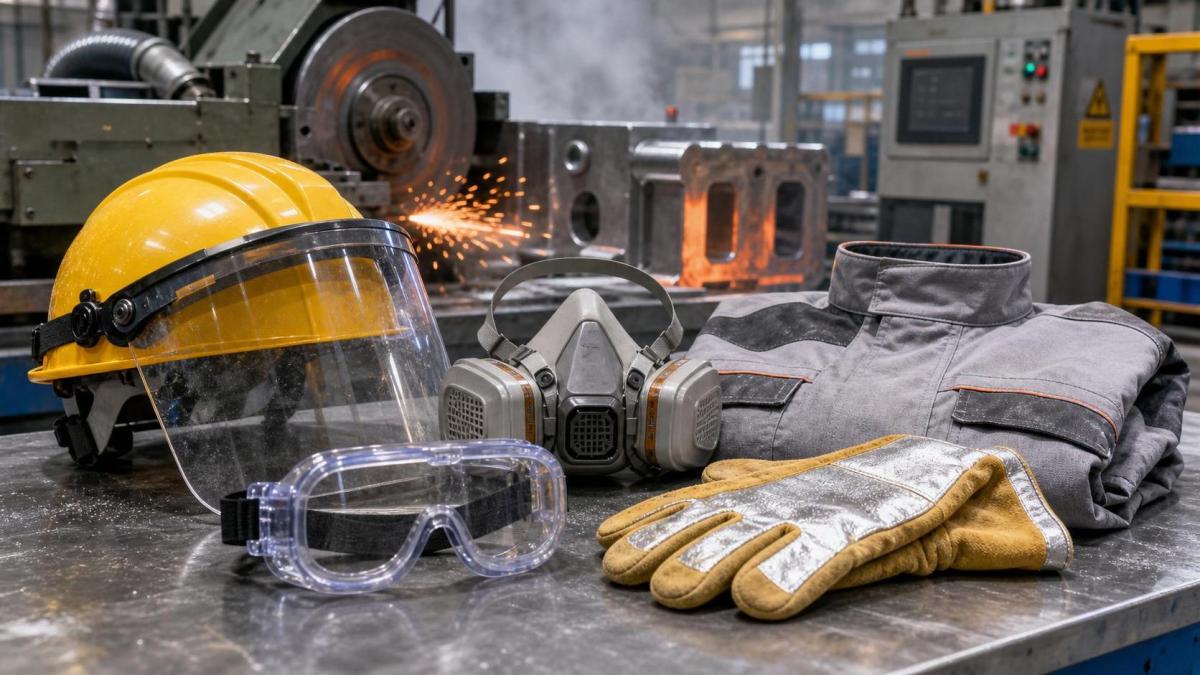
These hazards often appear together, not separately. Grinding creates dust and flying fragments. Fastening work near hot surfaces adds heat stress. Maintenance inside enclosed spaces may combine poor airflow, suspended particles, and falling-object risk.
Industrial safety gear must therefore be evaluated as a system. Eye, face, head, hand, respiratory, and body protection should work together without creating gaps, pressure points, or visibility problems.
This matters even more in environments shaped by advanced manufacturing and AIoT operations. Higher-powered handheld tools, tighter production cycles, and more instrumented facilities reduce tolerance for equipment mismatch.
What good industrial safety gear actually means in practice
Strong protection is not defined by thickness alone. The right industrial safety gear balances certified performance, usable comfort, durability, and compatibility with the work process.
In practice, that means looking beyond catalog labels. Heat resistance, dust filtration, and impact ratings are essential, but so are factors such as fog control, strap adjustment, weight distribution, and replacement frequency.
A useful selection standard asks one practical question: can this gear maintain protection during a full shift, under realistic movement, sweat, vibration, and contamination?
Core criteria worth checking early
- Relevant certifications for head, eye, respiratory, hand, and body protection
- Material behavior under high temperature, abrasion, and particle exposure
- Compatibility with helmets, shields, earmuffs, and communication devices
- Ease of cleaning, cartridge change, visor replacement, and inspection
- Fit consistency across different shift patterns and task durations
How to assess heat protection without sacrificing mobility
Heat exposure is not limited to molten material or open flame. It also comes from radiant surfaces, enclosed process rooms, hot-weather outdoor work, and tool-generated thermal buildup.
For this reason, industrial safety gear for heat should be chosen by exposure type. Intermittent radiant heat requires a different clothing strategy than direct contact heat or sustained ambient heat stress.
Breathability becomes critical here. Heavy protective clothing can increase fatigue, reduce concentration, and trigger improper wear habits. Lighter engineered fabrics, moisture management layers, and vented helmet designs often improve real protection because they are worn correctly for longer.
Face and eye protection also need attention. Heat-resistant face shields should preserve visibility, especially near sparks, grinding, or thermal splash conditions.
Heat-focused checks
- Confirm the actual heat source and duration of exposure
- Compare thermal resistance with garment weight and airflow
- Check cuff, collar, and closure design for gap control
- Review whether gloves maintain grip under heat and sweat
Dust protection depends on particle behavior, not only on masks
Dust hazards vary widely. Fine mineral dust, metal particles, wood dust, cement powder, insulation fibers, and mixed process residues each behave differently in the air and on the skin.
That is why industrial safety gear selection should begin with particle size, concentration, and exposure duration. A disposable mask may help in short, low-level tasks, while heavier exposure may require half-face or full-face respirators with suitable filters.
Seal integrity matters more than nominal filtration if the fit is poor. Dust also affects eye comfort, lens visibility, zipper life, and garment seams. Protective clothing should resist particle ingress without making movement too restrictive.
In facilities using smart lighting and camera-based monitoring, dust control has another consequence. Poor PPE visibility and contaminated lenses can reduce both human and digital inspection quality.
Impact protection should reflect real force paths
Impact risk is often underestimated when attention stays on obvious falling objects. In many sites, the more frequent hazards are side impacts, tool kickback, rebounding fasteners, and collisions in confined work areas.
Industrial safety gear for impact should therefore be matched to movement patterns and force direction. A hard hat, bump cap, visor, metatarsal footwear, and cut-resistant gloves may all play different roles in the same workflow.
Where brushless power tools and high-torque fastening systems are used, gloves need more than impact padding. They must preserve tactile control, trigger response, and grip on oily or vibrating surfaces.
Good visibility matters here too. Impact-rated helmets and shields should not narrow the field of view or interfere with hearing protection and site communication.
Selection works better when hazards are mapped by task
A task-based approach usually produces better results than buying by category alone. The same facility may need different industrial safety gear for cutting, fastener installation, line inspection, warehouse handling, and shutdown maintenance.
This is where the broader SHSS perspective becomes useful. PPE should be read alongside tools, hardware stress points, lighting conditions, and access-controlled environments. Safety decisions improve when physical risk, visibility, and workflow are reviewed together.
A practical task review can include
- What creates the hazard: process, surface, tool, or material
- How long exposure lasts during one cycle or full shift
- Which body areas are most at risk
- Whether the gear affects dexterity, inspection accuracy, or communication
- How often the gear fails, fogs, slips, or is removed improperly
Common buying mistakes that weaken protection
One common mistake is treating industrial safety gear as a compliance checkbox. Minimum certification is necessary, but not always sufficient for real process conditions.
Another mistake is testing items individually but not as a worn system. Respirators can interfere with shields. Helmet suspension may conflict with earmuffs. Sleeves may lift when gloves bend repeatedly.
Cost-only selection creates long-term inefficiency. Gear with poor durability, short cartridge life, or high wearer rejection often increases replacement cost and supervision burden.
It is also risky to ignore site-specific factors such as LED glare, enclosed humidity, biometric access checkpoints, or frequent donning and doffing near secure areas.
What to review before the next safety gear decision
The strongest industrial safety gear programs usually begin with a short reset. Recheck the actual hazard mix, compare current failure points, and verify whether protection still matches newer tools, materials, and work rhythms.
A useful next step is to build a small evaluation matrix for heat, dust, and impact. Include certification, comfort during extended wear, maintenance effort, compatibility, and visibility under real lighting conditions.
When that review is grounded in actual tasks rather than generic labels, industrial safety gear becomes easier to justify, easier to enforce, and more reliable in day-to-day operations. That is often where better safety outcomes and better operational discipline start to align.
Recommended News