
Search News
Industry Portal
Hot Articles
What to Compare in a Commercial Building Access Solutions Provider
Time
Click Count
What to Compare in a Commercial Building Access Solutions Provider
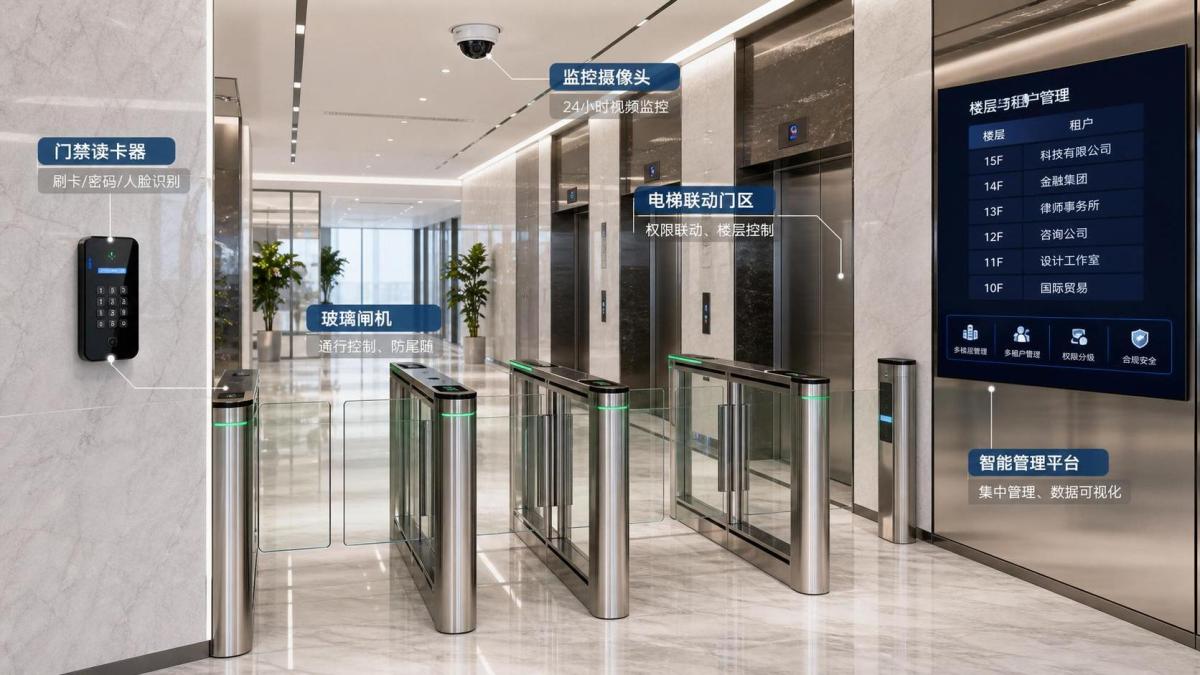
Choosing the right commercial building access solutions provider goes far beyond comparing door readers or software dashboards.
The real issue is how the provider performs under daily pressure, future expansion, and compliance demands.
A weak choice creates delays, security gaps, user frustration, and expensive retrofits.
A strong commercial building access solutions provider supports operations, protects assets, and fits long-term building intelligence plans.
In practical evaluation, it helps to compare providers across business outcomes, not just hardware features.
Start with Security Depth, Not Surface Features
Most vendors can show sleek readers, mobile credentials, and clean dashboards.
The stronger comparison is how the commercial building access solutions provider handles real threat conditions.
Look at authentication options first.
A capable provider should support cards, mobile credentials, PINs, and biometric access where risk justifies it.
That matters for mixed-use offices, data rooms, labs, parking areas, and after-hours entries.
Then check anti-tailgating options, forced-door alarms, lockdown modes, and audit trail granularity.
These details reveal whether the commercial building access solutions provider understands operational security or only product marketing.
- Does the system encrypt credentials and event data end to end?
- Can it separate access by floor, tenant, time window, and role?
- Does it support fast emergency response without manual overrides?
- Are logs detailed enough for investigations and compliance reviews?
From a risk perspective, these points usually matter more than reader appearance or app design.
Compare Scalability Across Buildings, Tenants, and Growth Plans
A commercial building access solutions provider should fit today’s footprint and tomorrow’s complexity.
That includes new doors, additional sites, temporary contractors, and changing tenant structures.
This is where many short-term buying decisions fail.
Some systems work well in one building but become difficult when portfolios expand.
Ask how the provider handles centralized administration across multiple facilities.
Also ask whether licenses, storage, and support costs rise predictably or spike later.
In real estate operations, flexibility often saves more money than the initial unit price.
Questions that reveal scalability
- Can the platform manage one site and fifty sites with the same logic?
- Can user groups, permissions, and reports be cloned across buildings?
- Does the commercial building access solutions provider support hybrid cloud and on-premise models?
- How easily can new credential types be added later?
A scalable system should reduce complexity as the property portfolio grows, not multiply it.
Evaluate Integration with the Rest of the Building Stack
Access control rarely works alone in a modern commercial property.
It needs to connect with video surveillance, visitor management, elevators, alarms, HR systems, and building management software.
A commercial building access solutions provider with weak integration creates silos and manual work.
A stronger provider helps unify security and operations.
More clearly now, buyers should ask about open APIs, supported protocols, and real deployment references.
Claims of integration are common.
Verified integrations with working examples are what matter.
In day-to-day operations, integration quality directly affects staff efficiency and incident handling speed.
Check Compliance, Privacy, and Data Governance Early
Compliance should not be reviewed after vendor shortlisting.
It should be part of the first comparison round, especially for biometric or cloud-based systems.
A commercial building access solutions provider may look advanced but still create privacy exposure.
This becomes more important in multi-tenant properties, regulated industries, and international portfolios.
Review how user identities are stored, where data is hosted, and who can access event records.
If biometrics are involved, ask about consent management, retention rules, template security, and deletion workflows.
This is where the most reliable commercial building access solutions provider stands out through documentation, not promises.
- Regional data privacy alignment, including GDPR where applicable
- Role-based admin controls and permission segregation
- Data retention, export, and deletion procedures
- Cybersecurity patching and vulnerability response practices
A provider that answers these clearly is usually easier to trust during audits and contract review.
Measure Reliability, Support, and Lifecycle Cost
Procurement decisions often overemphasize purchase price and underweight downtime risk.
Yet doors that fail, software outages, or delayed credential changes can disrupt tenants immediately.
That is why service capability should be a major comparison area for any commercial building access solutions provider.
Review hardware durability, software update discipline, warranty terms, response times, and spare parts availability.
Then look at the full operating model.
That includes subscription fees, support tiers, expansion licensing, installer dependency, and training effort.
A useful cost comparison should include
- Initial hardware, software, and commissioning cost
- Five-year support and upgrade cost
- Downtime exposure and service-level guarantees
- Replacement cycle for readers, controllers, and credentials
- Internal labor required for administration and reporting
The best commercial building access solutions provider is often the one with lower friction over five years, not lower spend on day one.
Ask for Proof Through Use Cases and Evaluation Steps
Vendor presentations can sound similar.
What separates one commercial building access solutions provider from another is evidence.
Ask for case studies that match your building type, occupancy pattern, and security profile.
A provider serving offices may not be equally strong in mixed-use towers or high-security technical sites.
In actual review cycles, a structured vendor scorecard helps keep choices objective.
Where possible, request a live demo using your own workflows.
Test visitor check-in, role changes, revoked access, reporting, and emergency actions.
That exposes usability and operational gaps quickly.
Make the Final Comparison Around Business Fit
The right commercial building access solutions provider should strengthen both protection and workflow.
That means reliable security, manageable administration, strong integrations, clear compliance posture, and predictable long-term cost.
More importantly, the solution should match the property’s operating model, tenant expectations, and future smart building roadmap.
When comparing vendors, use a weighted checklist and insist on proof.
That approach makes it far easier to identify a commercial building access solutions provider that will still perform well years after installation.
A disciplined comparison today usually prevents security compromises, operational friction, and avoidable reinvestment later.
Recommended News