
How to Evaluate an Industrial Automation Tools Manufacturer’s Cybersecurity
Evaluating an industrial automation tools manufacturer’s cybersecurity requires more than reviewing passwords and firewall claims. Technical assessors must examine connected tools, cloud platforms, firmware, identity controls, and supplier networks.
The practical question is whether the manufacturer can protect operational data, prevent unauthorized control, recover from disruption, and provide evidence that security practices work in deployed environments.
For technical evaluation teams, the strongest assessment combines architecture review, evidence collection, product testing, supplier due diligence, and clear contractual accountability before procurement decisions are finalized.
Start With the Security Boundary of the Industrial Automation Solution
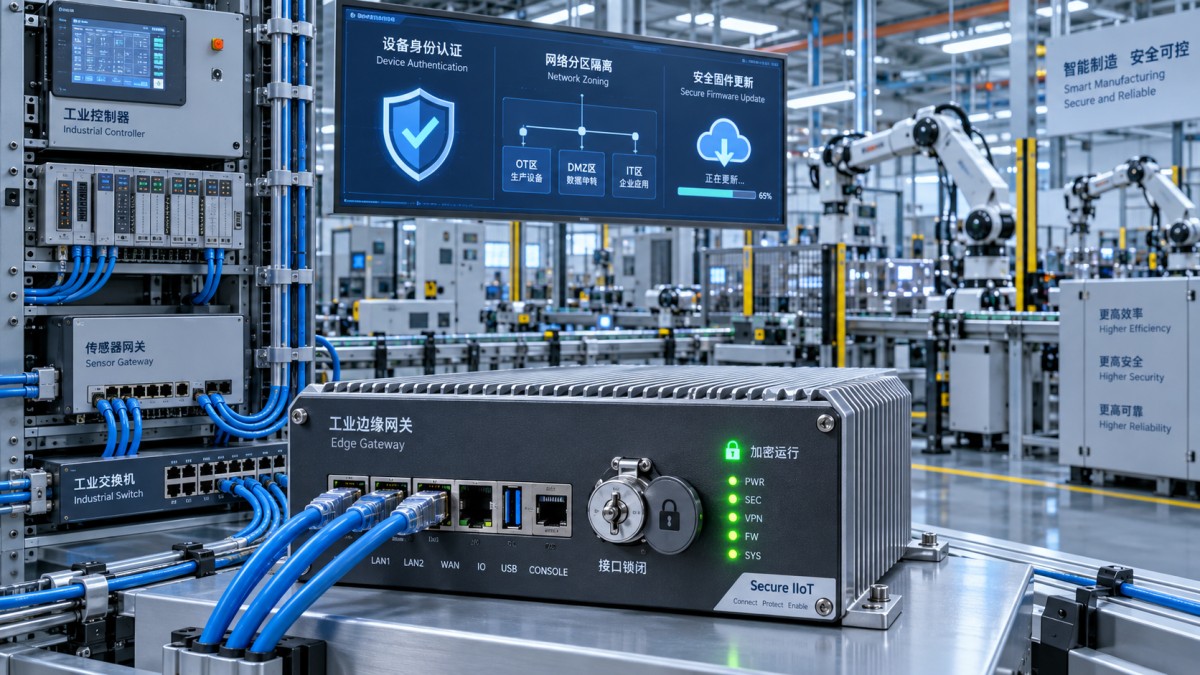
Begin by mapping exactly what the industrial automation tools manufacturer delivers. Security responsibilities differ greatly between a standalone cordless tool, connected controller, gateway, mobile application, and cloud analytics platform.
Ask for a complete asset inventory covering embedded devices, sensors, programmable controllers, operator interfaces, remote-service tools, APIs, mobile applications, cloud services, and third-party software components.
The inventory should identify where operational technology data originates, where it is processed, how it moves between systems, and where customers retain administrative control.
Connected industrial tools can expose more than production metrics. They may reveal facility layouts, maintenance schedules, torque settings, worker identities, production volumes, and potentially sensitive customer process data.
A manufacturer that cannot clearly describe data flows may also struggle to identify trust boundaries, enforce access controls, or investigate a security incident across its product ecosystem.
Request a current architecture diagram showing device-to-cloud communication, external interfaces, remote access paths, identity providers, update infrastructure, and customer-managed network segregation points.
Pay particular attention to gateways and service laptops. These components often bridge enterprise IT networks and operational technology environments, creating high-impact pathways for attackers.
Assess whether the manufacturer supports network segmentation by design. Products should function within restricted industrial zones without requiring unrestricted outbound access or broad inbound remote-management permissions.
Examine Secure Product Development Rather Than Marketing Claims
Cybersecurity quality is largely determined before a product ships. Evaluate whether secure development practices are embedded in engineering workflows instead of added only during compliance reviews.
Ask whether the manufacturer follows a documented secure development lifecycle aligned with recognized approaches such as IEC 62443-4-1, NIST guidance, or equivalent internal controls.
A credible lifecycle includes threat modeling, secure coding requirements, code review, dependency scanning, security testing, release approval, vulnerability handling, and post-release maintenance ownership.
Threat models should address realistic industrial misuse cases. Examples include unauthorized parameter changes, firmware replacement, credential theft, Bluetooth abuse, malicious mobile applications, and remote-service compromise.
Technical assessors should request examples of completed threat models for comparable products. Generic corporate policy documents do not demonstrate that engineers considered device-specific attack paths.
Review how the manufacturer manages open-source software and commercial libraries. Embedded products frequently depend on components that introduce inherited vulnerabilities and complicated patching obligations.
A current software bill of materials, commonly called an SBOM, provides useful evidence. It should identify major software components, versions, licenses, suppliers, and known vulnerability-monitoring responsibilities.
Check whether security requirements are traceable through design, implementation, testing, and release records. Traceability matters when an incident requires proof that critical controls were intentionally validated.
Verify Device Identity, Authentication, and Access Control
Every connected tool, controller, gateway, and cloud service should have a defined identity. Shared default credentials and anonymous device enrollment are serious warning signs for industrial deployments.
Determine whether each device receives unique credentials or certificates during manufacturing. Unique identities limit lateral movement and make it possible to revoke access when a device is lost.
Ask how credentials are generated, stored, rotated, and retired. Hardware-backed key storage, secure elements, and protected manufacturing processes provide stronger assurance than plain software storage.
Administrative access should use role-based controls. Operators, maintenance technicians, distributors, support engineers, and customer administrators should not automatically receive the same capabilities.
Multi-factor authentication should protect cloud portals, remote support accounts, privileged engineering systems, and administrative functions that can affect fleets of industrial automation tools.
Review whether the product supports least-privilege permissions. A technician who needs to read battery diagnostics should not necessarily be able to modify safety limits or firmware settings.
Evaluate local interfaces as carefully as cloud accounts. USB ports, debug headers, Bluetooth pairing, Wi-Fi setup modes, removable storage, and maintenance consoles can bypass otherwise strong network controls.
Ask how dormant accounts are removed and how contractor access expires. Long-lived supplier credentials are a recurring operational risk, especially after project completion or staff turnover.
Assess Encryption and Protection of Industrial Data
Encryption should protect data in transit, at rest, and during sensitive device operations. However, assessors should verify implementation details instead of accepting broad statements about encrypted communications.
Request supported protocol lists, cipher-suite information, certificate-validation behavior, and minimum transport security versions. Legacy protocols can undermine otherwise modern cloud or mobile security architecture.
Confirm that devices validate server certificates correctly. Improper validation can allow interception attacks when tools connect through field networks, temporary wireless access points, or compromised gateways.
Determine whether sensitive configuration data is encrypted on devices. Tool calibration values, access tokens, network credentials, biometric-related information, and production records require appropriate protection.
For cloud services, ask where customer data is hosted, whether tenants are logically separated, how backups are protected, and which parties may access stored telemetry.
Data minimization deserves attention. An industrial automation tools manufacturer should collect only information needed for support, maintenance, safety, performance analytics, or specifically agreed commercial functions.
Retention schedules should be documented. Indefinite storage of diagnostic logs, location data, workforce records, or production details increases exposure without necessarily improving product value.
Where biometric security systems connect with automation environments, verify consent handling, access logging, encryption, deletion workflows, and jurisdiction-specific privacy obligations before deployment.
Test Firmware Integrity and the Update Process
Firmware is one of the most important cybersecurity controls for connected industrial products. A secure device can become unsafe if attackers or unauthorized users can install altered software.
Ask whether firmware packages are cryptographically signed and whether devices verify signatures before installation. Signature verification should occur on the device, not solely in a management application.
Secure boot provides additional assurance by checking code integrity during startup. It helps prevent persistent compromise when attackers gain physical access or exploit an update mechanism.
Determine whether rollback protection exists. Without it, an attacker may reinstall an older firmware version containing known vulnerabilities after a manufacturer has issued a security fix.
Review the update delivery model. Assess whether updates are encrypted, authenticated, logged, resumable, tested for failure conditions, and manageable across disconnected or tightly controlled industrial sites.
Patch timing is equally important. Ask for documented severity classifications, target remediation periods, historical advisory examples, and evidence that customers receive understandable security notifications.
A manufacturer should provide a supported-product lifecycle statement. Technical teams need to know how long firmware security updates will remain available after purchase and deployment.
Be cautious when updates require broad remote access or unmanaged service applications. Security maintenance should not force customers to weaken segmentation or grant excessive privileges.
Review Vulnerability Management and Incident Response Capability
Even mature products will eventually contain vulnerabilities. The differentiator is how quickly the manufacturer discovers, validates, communicates, and resolves security issues without disrupting customer operations.
Look for a public vulnerability disclosure policy and a monitored reporting channel. Researchers, customers, distributors, and employees need a clear route for reporting potential security weaknesses.
Ask whether the company maintains a product security incident response team, often called a PSIRT. The team should have authority across engineering, legal, support, communications, and operations.
Evaluate vulnerability intake procedures. Reports should be acknowledged promptly, assessed consistently, tracked to closure, and communicated through advisories that contain useful mitigation guidance.
Request anonymized examples of previous security advisories. Strong advisories identify affected versions, severity, exploit conditions, mitigations, patch availability, and any operational precautions customers should take.
Assess whether the manufacturer performs regular penetration testing of products and cloud services. Independent testing is particularly valuable for remote access, mobile applications, APIs, and device enrollment flows.
Testing reports should identify scope, methodology, findings, remediation status, and retesting results. A simple statement that testing occurred provides limited assurance without supporting evidence.
Incident response plans should include customer notification thresholds, evidence preservation, service restoration priorities, and procedures for coordinating with customer security operations centers during active events.
Investigate Remote Support and Supplier Access Risks
Remote service can reduce downtime, but it is also a frequent entry point into industrial environments. Evaluate every support pathway offered by the industrial automation tools manufacturer.
Ask whether remote connections are customer initiated, time limited, multi-factor protected, individually attributable, recorded, and subject to customer approval for privileged actions.
Persistent vendor VPN connections deserve particular scrutiny. They can create hidden dependencies and may bypass the customer’s preferred monitoring, network segmentation, or change-management practices.
Support engineers should use named accounts rather than shared credentials. Session records should show who connected, what systems were accessed, which actions occurred, and when access ended.
Review supplier management controls as well. Manufacturers rely on chip vendors, cloud providers, contract manufacturers, logistics partners, software developers, and managed security service providers.
Ask how the manufacturer evaluates critical suppliers, requires security clauses, monitors subcontractors, and responds when a supplier vulnerability affects shipped equipment or supporting services.
For cloud-dependent products, identify the cloud provider’s role clearly. Customers need to understand which controls belong to the manufacturer, which belong to the provider, and which remain theirs.
Check Operational Resilience and Safety Consequences
Cybersecurity assessment in industrial environments cannot be separated from availability and safety. A compromised tool platform may halt work, damage equipment, create unsafe settings, or delay emergency maintenance.
Ask how products behave when connectivity fails. Essential industrial functions should remain predictable, and loss of cloud access should not create unnecessary production outages or hazardous operating states.
Review fail-safe design, manual override procedures, local logging, configuration backup options, and recovery instructions for devices that cannot communicate with central management systems.
Determine whether the manufacturer has tested denial-of-service scenarios. Resource-constrained devices may become unresponsive when exposed to excessive network traffic, malformed messages, or repeated authentication attempts.
Examine audit logging capabilities. Logs should capture security-relevant events such as logins, privilege changes, configuration changes, firmware updates, pairing events, and remote support sessions.
Logs should be exportable to customer monitoring platforms where appropriate. Time synchronization, integrity protection, retention controls, and understandable event fields make logs useful during investigations.
Ask whether cybersecurity changes undergo safety review. A remote configuration control or automatic update process may have operational consequences that product engineers and safety teams must jointly evaluate.
Use Compliance Evidence Carefully
Certifications and compliance statements can support an evaluation, but they should not replace technical evidence. Scope, product coverage, assessment date, and control ownership determine their actual value.
ISO 27001 certification may indicate an established information security management system. It does not automatically prove that every connected tool, firmware release, or customer deployment is secure.
IEC 62443 is particularly relevant for industrial automation environments because it addresses secure development, component security, system integration, and operational security responsibilities across the lifecycle.
Ask which IEC 62443 requirements were assessed, by whom, and for which products. A general alignment claim is weaker than independently reviewed evidence tied to specific product families.
Privacy obligations may also apply where telemetry identifies workers, locations, access patterns, or biometric characteristics. Confirm that legal and technical protections match the regions where products operate.
Contract terms should define security commitments. Include vulnerability notification, patch support, incident cooperation, data ownership, remote access controls, deletion requirements, and end-of-life responsibilities.
Build a Practical Evaluation Scorecard
A consistent scorecard helps technical assessors compare manufacturers without relying on polished presentations. Organize evidence around product security, cloud security, operational resilience, and supplier governance.
For each area, record the claimed control, evidence reviewed, implementation scope, remaining assumptions, identified gaps, owner, remediation deadline, and potential business or safety impact.
Prioritize findings that enable unauthorized control, expose credentials, prevent patching, permit insecure remote access, or affect safety-critical functions. These risks usually outweigh minor documentation gaps.
Distinguish between product limitations and customer configuration responsibilities. A secure capability provides little protection when deployment guidance is incomplete, unclear, or impossible to operate in practice.
Before selecting an industrial automation tools manufacturer, conduct a technical workshop with engineering, security, operations, procurement, and legal stakeholders. Cross-functional review exposes hidden dependencies early.
Where risk is significant, require a proof-of-concept deployment. Test identity integration, network segmentation, logging, firmware updates, remote support controls, and recovery procedures in a controlled environment.
Conclusion: Look for Evidence of Ongoing Security Ownership
The best cybersecurity evaluation does not seek a manufacturer that claims to be perfectly secure. It seeks a manufacturer that understands its risks and manages them transparently.
Strong candidates can explain their architecture, demonstrate secure development controls, protect device identities, deliver signed updates, respond to vulnerabilities, and support resilient customer operations.
For technical assessors, the key decision criterion is evidence. When an industrial automation tools manufacturer can provide product-specific proof, security becomes a measurable procurement requirement rather than a promise.