
Search News
Industry Portal
Hot Articles
LED Grow Lights PPFD Guide for Better Canopy Results
Time
Click Count
LED Grow Lights PPFD Guide for Better Canopy Results
For technical evaluators comparing lighting performance in controlled cultivation, understanding how LED grow lights affect PPFD distribution is essential to achieving stronger, more uniform canopy results.
This guide explains the relationship between fixture design, mounting height, spectrum, and photon density. It helps support more accurate, data-driven lighting decisions.
In real projects, better canopy performance depends less on headline wattage and more on measurable light delivery where plants actually grow.
Why PPFD Matters in LED Grow Lights Evaluation
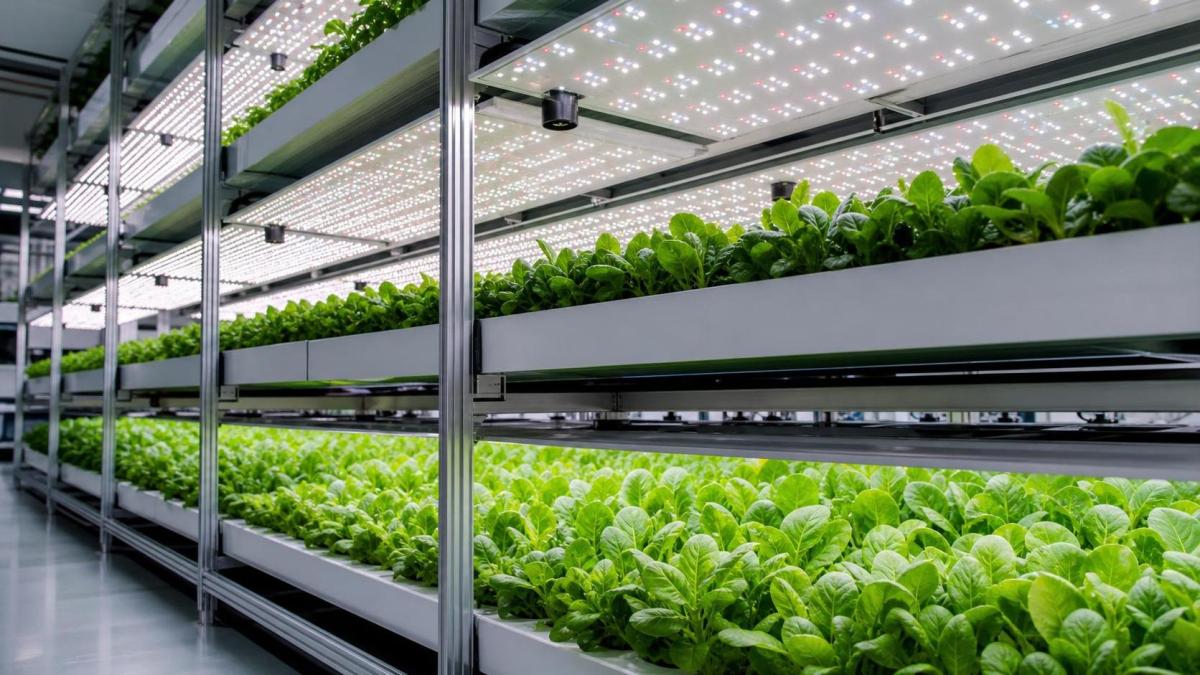
PPFD means Photosynthetic Photon Flux Density. It measures how many useful photons hit one square meter each second.
For LED grow lights, PPFD is one of the clearest indicators of practical plant lighting performance.
This matters because plants respond to photon availability, not marketing claims. A fixture may look powerful yet still create weak canopy penetration.
A technical review should separate total light output from usable canopy light. That distinction often changes procurement decisions.
When reviewing LED grow lights, focus on four linked metrics:
- PPF, which shows total photons leaving the fixture
- PPFD, which shows photons reaching the crop plane
- Uniformity, which shows how evenly light spreads
- Efficacy, which shows photons produced per watt
Among these, PPFD is closest to canopy response. It is especially useful when comparing fixture geometry, optics, and mounting strategies.
How Fixture Design Shapes Canopy PPFD
Not all LED grow lights distribute light the same way. Fixture architecture strongly influences PPFD patterns across the canopy.
Bar-style fixtures usually spread photons more evenly. They reduce hotspots and improve edge coverage in wider cultivation zones.
Board-style fixtures can perform well too. However, compact layouts may produce stronger center intensity and weaker perimeter values.
Lens design also matters. Narrow optics raise peak PPFD but may reduce lateral spread. Wide optics soften intensity and improve distribution.
From a technical standpoint, evaluate these design factors:
- Emitter spacing across the fixture body
- Use of secondary optics or reflectors
- Thermal management stability over time
- Driver dimming precision and consistency
Poor thermal control can slowly change output. That means initial PPFD readings may not reflect actual long-cycle operating conditions.
So when comparing LED grow lights, stable design is just as important as peak performance on a specification sheet.
Mounting Height and PPFD Distribution
Mounting height has a direct effect on PPFD. Raise the fixture, and the light spreads wider but loses intensity.
Lower the fixture, and center PPFD increases. Yet the risk of hotspots, leaf stress, and non-uniform canopy growth also rises.
This tradeoff is central in LED grow lights evaluation. The best height depends on plant stage, canopy density, and fixture footprint.
A practical review should not rely on one PPFD point. It should compare full-map results at several realistic hanging heights.
Useful evaluation checkpoints include:
- Center PPFD versus edge PPFD
- Average PPFD across the target grow area
- Uniformity ratio at full power and dimmed power
- Clearance margins for heat-sensitive crops
In multi-layer farms, small height adjustments can create major differences in photon use efficiency. This is where test discipline pays off.
Spectrum Does Not Replace PPFD, but It Changes Outcomes
Spectrum and PPFD work together. Spectrum influences plant morphology, while PPFD determines how much usable light the canopy receives.
That means two LED grow lights can show similar PPFD maps yet drive different crop responses under the same environment.
Blue-heavy output often supports compact growth. Red-heavy output often improves flowering efficiency. Far-red can alter canopy extension and light interception.
Still, spectrum should not distract from photon delivery quality. Weak distribution remains a structural problem, even with a well-tuned spectrum.
In technical comparisons, ask simple but important questions:
- Is the reported PPFD measured under the same spectrum setting?
- Does spectral tuning reduce total photon output?
- Will canopy shape change under that spectral recipe?
- Are crop goals vegetative, generative, or mixed?
A sound LED grow lights assessment always connects spectrum choices back to canopy-level PPFD behavior and crop targets.
How to Read PPFD Maps Without Being Misled
PPFD maps are useful, but they can also hide weaknesses. A single attractive center value does not guarantee strong growing performance.
First, confirm the test area dimensions. Some LED grow lights appear stronger simply because they are measured over a smaller footprint.
Second, verify mounting height and dimmer setting. These conditions must match your intended installation scenario.
Third, examine edge performance. A canopy only performs as uniformly as its weakest light zones allow.
More careful buyers also check these points:
- Number of sensor points in the PPFD grid
- Whether wall reflectivity influenced results
- Ambient temperature during testing
- Fixture stabilization time before measurement
In actual business settings, these details affect risk. A misleading map can cause over-lighting, under-lighting, or wasted capital.
Key Evaluation Criteria for Scalable Indoor Projects
For pilot rooms, many LED grow lights look acceptable. In scaled facilities, evaluation standards need to be tighter.
The real question is not whether a fixture can produce high PPFD once. It is whether it can sustain reliable canopy results at scale.
This wider view aligns with how smart lighting is evaluated in advanced facilities. Performance data should serve operations, not just product promotion.
Common Risks When Comparing LED Grow Lights
Several recurring mistakes can distort technical judgment. Most happen when decision teams focus on isolated values instead of system behavior.
- Choosing by wattage instead of canopy PPFD performance
- Accepting supplier PPFD maps without method review
- Ignoring dimming effects on distribution quality
- Overlooking fixture spacing in multi-unit layouts
- Assuming spectrum claims solve poor uniformity
A better approach is to evaluate LED grow lights as part of a cultivation system. Layout, controls, crop type, and rack geometry all matter.
That also means requesting third-party data or running internal validation before full deployment whenever possible.
Practical Checklist for Better Canopy Results
If the goal is stronger canopy consistency, the review process should stay simple, measurable, and repeatable.
- Define target PPFD by crop stage and production goal.
- Compare LED grow lights at identical mounting heights.
- Review full PPFD maps, not center readings alone.
- Check edge intensity, overlap zones, and uniformity ratios.
- Confirm efficacy and output stability under operating temperature.
- Validate dimming behavior and control compatibility.
- Run a pilot test before scaling procurement.
These steps make LED grow lights comparisons more grounded. They also reduce the chance of costly underperformance after installation.
The strongest canopy results come from matching photon density, fixture design, and operational control. When those factors align, lighting decisions become far more reliable and scalable.
Recommended News