
Search News
Industry Portal
Hot Articles
Structural Bolts vs Standard Bolts: What Matters in Load-Critical Joints
Time
Click Count
In load-critical construction and industrial assemblies, the choice between structural bolts and standard bolts shapes far more than fastening speed. It influences joint reliability, inspection confidence, maintenance cycles, and the margin of safety that keeps steel frames, heavy equipment, and public infrastructure performing as intended.
That is why structural bolts remain a frequent point of discussion across construction, industrial fabrication, transport systems, and smart city projects. In settings where SHSS tracks the physical anchors of modern civilization, bolt selection sits at the intersection of mechanics, compliance, and long-term operational resilience.
Why the distinction matters in real joints
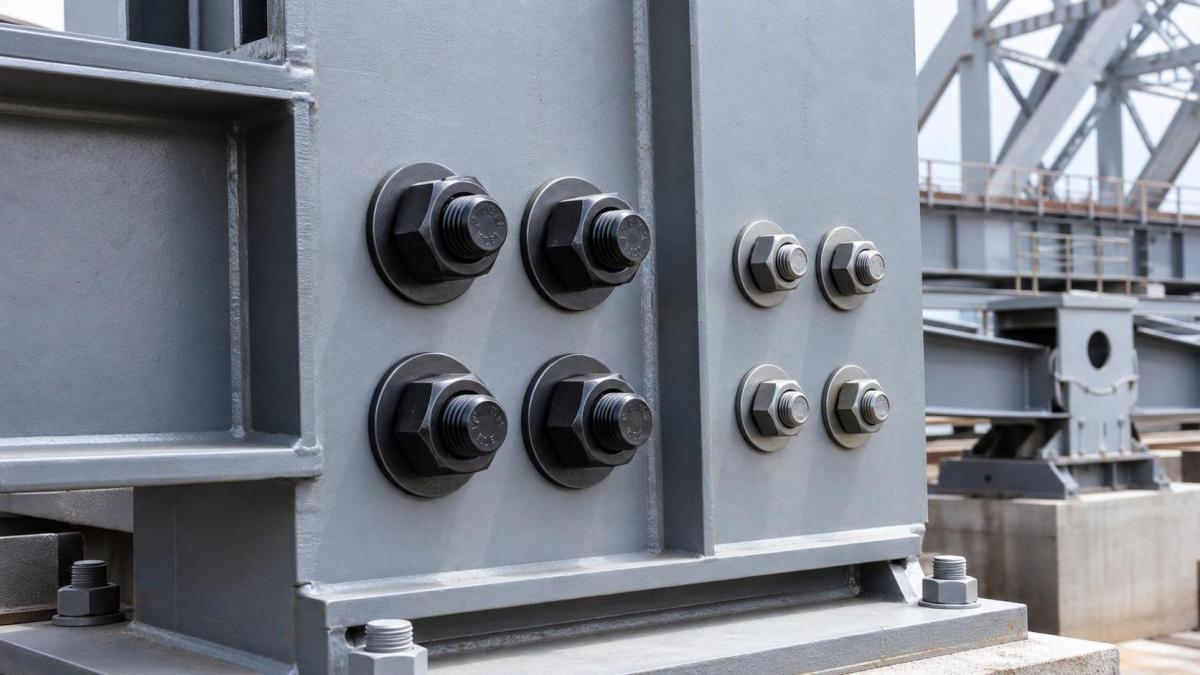
A load-critical joint is designed so that failure is not acceptable under expected service conditions. These joints appear in bridges, plant structures, crane systems, equipment bases, towers, transit facilities, and energy projects.
In those assemblies, a bolt is not simply a threaded connector. It becomes part of a load path. It must transfer tension, resist shear, hold clamp force, and behave predictably when vibration, fatigue, thermal cycling, or dynamic loads appear.
Standard bolts can be perfectly suitable in many non-critical applications. Guards, covers, enclosures, light-duty brackets, and serviceable access panels often do not need the performance envelope of structural bolts.
The problem starts when visually similar fasteners are treated as interchangeable. On paper they may share dimensions. In service, their material properties, preload behavior, certification traceability, and installation requirements can be very different.
Structural bolts and standard bolts are not defined by appearance alone
The simplest way to understand structural bolts is this: they are high-strength fasteners specified for joints where load transfer and joint behavior are engineered, verified, and often regulated by recognized standards.
They are commonly associated with controlled mechanical properties, specific head markings, approved material grades, and installation methods intended to achieve a required clamp force.
Standard bolts, by contrast, cover a broader range. Many are general-purpose fasteners used in machinery, building services, electrical support systems, maintenance tasks, and fabricated products that do not face the same joint-critical demands.
This does not make standard bolts “bad” and structural bolts “good.” It means each belongs to a different decision framework. One supports general fastening needs. The other supports engineered structural performance.
Key differences at a glance
What the industry is paying closer attention to
Fastener decisions are receiving more scrutiny because projects are becoming more integrated. A steel connection now affects digital inspection records, warranty exposure, predictive maintenance models, and asset lifecycle planning.
For SHSS, this is familiar territory. Whether the topic is biometric access, smart lighting controls, PPE performance, or high-strength fasteners, the same rule applies: small components often carry the highest consequence when failure occurs.
Several industry shifts explain the stronger focus on structural bolts:
- Higher design loads in compact structures and equipment frames.
- More vibration from rotating machinery, transport systems, and modular installations.
- Tighter inspection and traceability requirements in public and industrial projects.
- Growing use of powered installation tools that demand accurate fastening procedures.
- Pressure to reduce lifecycle failures rather than only first-cost spending.
In practical terms, the market is moving away from “a bolt that fits” toward “a fastener system that performs.” That shift favors better documentation, better installation discipline, and clearer separation between structural bolts and standard alternatives.
Where structural bolts create measurable value
The value of structural bolts is not limited to strength numbers on a datasheet. Their real business value appears when a joint must stay stable under demanding service, pass inspection without dispute, and remain serviceable over time.
That matters in several ways.
Joint integrity under real loads
When preload is correct and connection design is aligned, structural bolts help maintain friction, reduce slip, and control movement between connected parts. This is essential in dynamic or cyclic loading environments.
Consistency during inspection
Marked grades, recognized standards, and documented installation practices simplify QA review. That lowers the chance of rework, dispute, or late-stage replacement after field inspection.
Lower lifecycle uncertainty
A failed critical joint rarely stays local. It can trigger shutdowns, access restrictions, collateral damage, and accelerated maintenance. Structural bolts reduce uncertainty where the cost of failure is much higher than the cost of the fastener.
Typical scenarios where standard bolts are not enough
The dividing line becomes clearer when viewed by application rather than by catalog category. Some assemblies simply demand the controlled performance of structural bolts.
- Steel-to-steel building connections carrying primary structural load.
- Bridge members exposed to traffic-induced fatigue and weather cycling.
- Heavy equipment bases with vibration, shock, and periodic overload.
- Industrial platforms, conveyors, and support frames with repetitive stress.
- Energy and utility assets where outages create operational or public risk.
By comparison, standard bolts remain appropriate for many secondary attachments, covers, routing supports, access hardware, and non-load-critical assemblies where ease of replacement and general fastening utility matter more than engineered clamp force.
How to judge the right fastener choice
The safest approach is to treat the bolt as one part of a connection system. Material grade, nut compatibility, washer selection, hole condition, surface treatment, and tightening method all affect performance.
A reliable evaluation usually includes the following checks:
- Confirm whether the joint is load-critical, slip-critical, or mainly positional.
- Match the required standard, grade, and coating to the design environment.
- Review installation method, including torque control or tension verification.
- Check traceability, mill documentation, and head markings before release.
- Consider corrosion, temperature, vibration, and inspection access in service.
- Avoid substitutions unless the design authority approves equivalency.
This is also where modern industrial tools matter. High-output brushless fastening equipment can improve productivity, but only when tool calibration, socket condition, and tightening procedure stay aligned with the connection requirement.
Common mistakes behind bolt-related risk
Most field problems do not begin with a dramatic design error. They begin with small assumptions.
One common mistake is choosing by diameter and length alone. Another is treating coating, lubrication, and thread condition as minor details even though they can change achieved preload.
Mixed batches are another concern. If structural bolts and standard bolts enter the same site flow without clear segregation, inspection becomes harder and substitution risk rises quickly.
There is also a documentation gap in many projects. A connection may be designed correctly, but records for lot traceability, installation sequence, or verification method remain incomplete. That weakens quality assurance even when the hardware itself is acceptable.
A practical way forward for current projects
When comparing structural bolts with standard bolts, the most useful question is not which is stronger in the abstract. It is which fastener system matches the duty, the risk profile, and the inspection expectation of the joint.
For new projects, start by mapping all joints that carry primary loads, face cyclic stress, or could create significant downtime if they loosen or fail. Those locations deserve early fastener review rather than late procurement substitution.
For active sites, compare approved connection details with actual delivered hardware, installation tools, and verification records. Even a short audit can reveal where structural bolts are essential and where standard bolts remain fully appropriate.
That kind of disciplined review fits the broader SHSS view of modern hardware systems: safety and efficiency come from stitching together materials, tools, standards, and field execution. In load-critical joints, structural bolts are often the stitch that cannot be guessed.
The next step is straightforward. Define the critical joints, verify the specified fastener standard, and align procurement, installation, and inspection around the same connection logic. That is where better decisions stop being theoretical and start protecting the asset.
Recommended News