
Search News
Industry Portal
Hot Articles
Vertical Farming Lighting: How to Cut Energy Waste in 2026
Time
Click Count
As energy prices rise and controlled-environment agriculture scales, vertical farming lighting has become a board-level efficiency issue for growers, investors, and facility operators. In 2026, cutting energy waste is no longer just about lower utility bills—it directly affects crop consistency, ESG targets, and expansion capacity. This article explores practical strategies and smart lighting upgrades that help decision-makers reduce waste while protecting yield and operational resilience.
Why is vertical farming lighting such a critical energy issue in 2026?
Vertical farming lighting often represents the largest electricity load inside indoor farms. In many facilities, lighting can consume more power than irrigation, control systems, and packaging combined.
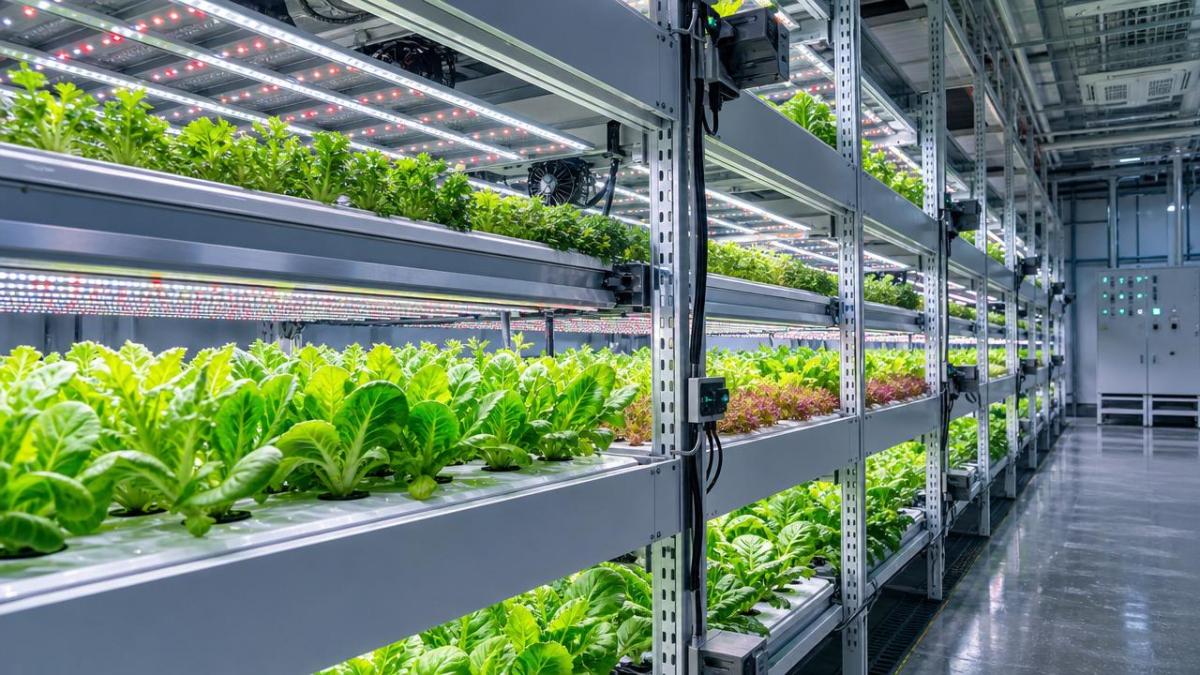
That matters more in 2026 because power tariffs are less predictable. Grid congestion, carbon reporting, and demand charges now shape the real operating cost of every growing cycle.
Waste usually hides in overspecification. Many sites still run fixed schedules, excessive intensity, poor uniformity, and outdated fixtures that convert too much electricity into heat.
Heat waste creates a second penalty. Cooling systems must remove extra thermal load, so inefficient vertical farming lighting increases both direct lighting consumption and HVAC demand.
This is why smart lighting belongs in broader industrial efficiency discussions. As SHSS often highlights, connected LED systems are no longer simple luminaires; they are data-enabled operating assets.
What causes the biggest energy waste in vertical farming lighting?
The biggest losses rarely come from one dramatic failure. They usually come from small design mistakes repeated across thousands of operating hours.
1. Running more photons than crops can use
Some crops receive higher PPFD than their growth stage requires. Excess light does not always improve biomass. It can simply raise energy use and plant stress.
2. Using the wrong spectrum for the crop plan
A static spectrum may work, but not efficiently. Seedlings, leafy greens, herbs, and fruiting crops often respond differently to blue, red, white, and far-red balance.
3. Poor fixture layout and canopy uniformity
Hot spots force operators to lower average performance or waste electricity in darker zones. Better optics and spacing reduce uneven growth and unnecessary over-lighting.
4. Lack of dimming and zoning
Facilities with one lighting setting for all racks lose flexibility. Different crops and growth stages need different light recipes and operating schedules.
5. Ignoring system-level controls
Vertical farming lighting should connect with sensors, scheduling software, and environmental controls. Without integration, operators miss opportunities for dynamic optimization.
How can facilities reduce vertical farming lighting waste without hurting yield?
The best approach is not simply “use less light.” It is “use the right light, at the right time, in the right place.”
Match DLI to crop targets
Daily Light Integral is often more useful than fixed fixture output. Optimizing DLI prevents waste during stages where full intensity adds little commercial value.
Adopt dimmable high-efficacy LEDs
Modern fixtures with strong efficacy reduce wattage per useful photon. Dimming also supports crop-specific schedules and cuts energy during lower-demand periods.
Use zoning by rack, crop, or growth phase
Zoning allows one room to support different production goals. This avoids wasting energy on uniform settings across non-uniform cultivation needs.
Integrate controls with IoT lighting protocols
DALI, Zigbee, and similar smart lighting protocols help connect fixtures to occupancy logic, sensors, and central management. In farms, that means recipe precision and better reporting.
Reduce heat at the source
Efficient vertical farming lighting lowers sensible heat. That can reduce cooling loads, stabilize climate zones, and improve consistency across stacked growing layers.
- Audit actual PPFD at canopy level, not fixture nameplate claims.
- Review photoperiod strategy against electricity tariffs.
- Compare crop response before and after spectrum adjustments.
- Track lighting energy per kilogram of sellable output.
How do you compare lighting options for retrofit versus new vertical farms?
Retrofit and greenfield projects should not follow the same decision model. Existing electrical capacity, rack geometry, and cooling design change the best path.
For retrofits, start with fixture replacement, dimming controls, and targeted zoning. These often deliver the fastest savings without major construction disruption.
For new sites, optimize the full system together. Vertical farming lighting, HVAC, shelving, sensors, and power distribution should be modeled as one operating platform.
What mistakes make vertical farming lighting upgrades underperform?
A common mistake is buying on wattage alone. Lower wattage does not guarantee lower production cost if uniformity, reliability, or control quality are poor.
Another mistake is relying on laboratory claims without in-rack validation. Real farms have reflections, humidity, airflow patterns, and maintenance limits that affect results.
Some upgrades also fail because teams ignore driver quality and communication stability. Smart vertical farming lighting needs dependable electronics, not just efficient diodes.
Maintenance planning is equally important. Dirty lenses, failed drivers, and calibration drift quietly reduce performance long before total fixture failure appears.
Risk reminders
- Do not over-light to compensate for weak uniformity.
- Do not separate lighting decisions from HVAC implications.
- Do not ignore software usability and data export needs.
- Do not treat all crops as one lighting profile.
What should be measured to prove savings from vertical farming lighting?
Good decisions need measurable outcomes. Energy savings alone are not enough if yield quality falls or crop cycles become less predictable.
A strong verification plan includes baseline data, trial zones, seasonally adjusted comparison, and documented crop outcomes. This is especially important when justifying capital expenditure.
What does a practical 2026 action plan look like?
Start with a lighting and climate audit. Measure actual canopy conditions, control behavior, and energy intensity by production area.
Next, identify quick wins. These may include schedule adjustment, dimming activation, failed fixture replacement, or zoning high-variance racks.
Then test one optimized lighting recipe before full deployment. Compare biomass, appearance, cycle time, and total energy against the existing setup.
Finally, build toward an integrated platform. The most resilient vertical farming lighting strategy combines efficient LEDs, smart controls, dependable drivers, and clean operational data.
In 2026, cutting waste in vertical farming lighting means improving precision, not reducing ambition. Better lighting decisions support lower operating costs, tighter crop consistency, and more scalable indoor agriculture. The next step is simple: audit current performance, test targeted upgrades, and prioritize systems that connect lighting efficiency with measurable production outcomes.
Recommended News