
Search News
Industry Portal
Hot Articles
Keyless Entry Door Lock Risks: What to Check Before Installation
Time
Click Count
Before installing a keyless entry door lock, it is essential to assess security, reliability, and operational fit, not just user convenience. Credential spoofing, weak firmware protection, poor fail-state design, and missing audit records can turn a modern access device into a hidden vulnerability. This guide explains what to verify so a keyless entry door lock improves access control instead of weakening it.
Why a checklist matters before installing a keyless entry door lock
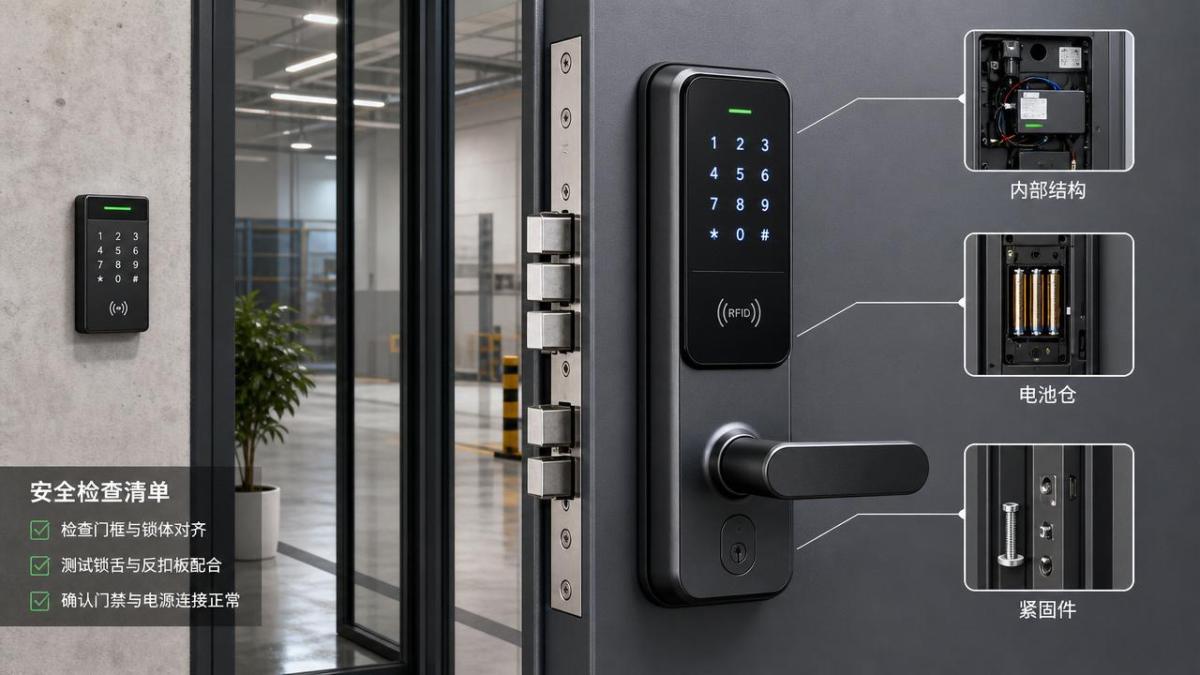
A keyless entry door lock combines mechanical hardware, electronics, software, and user identity management. That mix creates more decision points than a traditional lock cylinder.
If one layer is weak, overall protection drops fast. A strong deadbolt cannot compensate for cloned credentials, and secure software cannot fix a poor door frame.
Checklist-based review helps compare products consistently, document risk acceptance, and confirm that installation conditions match the lock’s design limits and compliance needs.
Core checklist: what to check before installation
- Verify credential types and anti-spoofing controls. Check whether PIN, RFID, mobile app, fingerprint, or biometric modes resist replay attacks, copied tags, fake fingerprints, and shoulder-surfing.
- Confirm encryption standards end to end. Review how the keyless entry door lock protects stored credentials, app traffic, cloud commands, and local communication between reader and controller.
- Inspect firmware update security. Require signed updates, controlled rollback, vendor patch history, and a clear process for applying security fixes without long operational downtime.
- Check fail-safe or fail-secure behavior. Define what happens during power loss, fire alarm activation, network outage, battery failure, and controller malfunction before approving installation.
- Review audit trail depth and retention. Ensure the system records successful entries, denied attempts, admin changes, tamper alarms, and timestamp accuracy for incident investigation.
- Examine physical attack resistance. Test the lock body, strike, mounting screws, reader housing, and door material against prying, drilling, impact, and exposed wiring access.
- Validate battery and power management. Confirm expected battery life, low-power alerts, emergency override options, and performance under temperature extremes or heavy traffic cycles.
- Assess network dependency carefully. Determine whether the keyless entry door lock can operate locally if Wi-Fi, cloud access, or the building network becomes unavailable.
- Confirm identity lifecycle control. Check how quickly credentials can be issued, limited, revoked, and audited across staff changes, visitor access, and temporary contractors.
- Measure integration risk with existing systems. Review compatibility with fire panels, video surveillance, alarm platforms, elevators, and building management tools before deployment.
- Check compliance and privacy obligations. Biometric-enabled models may trigger data protection, storage limitation, consent, and cross-border transfer requirements depending on location.
- Request testing evidence and certifications. Look for cycle testing, ingress ratings, environmental testing, and relevant standards rather than relying on marketing claims alone.
How risks change by application scenario
Office and commercial buildings
In shared office settings, the main risk is uncontrolled credential spread. PINs are often reused, and mobile credentials may remain active after role changes or contractor turnover.
A keyless entry door lock in this environment should support fast revocation, door-by-door permissions, and reliable event logs that align with reception, CCTV, and alarm workflows.
Industrial facilities and service entrances
Industrial sites add dust, vibration, moisture, gloves, and shift traffic. These conditions affect reader accuracy, mechanical wear, and battery life more than in clean indoor locations.
Here, a keyless entry door lock should be checked for ingress protection, metal door compatibility, tamper resistance, and emergency access procedures during power or network interruptions.
Multi-tenant and residential properties
In residential or mixed-use buildings, convenience features often increase attack surface. Remote unlocking, guest codes, and app sharing can create unnoticed exposure if permissions are not time-limited.
The best fit is usually a keyless entry door lock with local operation, strong account recovery rules, encrypted mobile access, and clear resident guidance on credential hygiene.
Commonly overlooked issues that create security gaps
Door hardware mismatch
Many failures come from weak doors, frames, or strikes, not the electronics. Installing a robust keyless entry door lock on a flexible or hollow assembly reduces real protection.
Shared admin credentials
If several people use one administrator account, investigations become difficult. Individual admin identities, change logs, and privilege separation should be mandatory.
Unclear emergency override rules
Mechanical override keys, if present, can become the weakest link. Control who holds them, where they are stored, and how usage is recorded after each incident.
Cloud dependence hidden in product setup
Some locks advertise local convenience but require cloud services for user management, updates, or logging. Verify which features fail when internet access is lost.
No maintenance ownership
A keyless entry door lock is not a fit-and-forget device. Without assigned responsibility for batteries, patching, access reviews, and log checks, security degrades quietly.
Practical execution steps before approval
- Map the opening by risk level, traffic volume, emergency egress needs, and exposure to weather, impact, or tampering.
- Run a pilot on one real door and test credential enrollment, revocation, battery alerts, forced entry response, and offline operation.
- Document firmware versions, default settings, admin roles, and integration points before the lock enters daily use.
- Perform a physical inspection after installation, including alignment, latch throw, cable protection, and strike reinforcement.
- Schedule periodic review intervals for permissions, audit logs, software updates, and hardware wear patterns.
Conclusion and next action
Choosing a keyless entry door lock should begin with risk verification, not product aesthetics or app features. The right decision depends on secure credentials, durable hardware, resilient fail-state design, and traceable system management.
Use this checklist to compare models, inspect site conditions, and define acceptance criteria before purchase and installation. When each checkpoint is documented, a keyless entry door lock becomes a stronger control point for modern facilities instead of a new exposure path.
Recommended News