
Search News
Industry Portal
Hot Articles
China-Uzbekistan AEO Mutual Recognition Takes Effect Aug. 1, Easing Security and Smart Hardware Exports
Time
Click Count
From August 1, 2026, customs authorities in China and Uzbekistan will formally implement mutual recognition of Authorized Economic Operator (AEO) status. Based on the information provided for this update, the arrangement gives eligible importers and exporters on both sides access to facilitation measures such as priority clearance, lower inspection rates, and simplified documentation procedures.
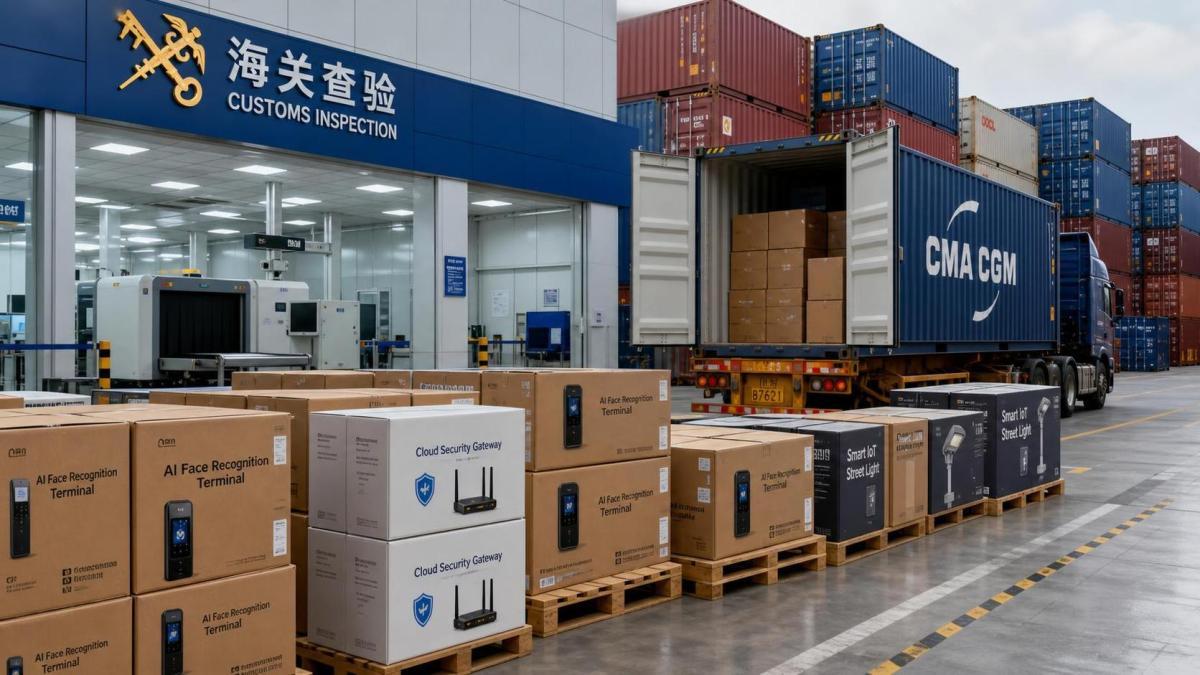
For companies shipping security and smart hardware products into Central Asia, the practical value is fairly direct. Products including 3D facial recognition terminals, iris and vein biometric locks, cloud security gateways, and smart streetlight IoT devices typically face higher compliance sensitivity in cross-border trade. When customs handling becomes more predictable, the immediate effect may be less about demand creation and more about execution efficiency: shorter clearance cycles, fewer procedural frictions, and lower compliance pressure for overseas distributors.
This matters because export competitiveness in these categories is often influenced by delivery certainty as much as by product capability. Devices tied to biometrics, network security, or connected urban infrastructure usually involve more documentation discipline and closer scrutiny during cross-border movement. In that context, an AEO mutual recognition mechanism can improve transaction confidence across the supply chain, especially for businesses that need steadier lead times when serving channel partners or project-based buyers.
The announcement also signals that trade facilitation is becoming more relevant to companies selling higher-compliance hardware into regional markets that are not always treated as straightforward extensions of traditional export routes. For exporters, the benefit is not only at the customs counter. If the mechanism works smoothly in practice, it could reduce the hidden operating burden around shipment planning, distributor coordination, and after-sales deployment schedules.
At the same time, the impact will still depend on which companies qualify for and actively use AEO-related benefits, and on how consistently these conveniences are reflected in real customs processes after implementation. In the near term, industry participants are likely to watch for practical changes in clearance speed, inspection frequency, and documentation handling rather than assume uniform gains across all shipments.
This article is based solely on the event title, date, and summary provided here. For follow-up tracking, the most relevant signals will likely come from official customs notices, company disclosures related to export operations, and other public information tied to cross-border trade execution.
Recommended News