
Search News
Industry Portal
Hot Articles
Custom Hardware Solutions Pricing: Cost Drivers, MOQ, and Hidden Charges
Time
Click Count
Custom Hardware Solutions Pricing: Cost Drivers, MOQ, and Hidden Charges
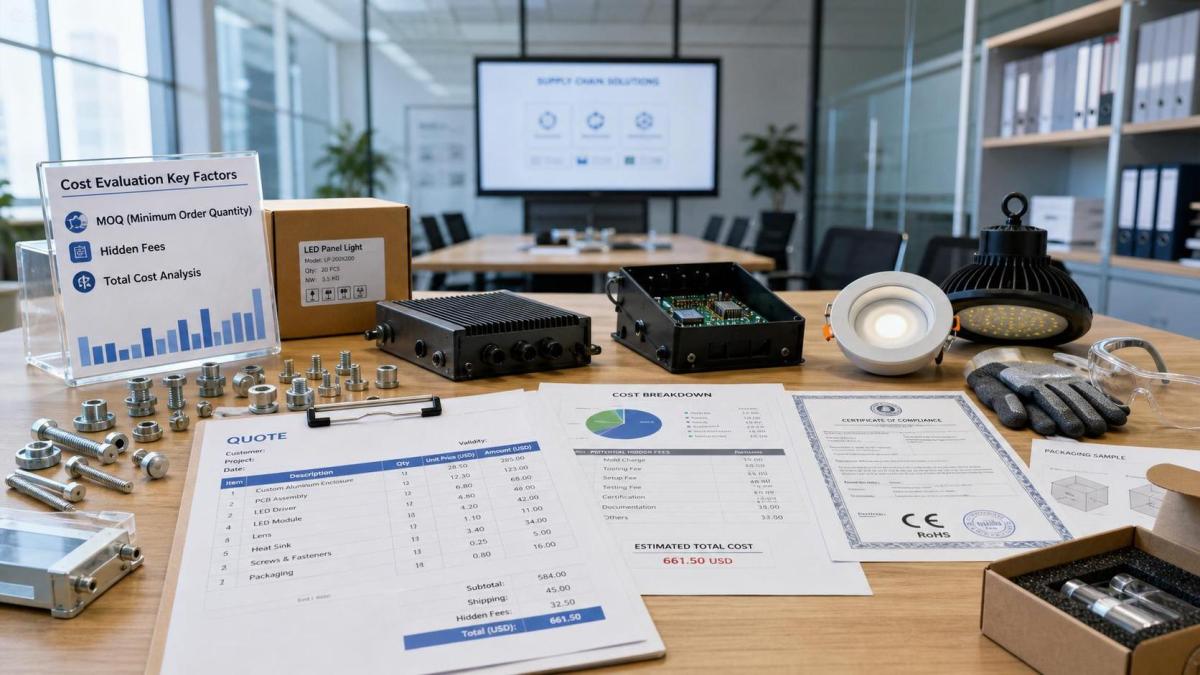
For finance approvers evaluating industrial tools, biometric security, fasteners, smart lighting, or PPE projects, custom hardware solutions pricing is rarely defined by unit cost alone.
Engineering complexity, compliance, tooling, MOQ, certification, and service terms can quickly reshape the real budget.
That is why early cost visibility matters.
A low quoted unit price may still create a high total landed cost.
In actual procurement, delays, retesting, packaging changes, and warranty exposure often do more damage than the first quote suggests.
This guide breaks down custom hardware solutions pricing in practical terms, so budget reviews can move from guesswork to decision-grade analysis.
Why Custom Hardware Solutions Pricing Varies So Much
Custom hardware solutions pricing changes because custom work shifts cost from standard inventory into engineering, validation, and controlled production.
That applies whether the project involves BLDC tools, biometric readers, high-strength fasteners, connected lighting, or advanced PPE.
A custom enclosure, firmware feature, metal grade, optical sensor, or impact-resistant material can trigger new cost layers.
More importantly, those layers do not appear at the same stage.
Some show up before production, such as NRE and tooling.
Others surface after approval, including recertification, change orders, and spare parts commitments.
From a finance view, the question is not just price per unit.
The better question is which cost elements are fixed, which are volume-sensitive, and which are uncertain.
The Main Cost Drivers Behind Custom Quotes
Most custom hardware solutions pricing models are built around six core drivers.
- Design complexity: New CAD work, firmware adaptation, thermal design, optical tuning, or structural reinforcement increases engineering hours.
- Material selection: Aerospace alloys, anti-corrosion coatings, flame-retardant plastics, and cut-resistant fabrics raise direct material cost.
- Performance targets: Higher torque, longer battery life, tighter biometric accuracy, or longer LED lifespan usually need premium components.
- Compliance scope: CE, UL, FCC, RoHS, REACH, ANSI, EN, or data-security requirements can require extra testing and documentation.
- Production method: CNC, die casting, injection molding, stamping, or precision thread rolling each carries different setup economics.
- Service obligations: Warranty terms, replacement parts, field failure analysis, and training support affect total commercial exposure.
In recent sourcing cycles, the stronger signal is that compliance and traceability costs are rising faster than labor alone.
That matters for security systems and safety gear especially, where audit trails and data handling can be as expensive as the hardware itself.
MOQ and Its Real Effect on Budget Approval
MOQ is one of the biggest pressure points in custom hardware solutions pricing.
Suppliers set minimum order quantities to absorb setup costs, protect capacity, and reduce procurement fragmentation.
For buyers, MOQ affects cash flow, inventory risk, and project timing.
A lower MOQ often looks attractive, but it can push unit pricing sharply higher.
A higher MOQ may lower unit cost, yet create carrying cost and slow stock turnover.
This is especially relevant for customized access terminals, branded power tools, special fastener sizes, and project-specific lighting assemblies.
In practice, the right MOQ decision depends on three checks.
- Compare unit savings against inventory holding cost over the expected sell-through period.
- Confirm whether the MOQ covers one SKU or a mixed production family.
- Ask whether forecast commitments can replace immediate full-volume purchase.
These details often make the difference between a workable sourcing plan and a budget trap.
Common Hidden Charges in Custom Hardware Solutions Pricing
Hidden charges are where custom hardware solutions pricing becomes difficult to defend later.
The initial quote may be accurate, yet incomplete.
The most common hidden costs include the following.
- NRE fees for engineering updates after prototype feedback.
- Tooling modification charges after design freeze changes.
- Certification retest fees when materials or electronics change.
- Special packaging, labeling, barcoding, or retailer compliance requirements.
- Freight surcharges for batteries, hazardous materials, oversized cartons, or split shipments.
- Spare parts stocking and end-of-life component replacement planning.
- Software maintenance, cloud licensing, or data storage for connected devices.
- Field failure analysis and replacement logistics during the warranty period.
Biometric systems are a good example.
The hardware quote may look competitive, but integration, encryption, user enrollment workflows, and privacy compliance can materially raise total spend.
The same pattern appears in smart lighting, where gateways, commissioning, and protocol compatibility are often priced separately.
A Simple Framework to Evaluate Total Cost
A practical review of custom hardware solutions pricing should separate one-time cost from recurring cost and risk cost.
This structure makes supplier comparisons more useful.
Instead of choosing the cheapest quote, teams can compare the most complete cost picture.
Questions That Improve Negotiation Outcomes
Better custom hardware solutions pricing often comes from better questions, not just harder bargaining.
During quotation review, ask suppliers to clarify these points.
- Which fees are one-time, and which can repeat after revisions?
- What assumptions were used for annual volume, defect rate, and testing scope?
- What event would trigger a tooling change or requalification fee?
- Are software, cloud, or protocol licenses included for the full contract term?
- What warranty return rate is built into the commercial model?
- Can packaging or component options reduce cost without harming compliance?
These questions are useful across industrial and security categories.
They also help reveal whether a supplier is quoting from proven process control or from assumptions that may not survive pilot production.
How to Balance Cost, Risk, and Long-Term Value
The best custom hardware solutions pricing decision is rarely the lowest first number.
For mission-critical hardware, lower failure rates and smoother compliance can produce a better financial outcome over time.
This is easy to see in high-cycle fasteners, smart street lighting, biometric access control, and protective equipment used in regulated environments.
A slightly higher upfront cost may prevent recall exposure, downtime, rejected shipments, or expensive retrofit work.
That also means internal approval should focus on lifecycle value.
Use a sourcing checklist that covers specification stability, MOQ logic, hidden charges, compliance ownership, and service obligations before final sign-off.
When custom hardware solutions pricing is reviewed this way, procurement becomes more predictable, negotiation becomes more disciplined, and margin protection becomes much easier to defend.
Before issuing the next RFQ, align engineering, compliance, operations, and finance on the full cost map. That single step prevents most pricing surprises later.
Recommended News