
Search News
Industry Portal
Hot Articles
How to Choose High-Torque Industrial Brushless Tools for Continuous Duty
Time
Click Count
Choosing industrial brushless tools high torque for continuous duty starts with a practical shift in mindset. Peak torque matters, but sustained output, thermal balance, battery behavior, and repeatable fastening quality matter more once the tool enters real production cycles.
That is why this topic now sits at the center of construction, industrial assembly, infrastructure maintenance, and smart-city operations. A tool that performs well for ten seconds can still fail the job if it overheats, derates early, or drifts under repetitive load.
Within the wider SHSS view of modern hardware systems, industrial power tools are not isolated devices. They connect to fastening integrity, operator protection, site uptime, and the reliability standards expected across advanced manufacturing and urban operations.
What high-torque performance really means in continuous duty
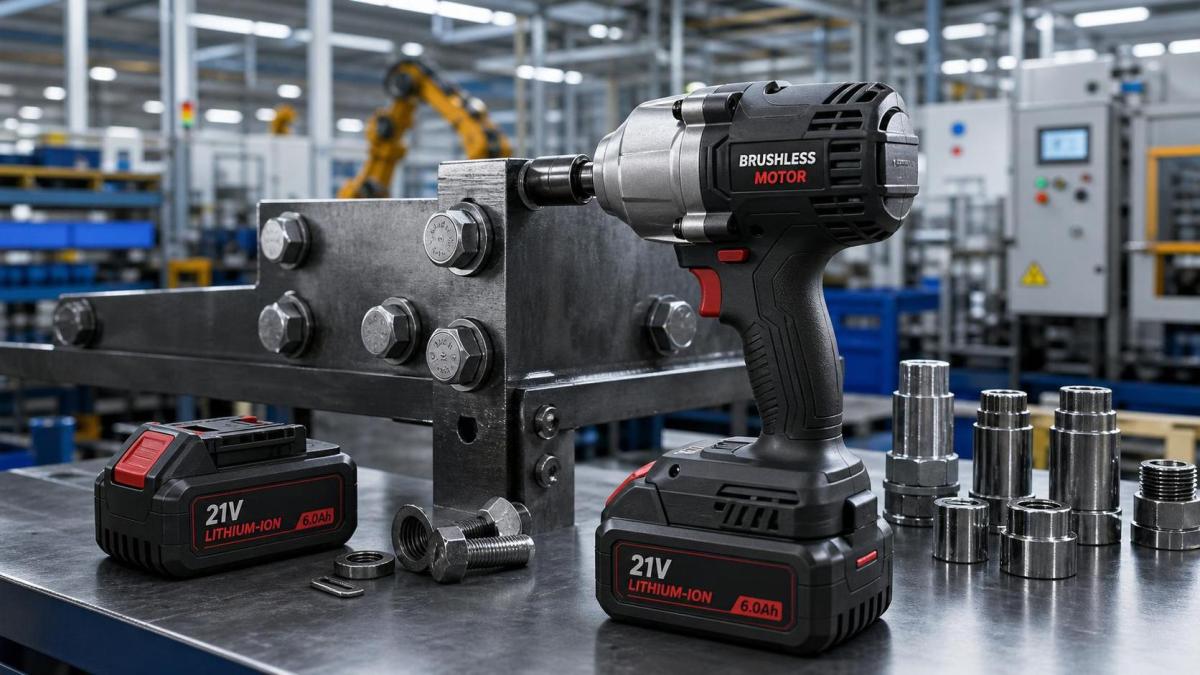
In specification sheets, torque often appears as a headline number. In daily use, however, high torque only becomes valuable when the motor, drive electronics, gearbox, and energy source can hold that output through repeated cycles.
For industrial brushless tools high torque applications, the more useful questions are simple. How long can torque stay stable? How much speed drops under load? How quickly does housing temperature rise? What happens after fifty or one hundred consecutive fastenings?
Brushless DC platforms are favored because they remove brush wear, improve efficiency, and allow finer electronic control. That usually delivers better runtime, less maintenance, and more predictable output than brushed alternatives under demanding schedules.
Still, not every BLDC tool is suitable for continuous duty. Some are tuned for short bursts. Others are designed for sustained fastening, drilling, anchoring, or bolting where downtime is expensive and inconsistency creates downstream quality risk.
Why this matters more across current industrial environments
Production environments have changed. Materials are stronger, schedules are tighter, and labor efficiency is under scrutiny. At the same time, battery platforms have improved enough to move more heavy-duty work away from air hoses and fixed power lines.
That shift has raised expectations for industrial brushless tools high torque performance. Sites now expect cordless tools to approach pneumatic productivity in selected tasks, especially where mobility, safety, and access constraints make cords or hoses inefficient.
The issue also extends beyond speed. In steel structures, transport equipment, utility maintenance, commercial fit-out, and industrial MRO, fastening accuracy affects structural security, rework rates, and inspection outcomes.
SHSS tracks this broader chain closely. A fastening tool influences how reliably high-strength hardware performs, how safely PPE users operate in harsh zones, and how efficiently critical assets in smart buildings or urban infrastructure stay in service.
The selection criteria that deserve the closest attention
A strong evaluation process usually starts with the load profile, not the catalog. Continuous duty demands a match between tool capability and the real cycle of torque, pause time, ambient temperature, and material resistance.
Thermal stability under repeated load
Heat is often the first hidden limit. A tool may reach target torque early, then derate as motor windings, controller components, or battery cells climb in temperature.
Look for test data showing sustained operation, not just momentary output. Vent path design, controller calibration, and housing materials all affect whether performance remains usable after extended cycles.
Motor efficiency and electronic control
The best industrial brushless tools high torque models convert electrical energy into useful work with limited losses. Efficient motors run cooler and hold speed better when torque demand rises.
Electronic controls also matter. Better systems regulate startup current, manage stall behavior, and protect the tool from destructive overload without making it feel weak during normal operation.
Geartrain durability
Continuous-duty torque is transferred through gears, bearings, anvils, and impact mechanisms. If these parts are undersized, early wear appears long before the motor itself becomes the issue.
Material grade, hardening quality, lubrication retention, and sealing all influence durability. This is especially important around vibration-heavy fastening tasks and contaminated jobsite environments.
Battery system behavior
Battery capacity alone is not enough. Cell chemistry, discharge rate, thermal management, and pack communication determine whether the tool can sustain current draw during demanding work.
High-rate Li-ion packs can transform performance, but only when matched to the motor platform. A strong tool on a weak battery ecosystem will show voltage sag, runtime collapse, and inconsistent torque delivery.
Where selection errors usually happen
Many buying mistakes come from comparing only one figure. Maximum torque, no-load speed, and battery amp-hours are useful, yet none alone predicts how a tool behaves in continuous service.
- Choosing by peak torque without checking sustained torque or thermal derating.
- Ignoring fastener grade, joint hardness, and breakaway requirements.
- Assuming one battery platform suits every heavy-duty duty cycle.
- Overlooking vibration, grip design, and balance during long shifts.
- Treating maintenance access and spare-part support as secondary.
In practice, industrial brushless tools high torque decisions should be tied to the full working system. That includes joint design, fastener specification, operator exposure, charging logistics, and environmental contamination.
A useful way to compare options
A structured comparison matrix helps reveal which platforms are built for true continuous duty and which are better suited to intermittent heavy use.
This kind of framework is more revealing than marketing language. It also creates a common basis for comparing cordless, corded, and pneumatic alternatives where the operating environment is mixed.
Application context changes the right answer
No single configuration fits every site. The correct industrial brushless tools high torque choice depends on the task pattern and the cost of failure in that setting.
Structural fastening and anchors
Higher breakaway demands, hard substrates, and strict fastening repeatability favor robust geartrains, thermal headroom, and strong battery discharge capability.
Industrial maintenance and repair
Mobility matters more here. Weight, access, battery swap speed, and compatibility with multiple tool bodies often shape the better platform decision.
Smart infrastructure installation
Work around lighting systems, access control hardware, and connected building equipment often combines heavy fastening with delicate assemblies. Multi-mode control and reliable low-speed behavior become more valuable.
Harsh or safety-critical environments
Dust, vibration, moisture, and limited visibility place greater importance on sealing, tactile control, and compatibility with protective gloves and full PPE.
Reading total cost beyond the purchase price
Tool selection becomes much clearer once cost is measured across uptime, failure rates, maintenance intervals, battery replacement, and fastening quality outcomes.
A cheaper platform may carry a higher operating burden if it shortens battery life, creates rework, or requires more frequent service. A more durable platform can justify itself through fewer stoppages and better output stability.
SHSS often frames this as a systems decision. The tool, the fastener, the safety gear, and the surrounding workflow all contribute to whether a site achieves secure, efficient, and repeatable execution.
What to do before making the final choice
Start with the real duty cycle. Record fastening frequency, joint resistance, ambient conditions, and acceptable temperature rise. Then compare candidate tools under matching conditions rather than showroom demonstrations.
- Request sustained-load test data, not only peak figures.
- Check compatibility with the intended fastener classes and joint materials.
- Review battery charging logistics across the full shift pattern.
- Assess ergonomics while wearing the site’s actual PPE.
- Compare service support, spare availability, and diagnostics access.
If the application is critical, run a short field trial and measure output drift over time. That step usually reveals more than any brochure and helps separate short-burst performers from real continuous-duty tools.
The most reliable decision is rarely the one with the biggest single number. It is the one that keeps torque stable, protects operators, supports fastening integrity, and stays dependable across the full working cycle.
Recommended News