
Search News
Industry Portal
Hot Articles
Access Control Risks in Cloud-Managed Sites
Time
Click Count
Access Control Risks in Cloud-Managed Sites
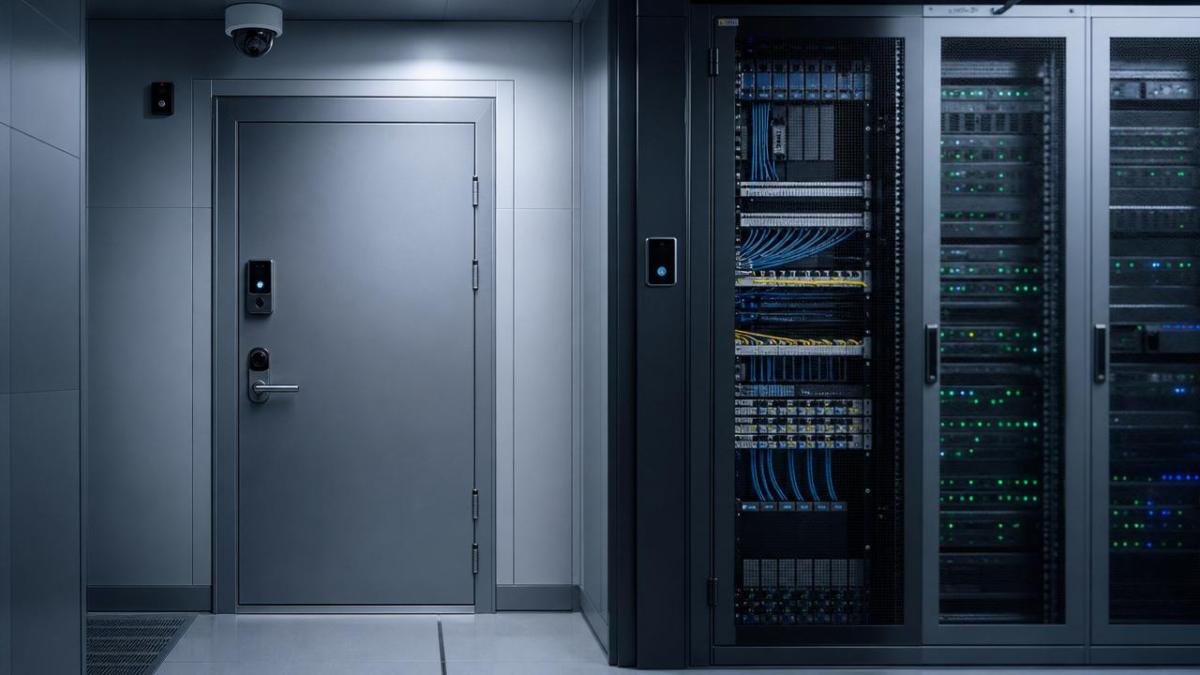
Cloud-managed sites promise centralized visibility, faster deployment, and lower operational friction, but they also reshape the risk profile of physical security.
For enterprise decision makers, access control is no longer just a door hardware issue.
It is a strategic exposure spanning cloud identity, biometric data, network resilience, vendor governance, and regulatory compliance.
Understanding where these systems can fail is essential before scaling across offices, factories, data centers, or smart-city assets.
What Makes Cloud-Managed Access Control Different?
Traditional access control often depends on local panels, on-site servers, physical badges, and facility-level administration.
Cloud-managed access control shifts configuration, logs, credential lifecycle, analytics, and sometimes biometric templates into connected platforms.
This change improves speed and visibility, especially across distributed buildings, warehouses, laboratories, and commercial campuses.
However, it also creates shared dependency on cloud availability, identity permissions, API security, and vendor operational maturity.
In smart hardware environments, access control connects doors, turnstiles, elevators, cameras, visitor systems, and emergency workflows.
A misconfiguration can therefore affect more than one entrance.
It may influence production zones, server rooms, PPE storage areas, high-value tooling cages, or restricted mechanical spaces.
Core difference at a glance
- Local systems isolate risk but limit centralized control.
- Cloud platforms scale faster but expand digital attack surfaces.
- Biometric access control improves assurance but increases privacy obligations.
- Remote administration saves time but requires strong privilege governance.
Where Do Access Control Failures Usually Begin?
Most access control failures do not begin with dramatic forced entry.
They usually start with weak assumptions, rushed deployment, and unclear accountability between physical security and IT teams.
Common gaps include excessive administrator rights, unmanaged mobile credentials, poor offboarding, and insufficient audit review.
Another frequent issue is treating cloud access control as a simple subscription product.
In reality, it is a living security system that needs policies, testing, monitoring, and ownership.
High-risk starting points
- Shared administrator accounts without traceable ownership.
- Credential permissions copied between unrelated job roles.
- Former staff, contractors, or vendors remaining active.
- Unencrypted data flows between controllers and cloud services.
- Emergency door rules never tested under network failure.
A practical access control review should map every credential to a person, purpose, location, and expiration condition.
This basic discipline reduces hidden exposure before more advanced controls are introduced.
How Serious Is Biometric Risk in Access Control?
Biometric access control offers strong identity assurance when designed well.
Face recognition, iris recognition, palm vein scanning, and fingerprint verification can reduce badge sharing and impersonation.
Yet biometric data is different from a password.
If compromised, it cannot be simply reset like a card, PIN, or mobile token.
This makes biometric access control a compliance-sensitive choice for offices, plants, data centers, and public-facing facilities.
Key questions include where templates are stored, how they are encrypted, and whether raw images are retained.
Regulations such as GDPR may require lawful basis, data minimization, transparency, retention limits, and deletion rights.
Recommended biometric safeguards
- Prefer encrypted templates over raw biometric images.
- Store templates locally when risk tolerance demands isolation.
- Use liveness detection against masks, photos, and replay attacks.
- Define retention and deletion procedures before enrollment.
- Offer alternatives where law or policy requires accommodation.
Biometric security should strengthen access control without creating uncontrolled identity liabilities.
What Happens If the Network or Cloud Service Fails?
Cloud-managed access control depends on reliable connectivity, but doors must still behave safely during outages.
Failure planning should distinguish between life safety, asset protection, operational continuity, and regulatory obligations.
A laboratory door may need fail-secure behavior.
An emergency exit must support evacuation under fire and safety codes.
A factory gate may require temporary offline credential validation to avoid stopping production.
Offline modes are therefore critical in modern access control design.
Controllers should retain recent permissions, event buffers, time schedules, and emergency commands where appropriate.
Questions for resilience testing
- Which doors unlock, lock, or stay controlled during outage?
- How long can controllers operate without cloud contact?
- Are event logs preserved and synchronized later?
- Can emergency overrides be performed locally?
- Are UPS units sized for locks, readers, and panels?
Resilient access control is not measured only by uptime claims.
It is proven by controlled behavior when cloud, power, or network layers degrade.
How Should Vendor Risk Be Evaluated Before Deployment?
Cloud-managed access control introduces vendor dependency into physical protection.
The platform provider may handle identity integrations, firmware updates, APIs, storage, mobile credentials, and support access.
A weak vendor can turn a strong door strategy into a fragile security ecosystem.
Vendor review should go beyond product brochures and installation convenience.
It should examine security certifications, breach notification terms, data residency, penetration testing, and service continuity.
Firmware governance matters especially in smart hardware environments.
Readers, locks, controllers, and intercoms can become entry points if update channels are poorly protected.
Vendor evaluation checklist
- Document cloud hosting regions and data residency options.
- Confirm encryption for data at rest and in transit.
- Review SOC 2, ISO 27001, or comparable assurance reports.
- Require role-based access for vendor support sessions.
- Clarify exit plans and data export formats.
Access control procurement should include legal, security, facilities, and operational validation before wide rollout.
Which Access Control Model Fits Different Sites?
No single access control model fits every location.
A sales office, logistics hub, cleanroom, and data center have different risks and continuity needs.
The right design balances usability, security strength, maintenance capacity, and compliance exposure.
Cloud-first access control suits multi-site visibility and rapid credential changes.
Hybrid models suit critical facilities needing local resilience with centralized supervision.
Fully local systems may still fit isolated high-security environments with strict network segmentation.
A phased pilot reduces uncertainty before access control is extended across many buildings.
What Mistakes Increase Cost and Delay?
Cost overruns often appear when access control is treated as hardware replacement only.
Cloud licensing, identity integration, network upgrades, training, migration, and compliance work can be underestimated.
Door conditions also matter.
A poor frame, weak strike, or unsuitable lock can defeat a sophisticated access control platform.
Physical anchors remain critical, from hinges and fasteners to readers and emergency release hardware.
Another mistake is deploying integrations without defining incident response.
If a badge event triggers video, alarms, and visitor workflows, escalation rules must be tested.
Practical implementation sequence
- Classify doors by risk, safety, and operational impact.
- Define credential types and approval authority.
- Validate network, power, and offline behavior.
- Pilot access control at representative locations.
- Audit logs, exceptions, and user feedback.
- Scale only after policy gaps are corrected.
This sequence keeps access control decisions grounded in real site behavior, not theoretical platform features.
FAQ: Key Access Control Questions for Cloud-Managed Sites
Cloud-managed access control can improve safety, efficiency, and multi-site governance when engineered carefully.
It also introduces risks that cross physical security, cybersecurity, privacy, and operational continuity.
The next step is a structured risk assessment covering doors, identities, biometric data, vendors, networks, and emergency behavior.
Strong access control begins when every credential, controller, policy, and physical barrier is tested as one system.
Recommended News