
Search News
Industry Portal
Hot Articles
AI+Consumption Policy Backs Smart Street Lighting Exports
Time
Click Count
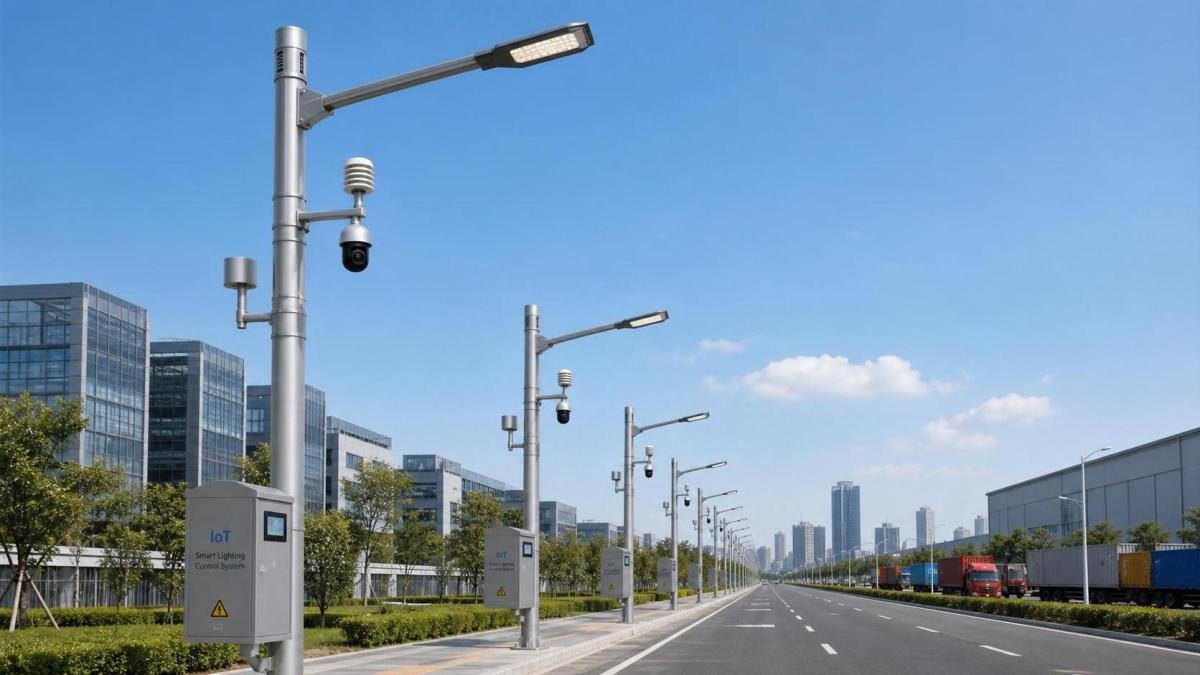
On June 19, 2026, eight government departments led by the Ministry of Commerce issued an implementation opinion on accelerating the development of AI-driven consumption. For the smart street lighting IoT segment, the most notable point is that it was included among the new-generation products prioritized for overseas rollout through a first-launch platform for AI products. This deserves attention from manufacturers, exporters, overseas municipal buyers, EPC contractors, and compliance service providers because the policy package points directly to lower market-entry friction and shorter validation cycles in cross-border procurement.
What the June 19 policy explicitly introduced
According to the information provided, the implementation opinion was jointly issued on June 19 by eight departments including the Ministry of Commerce. The document calls for the construction of a first-launch platform for AI products and highlights support for the overseas expansion of next-generation products including intelligent connected vehicles, smart home products, and smart street lighting IoT solutions.
The policy package described in the input also includes first-purchase subsidies, scenario demonstration support, and a green channel for cross-border certification. Based on the supplied summary, these measures are intended to reduce access barriers and shorten the verification period for overseas municipal buyers and EPC contractors purchasing Chinese smart street lighting systems.
Where the impact may appear first
For system manufacturers and export-facing suppliers
From an industry perspective, these companies may feel the effect first because the policy language is tied directly to product launch, overseas promotion, and procurement facilitation. The business links most likely affected are overseas market development, customer proof-of-concept preparation, and certification coordination. What deserves closer attention is whether official follow-up rules further define how smart street lighting IoT products can access the first-launch platform and related support tools.
For overseas municipal buyers and EPC contractors
Analysis shows that the policy matters to buyers because the stated measures target two practical obstacles in public infrastructure procurement: entry thresholds and verification time. In business terms, that can affect supplier screening, pilot evaluation, and project approval preparation. Buyers and project contractors will need to watch how the green channel and scenario demonstration arrangements are translated into actual operating procedures.
For certification, delivery, and cross-border service participants
Observably, service providers involved in compliance documentation, certification coordination, logistics, and project delivery may also be affected. The reason is straightforward: once procurement barriers are lowered, the quality and speed of supporting services become more visible in the deal cycle. The key change to monitor is not only whether demand expands, but whether documentation, certification timing, and delivery coordination become more standardized.
What companies should track now
Watch for the detailed policy wording that follows
The current information confirms the direction of support, but companies still need to distinguish between a policy signal and the final operating rules. It is practical to monitor how the first-launch platform will function, what product categories will be prioritized in practice, and whether any application or review requirements are clarified later.
Prepare materials that shorten customer validation
Because the summary specifically mentions lower access thresholds and shorter verification cycles, companies involved in smart street lighting IoT should pay close attention to the materials customers typically require during evaluation. In analysis terms, readiness in product documentation, certification files, and project communication may become more important if overseas buyers move faster once support mechanisms are activated.
Separate subsidy expectations from execution readiness
First-purchase subsidies and scenario demonstration support are clear policy elements in the input, but their commercial effect depends on implementation details. What deserves closer attention is whether companies are treating the policy as immediate order conversion or as a framework that may improve conditions over time. That distinction matters for forecasting, customer communication, and internal resource planning.
Review coordination across export and delivery teams
For companies already active in overseas infrastructure-related business, this policy signal is likely to touch several internal functions at once, including sales, compliance, supply chain, and delivery support. Observably, the near-term priority is not broad expansion language, but whether teams can align on qualification materials, lead-time expectations, and communication with municipal or EPC customers.
Why this is more of a policy signal than a finished outcome
Analysis shows that this development should currently be understood as a meaningful policy signal rather than a completed market result. The inclusion of smart street lighting IoT alongside other supported AI product categories indicates that the segment is now being recognized within a broader export-support framework. At the same time, the input does not provide implementation schedules, operating rules, or measured outcomes, so the industry still needs to observe how support is converted into executable processes.
From an industry perspective, the importance of this update lies less in immediate volume conclusions and more in the fact that policy attention is now connecting AI product promotion with concrete procurement facilitation tools. That makes it relevant not only to manufacturers, but also to buyers and service intermediaries that shape project execution.
How this update is best understood at this stage
At this stage, it is more appropriate to understand the June 19 policy as an actionable directional change for the overseas development of smart street lighting IoT, rather than as proof of an already completed market shift. The confirmed facts point to lower procurement friction and faster validation pathways for overseas municipal and EPC buyers, which is significant for cross-border project development. Even so, the practical impact will depend on how the first-launch platform, subsidies, demonstration arrangements, and certification facilitation are implemented after the policy announcement.
Basis of this article and what still needs verification
This article is generated strictly from the user-provided news title, event date, and event summary. Source types commonly associated with this kind of update may include official policy notices, government announcements, company statements, industry association releases, authoritative media coverage, and standards-related documents. A specific official source link was not provided in the input, so that link still needs to be verified on an ongoing basis. Areas that warrant continued monitoring include the detailed rules for the AI product first-launch platform, any category-specific implementation guidance, and the practical operation of subsidy, demonstration, and cross-border certification arrangements.
Recommended News