
Search News
Industry Portal
Hot Articles
Data Center Security Upgrades: Cost, Downtime, and Compliance Priorities
Time
Click Count
Data center security upgrades: what is really being purchased?
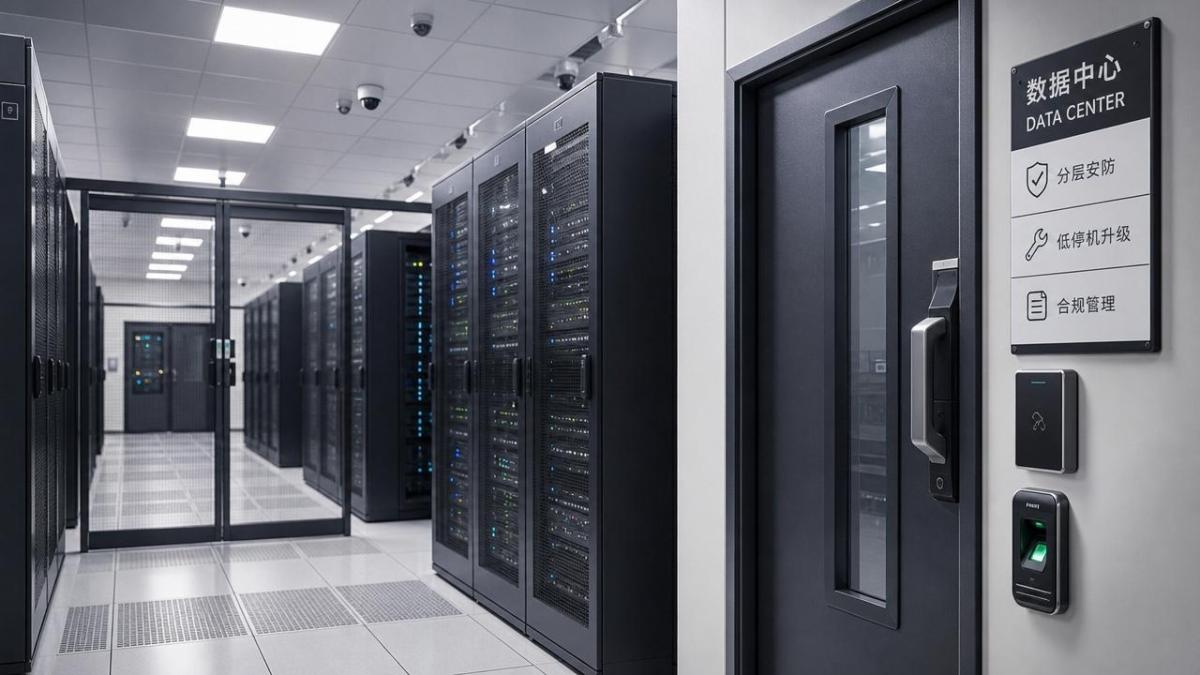
Data center security is no longer just a lock, a camera, or a badge system.
In practice, it is a layered investment in physical protection, operational continuity, and auditable control.
That matters because a modern facility faces blended risks.
A forced door, an unverified contractor, a failed cabinet latch, or poor visibility can trigger the same business pain as a cyber incident.
For that reason, data center security upgrades often include biometric access, hardened doors, reinforced fasteners, intelligent lighting, and continuous monitoring.
The strongest programs also connect physical hardware with policy, maintenance, and compliance evidence.
This is where the broader SHSS perspective becomes useful.
Its research focus on biometric security, high-strength hardware, smart lighting, and protective systems reflects how real facilities are secured on the ground.
So the first useful question is not “Which device is cheapest?”
A better question is whether the upgrade reduces risk without creating new downtime, workflow friction, or compliance gaps.
Where do costs usually rise fastest in data center security projects?
Most budgets do not fail because readers underestimate cameras or readers alone.
They fail when infrastructure, installation sequencing, and integration work were not priced early enough.
For example, upgrading to biometric access control may also require door reinforcement, new power paths, edge storage, software licensing, and enrollment procedures.
A cabinet security program can look modest on paper.
Then it expands once teams discover weak hinges, legacy rack layouts, or inconsistent lock standards.
The more reliable way to estimate data center security cost is to break spending into four buckets:
- Core hardware, such as readers, controllers, locks, sensors, barriers, and cameras.
- Mechanical hardening, including frames, bolts, anti-tamper parts, and rack reinforcement.
- System integration, including software, identity linkage, logging, and alert workflows.
- Operational transition, including training, testing, enrollment, and temporary access handling.
In real procurement reviews, hidden cost is often tied to physical detail.
A premium biometric reader means little if the door closer, mounting plate, or fastening point can be defeated quickly.
That is why data center security decisions should compare total protection value, not just device price.
How can upgrades be done without causing unacceptable downtime?
This concern is usually justified.
Even a short access interruption can delay maintenance windows, vendor work, and incident response.
The better path is phased implementation around critical operations, not around installer convenience.
In practical terms, data center security upgrades should begin with the lowest-disruption control points.
Perimeter logging, visitor identity workflows, and passive monitoring often come before high-impact door replacements.
Biometric deployment also benefits from parallel operation.
Run old credentials and new verification together for a defined period, then remove the weaker layer after validation.
It also helps to separate physical work from logical cutover.
Doors, cabinets, and mounting hardware can be prepared in advance, while system switching happens in short, controlled windows.
The table below is a simple way to judge disruption before approval.
When downtime tolerance is near zero, mock deployment matters.
A pilot at one entrance or one row of cabinets often reveals workflow problems before they affect the full site.
Which compliance priorities should shape data center security choices?
Compliance should not be treated as a finishing step.
It directly affects architecture, retention rules, access procedures, and evidence quality.
The exact checklist varies by sector and geography, but three priorities appear again and again.
First, prove who entered, when, and under which authorization.
This is where strong data center security logging matters more than generic attendance records.
Logs must be accurate, searchable, and connected to actual identities and approved activities.
Second, protect sensitive identity data responsibly.
Biometric systems are powerful, but they require strict handling.
Template storage, encryption, consent practices, and regional privacy obligations should be reviewed before purchase.
That aligns with the SHSS research emphasis on compliance-aware biometric deployment rather than security theater.
Third, maintain defensible physical controls.
Auditors increasingly look beyond software screenshots.
They want to see that doors, cabinets, lighting, and intrusion points are physically resistant and consistently managed.
In other words, data center security compliance lives at the intersection of policy and hardware reality.
A weak fastener, poor camera angle, or uncontrolled service entrance can undermine excellent paperwork.
Is biometric access always the right move, or are hybrid models safer?
Not every site needs the same access model.
The better choice depends on traffic patterns, data sensitivity, contractor frequency, and regional privacy limits.
Biometric access improves identity assurance, especially for restricted rooms and high-value zones.
It also reduces risks tied to shared cards, copied keys, or borrowed credentials.
Still, hybrid data center security models are often more resilient.
A common arrangement uses biometric verification at critical boundaries, then role-based cards or mobile credentials for lower-risk areas.
That approach usually lowers enrollment pressure and supports faster recovery if one layer fails.
It also fits facilities where third-party technicians require temporary, traceable access.
More importantly, hybrid design allows stronger physical zoning.
- Outer perimeter: surveillance, visitor screening, and monitored entry records.
- Controlled interior: card or mobile identity with anti-passback rules.
- Critical rooms: biometric verification plus video correlation.
- Racks or cages: cabinet locks, tamper alerts, and maintenance logging.
This layered structure reflects a useful lesson from industrial security.
The strongest protection does not rely on one brilliant device.
It relies on multiple controls that fail gracefully and leave evidence behind.
What mistakes make data center security upgrades more expensive later?
The most common mistake is buying visible technology before mapping actual risk paths.
Teams may fund premium readers while ignoring loading bays, side entrances, unsecured cabinets, or poor nighttime visibility.
Another expensive error is treating physical components as commodity parts.
In a data center security project, hinges, strike plates, tamper-resistant fasteners, and emergency egress details affect outcomes more than many buyers expect.
There is also a workflow risk.
If visitor management, contractor access, and incident escalation are not redesigned, new tools often create confusion instead of control.
A final issue is weak lifecycle planning.
Readers, locks, controllers, lighting, and sensors all need service intervals, firmware governance, and spare-part strategy.
A sensible review before approval should ask:
- Which locations create the highest physical breach impact?
- Which components are mission-critical and must have fallback modes?
- Which compliance records must be produced during an audit or incident?
- Which upgrade steps can be staged with minimal operational interruption?
Those questions keep data center security spending tied to measurable resilience, not assumptions.
How should the next decision be made?
A practical decision starts with a site-specific gap review.
List every critical boundary, every high-value asset zone, and every access event that must be verified later.
Then compare proposed upgrades against three tests: cost clarity, downtime tolerance, and compliance defensibility.
If a measure strengthens one area while weakening another, it needs redesign.
The best data center security strategy usually combines hardened physical details, trustworthy identity verification, and operational evidence that stands up under review.
That is also why multidisciplinary intelligence matters.
Insights drawn from biometric controls, structural hardware, smart lighting, and real-world industrial maintenance often reveal risks that isolated planning misses.
Before moving forward, refine the scope, request a phased deployment plan, and verify how each layer will be tested, logged, and maintained.
That approach makes data center security upgrades easier to justify, easier to operate, and much harder to regret.
Recommended News