
Search News
Industry Portal
Hot Articles
Biometric Security Options Compared: Face, Fingerprint, Iris, and Vein
Time
Click Count
Biometric Security Options Compared: Face, Fingerprint, Iris, and Vein
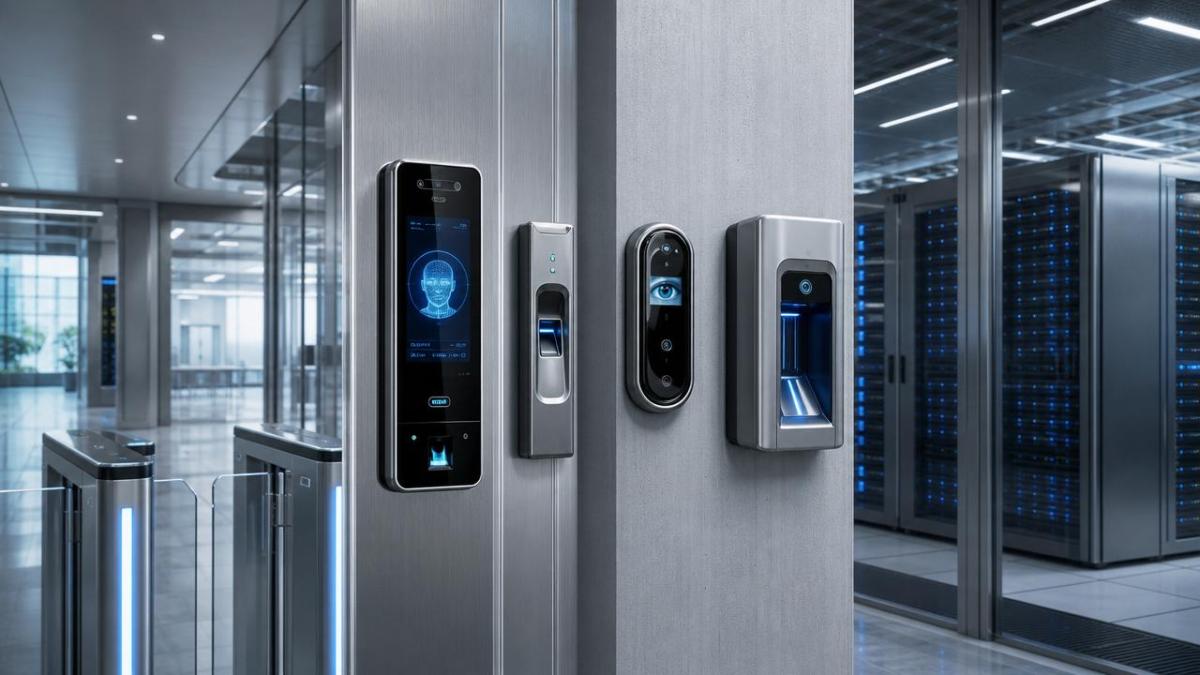
Choosing a biometric security method is rarely about convenience alone.
For real access control projects, the better question is fit.
Face, fingerprint, iris, and vein systems solve different risk profiles.
That matters when uptime, compliance, spoof resistance, and user flow all count.
In today’s biometric security market, buyers are moving away from single-metric decisions.
Accuracy still matters, but operating conditions matter just as much.
Dusty factories, bright lobbies, dark perimeter gates, and high-throughput offices need different answers.
This comparison looks at how each biometric security option performs in the field.
The goal is simple: support a decision that is reliable, scalable, and easier to defend internally.
What Actually Matters in Biometric Security Selection
A good biometric security evaluation starts with five filters.
- Recognition accuracy under normal and degraded conditions.
- Resistance to spoofing, replay, and presentation attacks.
- Enrollment speed and daily user acceptance.
- Hardware cost, maintenance load, and lifecycle economics.
- Privacy impact, template storage design, and regulatory fit.
These factors interact in ways that are easy to underestimate.
For example, stronger spoof resistance may raise capture friction.
Lower-cost sensors may reduce project risk at pilot stage.
But they may also increase false rejects in harsh environments.
Face Recognition: Fast, Familiar, and Highly Scalable
Face recognition is often the easiest biometric security technology to deploy at scale.
Users understand it instantly, and touchless operation improves throughput.
That is especially useful at office lobbies, campuses, and mixed-traffic buildings.
Modern systems use visible light, infrared, or 3D structured light.
The sensor choice heavily affects real performance.
Basic 2D face recognition is affordable, but weaker against printed photos and screen replay.
3D and infrared models improve liveness detection and low-light recognition.
Even so, face recognition can be sensitive to masks, heavy backlighting, and aging datasets.
In practical biometric security planning, that means installation geometry matters.
- Best fit: high-flow entrances and low-friction access control.
- Main strength: speed, touchless use, and easy user adoption.
- Main risk: performance shifts with lighting and presentation attacks.
If the site needs passive recognition, face remains a strong first candidate.
Fingerprint Recognition: Mature, Affordable, and Widely Proven
Fingerprint remains one of the most deployed biometric security methods worldwide.
There is a simple reason for that.
The ecosystem is mature, pricing is accessible, and integration options are broad.
Capacitive, optical, and ultrasonic sensors now cover many budget and risk levels.
For indoor doors and attendance systems, fingerprint is often the most practical choice.
Still, fingerprints are not ideal everywhere.
Workers in manufacturing, logistics, and construction may have worn or damaged fingertips.
Moisture, oil, dust, and gloves also reduce consistency.
Spoof resistance depends greatly on sensor quality and liveness controls.
Cheap devices can create long-term biometric security headaches.
- Best fit: standard offices, staff doors, and cost-sensitive projects.
- Main strength: low cost, proven interoperability, and easy maintenance.
- Main risk: lower consistency in rough working environments.
When budget pressure is real, fingerprint still delivers strong value.
Iris Recognition: High Accuracy for High-Security Access
Iris recognition is often selected when biometric security must prioritize precision over convenience.
The iris pattern is highly distinctive and stable over time.
That gives iris systems very low false acceptance rates in controlled deployments.
They also work well in low light when infrared capture is properly engineered.
This makes iris a strong option for data centers, labs, and restricted infrastructure zones.
The trade-off is user experience.
Enrollment is usually more controlled, and capture distance must be managed carefully.
Some users also perceive iris scanning as intrusive, even when it is safe.
That perception can slow rollout unless communication is handled well.
So iris is usually strongest where security policy already supports stricter behavior.
Vein Recognition: Strong Anti-Spoofing with Controlled Deployment Benefits
Vein recognition uses subdermal patterns, usually in the finger, palm, or hand.
Because the feature sits beneath the skin, spoofing is harder.
That gives vein systems a strong reputation in advanced biometric security deployments.
In healthcare, finance, and critical operations, this advantage is meaningful.
Vein recognition also tends to perform well when fingerprints are worn.
However, hardware costs are higher, and vendor ecosystems are narrower.
Integration can be less flexible than face or fingerprint systems.
In some projects, that increases long-term supplier dependence.
- Best fit: high-assurance indoor access and anti-spoofing priorities.
- Main strength: strong liveness profile and stable matching.
- Main risk: higher cost and fewer qualified supply options.
If trust in the credential itself is the top concern, vein deserves serious review.
Side-by-Side Biometric Security Comparison
This table is a starting point, not a final answer.
Biometric security performance always shifts with environment, policy, and vendor execution.
How to Match the Method to the Use Case
In actual procurement, the use case should drive the technology.
A few patterns appear again and again.
- Corporate office entry: face recognition usually gives the best user flow.
- Budget-sensitive indoor access: fingerprint often wins on total cost.
- Critical infrastructure and server rooms: iris or vein usually fit better.
- Harsh industrial settings: avoid assuming fingerprints will remain reliable.
- Privacy-sensitive deployments: evaluate on-device matching and template encryption early.
More teams are also choosing multimodal biometric security.
That can mean face plus card for speed.
Or vein plus PIN for high-assurance zones.
This approach improves resilience without forcing one method into every doorway.
Compliance, Privacy, and Long-Term Risk
Biometric security decisions are not only technical.
They also create legal and governance obligations.
That becomes more important as data protection rules tighten globally.
The safer design principle is data minimization.
Store templates instead of raw images where possible.
Prefer encrypted storage, secure element support, and strict retention policies.
It is also smart to verify revocation, fallback credentials, and audit logging.
A biometric security system that cannot fail safely is poorly designed.
The strongest technical match still fails if the governance model is weak.
Final Decision Framework
If quick guidance is needed, start with the operating environment first.
Then rank threat level, throughput needs, and user tolerance.
After that, compare vendors on liveness detection, template handling, and support quality.
For broad commercial access, face recognition often offers the best balance.
For cost-controlled indoor projects, fingerprint usually remains the practical baseline.
For high-security biometric security environments, iris and vein are usually stronger candidates.
The best choice is rarely the most advanced technology on paper.
It is the option that stays accurate, defensible, and manageable after deployment.
That is the biometric security decision worth making.
Recommended News