
Search News
Industry Portal
Hot Articles
Construction Safety Equipment Checklist for High-Rise Fall Risk Control
Time
Click Count
Construction Safety Equipment Checklist for High-Rise Fall Risk Control
In high-rise projects, the right construction safety equipment can mean the difference between controlled risk and catastrophic loss.
A practical checklist helps teams confirm protection systems before workers leave the ground.
It also supports stronger accountability, cleaner inspections, and faster corrective action.
For high-rise operations, construction safety equipment should never be treated as a last-minute purchase.
It needs to be checked as a working system, not as isolated items.
Why a Checklist Matters Before Work at Height Starts
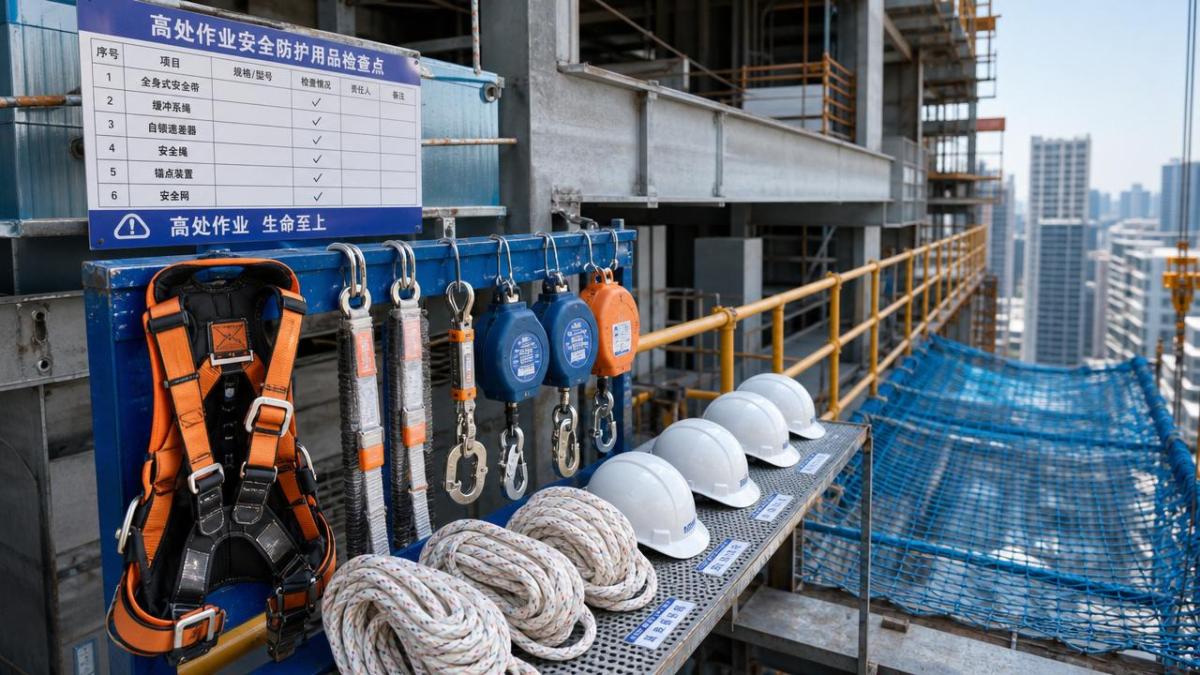
Fall incidents rarely come from one failure alone.
More often, they start with gaps in inspection, damaged gear, weak anchor points, or poor task planning.
That is why construction safety equipment must be reviewed in context.
A harness may be compliant, yet the connecting lanyard may be expired.
An anchor may be installed, yet not rated for the actual load path.
A checklist turns those hidden assumptions into visible control points.
Core Construction Safety Equipment for Fall Risk Control
The first layer of control is personal fall protection equipment.
The second layer is structural support and site access protection.
Both must be verified together.
Personal Protective Equipment
- Full-body harness with readable labels, intact stitching, and no cuts, burns, deformation, or chemical damage.
- Shock-absorbing lanyards matched to free-fall distance and swing-fall exposure.
- Self-retracting lifelines for vertical movement and frequent repositioning zones.
- Helmets with chin straps, especially where wind and edge work increase dislodgement risk.
- Cut-resistant gloves and anti-slip footwear suited to steel, concrete, and wet surfaces.
- Hi-visibility clothing that remains effective in low light, dust, and congested access areas.
Site Protection Systems
- Guardrails at open edges, floor openings, stairs, shafts, and temporary platforms.
- Safety nets placed where collective protection is more reliable than individual tie-off.
- Anchorage points with documented load rating and installation record.
- Horizontal or vertical lifeline systems inspected for compatibility and span condition.
- Scaffolds, ladders, and mobile platforms checked for stability, access control, and edge protection.
Good construction safety equipment works only when every connection point is also right.
Pre-Shift Checklist for High-Rise Fall Protection
Before each shift, inspections should move from documents to gear to structure.
This sequence reduces missed details and keeps reviews practical.
- Confirm task scope, work elevation, weather changes, and planned movement path.
- Verify inspection records for all construction safety equipment assigned that day.
- Check harness webbing, D-rings, buckles, labels, and impact indicators.
- Inspect lanyards, retractable devices, hooks, and connectors for wear or locking failure.
- Review anchor point identification, certification, and safe connection method.
- Inspect guardrails, covers, scaffold decks, ladder ties, and access gates.
- Confirm dropped-object controls, tool tethering, and exclusion zone boundaries.
- Verify rescue readiness, communication tools, and trained responders on site.
In real operations, this checklist should take minutes, not hours.
The goal is consistent control, not paperwork for its own sake.
Critical Control Points Often Missed on Busy Sites
From recent field changes, one clear pattern stands out.
Sites usually own enough construction safety equipment, but consistency breaks during fast schedule shifts.
Anchor Mismatch
Temporary anchors are sometimes reused without checking substrate condition.
That creates a dangerous gap between rated capacity and actual performance.
Connector Incompatibility
Hooks may appear functional but can side-load or roll out under poor geometry.
Construction safety equipment should be checked as a full assembly, not item by item.
Weather Exposure
Wind, rain, and UV exposure quietly shorten the reliable life of equipment.
Storage conditions matter almost as much as usage conditions.
Rescue Delay
Fall arrest is not the end of the emergency.
Without a retrieval plan, suspended workers remain at serious risk.
How to Evaluate Construction Safety Equipment Quality
A checklist is only useful when the underlying equipment is dependable.
That means evaluating more than price and product availability.
For many teams, better procurement decisions reduce field risk faster than adding more gear.
Building a More Reliable Inspection Routine
The most effective routines are simple enough to repeat under pressure.
They also connect equipment checks with site conditions and work sequencing.
- Use a color-tag or digital log system for construction safety equipment status.
- Separate new, active, quarantined, and retired gear to avoid accidental reuse.
- Inspect after impact, severe weather, contamination, or structural relocation.
- Link inspection forms with corrective actions and closure deadlines.
- Review lessons from near misses, not only from recordable incidents.
This approach keeps construction safety equipment visible as part of operational control.
It also makes audits less reactive and more useful.
Final Checklist for Safer High-Rise Operations
When schedules tighten, shortcuts often begin with familiar equipment.
That is exactly when a disciplined checklist adds the most value.
Review construction safety equipment before every shift, after every incident, and whenever site conditions change.
Focus on anchor integrity, connection compatibility, access safety, rescue readiness, and documented compliance.
If one control fails, the rest of the system must still protect the worker.
That is the real purpose of construction safety equipment in high-rise fall risk control: turning risk into a managed condition before exposure begins.
Recommended News